• HOME
  • NEWS
  • EXPLORE
    • CAREER
      • Companies
      • Jobs
    • EVENTS
    • iGEM
      • News
      • Team
    • PHOTOS
    • VIDEO
    • WIKI
  • BLOG
  • COMMUNITY
    • FACEBOOK
    • INSTAGRAM
    • TWITTER
Saturday, February 7, 2026
BIOENGINEER.ORG
No Result
View All Result
  • Login
  • HOME
  • NEWS
  • EXPLORE
    • CAREER
      • Companies
      • Jobs
        • Lecturer
        • PhD Studentship
        • Postdoc
        • Research Assistant
    • EVENTS
    • iGEM
      • News
      • Team
    • PHOTOS
    • VIDEO
    • WIKI
  • BLOG
  • COMMUNITY
    • FACEBOOK
    • INSTAGRAM
    • TWITTER
  • HOME
  • NEWS
  • EXPLORE
    • CAREER
      • Companies
      • Jobs
        • Lecturer
        • PhD Studentship
        • Postdoc
        • Research Assistant
    • EVENTS
    • iGEM
      • News
      • Team
    • PHOTOS
    • VIDEO
    • WIKI
  • BLOG
  • COMMUNITY
    • FACEBOOK
    • INSTAGRAM
    • TWITTER
No Result
View All Result
Bioengineer.org
No Result
View All Result
Home NEWS Science News Biology

Spicy breast milk?

Bioengineer by Bioengineer
November 29, 2021
in Biology
Reading Time: 3 mins read
0
Mass spectrometric analysis by a research team shows that piperine, which is responsible for the pungency of pepper, is detectable in breast milk for several hours just one hour after consuming a curry dish.
Share on FacebookShare on TwitterShare on LinkedinShare on RedditShare on Telegram

Breast milk is the first food that babies consume. Various studies have suggested that the “taste experience” in early childhood influences eating behavior in adults. Unlike standardized infant formula, natural milk does not taste and smell the same every day. The differences are largely due to the maternal diet.
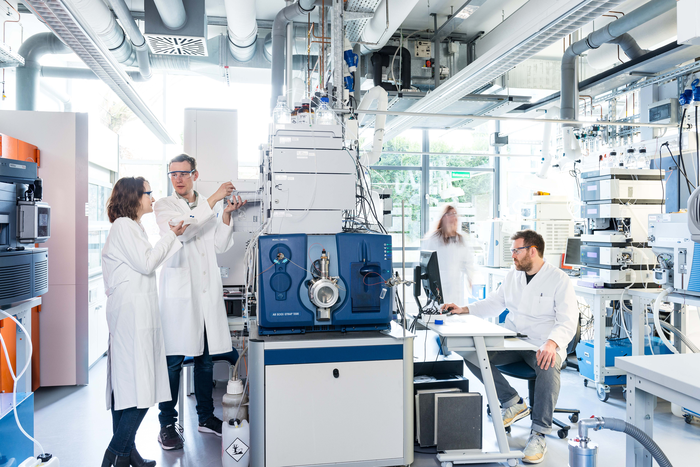
Mass spectrometric analysis by a research team shows that piperine, which is responsible for the pungency of pepper, is detectable in breast milk for several hours just one hour after consuming a curry dish.

Credit: C. Schranner/Leibniz-LSB@TUM

Breast milk is the first food that babies consume. Various studies have suggested that the “taste experience” in early childhood influences eating behavior in adults. Unlike standardized infant formula, natural milk does not taste and smell the same every day. The differences are largely due to the maternal diet.

No one-to-one transfer

However, the taste and aroma of food consumed by the mother are not transferred one-to-one to her milk. Research has already shown that odor and taste active substances from garlic or coffee partly enter the mother’s milk as an odor active metabolic product, while flavors from fish oil or nursing tea were of little to no significance in this respect.

The extent to which pungent substances from chili, ginger, or pepper are found in breast milk has been even less researched than aroma and taste substances. For this reason, a scientific team led by TUM has now investigated whether these substances are transferred from food to breast milk and if so, which ones.

Piperine detectable after just one hour

Through extensive mass spectrometric analyses, the team has shown that already one hour after consumption of a standardized curry dish, piperine is detectable in breast milk for several hours. “The observed maximum concentrations of 14 to 57 micrograms per liter were about 70- to 350-fold below the taste perception threshold of an adult,” says Professor Corinna Dawid, who heads the Chair of Food Chemistry and Molecular Sensory Science at TUM commissarial for Professor Thomas Hofmann.

Roman Lang, who was initially involved in the study as a scientist at TUM and later at the Leibniz Institute for Food Systems Biology (LSB) adds, “It seems rather unlikely to us that the infants consciously perceive the sharpness. Nevertheless, it is conceivable that regular, low-threshold activation of the “pungent receptor” TRPV1 could help to increase tolerance for such substances later on.”

Pungents from ginger or chili as well as the secondary plant compound curcumin, which is also abundant in curry, did not enter milk, according to the research. “We were particularly surprised by the latter, since piperine is supposed to significantly increase the bioavailability of curcumin according to the results of other studies,” reports Roman Lang, who heads the Biosystems Chemistry & Human Metabolism research group at the LSB.

“These observations were made in collaboration with our partners from the Friedrich-Alexander-University Erlangen-Nuremberg, the Fraunhofer Institute for Process Engineering and Packaging IVV, and the LSB. Continued exploration will help us to better understand both the emergence of food preferences and the metabolic processes that play a role in the transfer of bioactive food ingredients into breast milk,” says TUM-Professor Corinna Dawid.


Journal

Molecular Nutrition & Food Research

DOI

10.1002/mnfr.202100508

Subject of Research

Not applicable

Article Title

Dietary piperine is transferred into the milk of nursing mothers

Article Publication Date

11-Oct-2021
Share12Tweet8Share2ShareShareShare2

Related Posts

Florida Cane Toad: Complex Spread and Selective Evolution

Florida Cane Toad: Complex Spread and Selective Evolution

February 7, 2026
New Study Uncovers Mechanism Behind Burn Pit Particulate Matter–Induced Lung Inflammation

New Study Uncovers Mechanism Behind Burn Pit Particulate Matter–Induced Lung Inflammation

February 6, 2026

DeepBlastoid: Advancing Automated and Efficient Evaluation of Human Blastoids with Deep Learning

February 6, 2026

Navigating the Gut: The Role of Formic Acid in the Microbiome

February 6, 2026

POPULAR NEWS

  • Robotic Ureteral Reconstruction: A Novel Approach

    Robotic Ureteral Reconstruction: A Novel Approach

    82 shares
    Share 33 Tweet 21
  • Digital Privacy: Health Data Control in Incarceration

    63 shares
    Share 25 Tweet 16
  • Study Reveals Lipid Accumulation in ME/CFS Cells

    57 shares
    Share 23 Tweet 14
  • Breakthrough in RNA Research Accelerates Medical Innovations Timeline

    53 shares
    Share 21 Tweet 13

About

We bring you the latest biotechnology news from best research centers and universities around the world. Check our website.

Follow us

Recent News

Digital Health Perspectives from Baltic Sea Experts

Florida Cane Toad: Complex Spread and Selective Evolution

Exploring Decision-Making in Dementia Caregivers’ Mobility

Subscribe to Blog via Email

Enter your email address to subscribe to this blog and receive notifications of new posts by email.

Join 73 other subscribers
  • Contact Us

Bioengineer.org © Copyright 2023 All Rights Reserved.

Welcome Back!

Login to your account below

Forgotten Password?

Retrieve your password

Please enter your username or email address to reset your password.

Log In
No Result
View All Result
  • Homepages
    • Home Page 1
    • Home Page 2
  • News
  • National
  • Business
  • Health
  • Lifestyle
  • Science

Bioengineer.org © Copyright 2023 All Rights Reserved.