• HOME
  • NEWS
  • EXPLORE
    • CAREER
      • Companies
      • Jobs
    • EVENTS
    • iGEM
      • News
      • Team
    • PHOTOS
    • VIDEO
    • WIKI
  • BLOG
  • COMMUNITY
    • FACEBOOK
    • INSTAGRAM
    • TWITTER
Friday, May 1, 2026
BIOENGINEER.ORG
No Result
View All Result
  • Login
  • HOME
  • NEWS
  • EXPLORE
    • CAREER
      • Companies
      • Jobs
        • Lecturer
        • PhD Studentship
        • Postdoc
        • Research Assistant
    • EVENTS
    • iGEM
      • News
      • Team
    • PHOTOS
    • VIDEO
    • WIKI
  • BLOG
  • COMMUNITY
    • FACEBOOK
    • INSTAGRAM
    • TWITTER
  • HOME
  • NEWS
  • EXPLORE
    • CAREER
      • Companies
      • Jobs
        • Lecturer
        • PhD Studentship
        • Postdoc
        • Research Assistant
    • EVENTS
    • iGEM
      • News
      • Team
    • PHOTOS
    • VIDEO
    • WIKI
  • BLOG
  • COMMUNITY
    • FACEBOOK
    • INSTAGRAM
    • TWITTER
No Result
View All Result
Bioengineer.org
No Result
View All Result
Home NEWS Science News Biology

Humans hastened the extinction of the woolly mammoth

Bioengineer by Bioengineer
November 11, 2021
in Biology
Reading Time: 2 mins read
0
Woolly mammoth
Share on FacebookShare on TwitterShare on LinkedinShare on RedditShare on Telegram

New research shows that humans had a significant role in the extinction of woolly mammoths in Eurasia, occurring thousands of years later than previously thought.
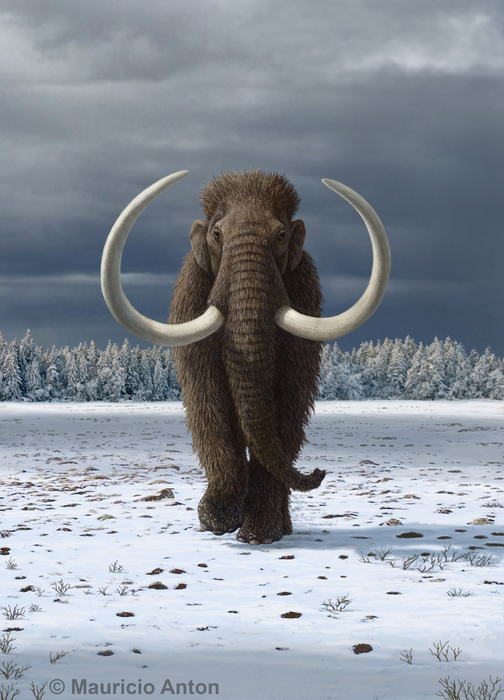
Woolly mammoth

Credit: Credit Mauricio Anton (https://mauricioanton.wordpress.com/)

New research shows that humans had a significant role in the extinction of woolly mammoths in Eurasia, occurring thousands of years later than previously thought.

An international team of scientists led by researchers from the University of Adelaide and University of Copenhagen, has revealed a 20,000-year pathway to extinction for the woolly mammoth.

“Our research shows that humans were a crucial and chronic driver of population declines of woolly mammoths, having an essential role in the timing and location of their extinction,” said lead author Associate Professor Damien Fordham from the University of Adelaide’s Environment Institute.

“Using computer models, fossils and ancient DNA we have identified the very mechanisms and threats that were integral in the initial decline and later extinction of the woolly mammoth.”

Signatures of past changes in the distribution and demography of woolly mammoths identified from fossils and ancient DNA show that people hastened the extinction of woolly mammoths by up to 4,000 years in some regions.

“We know that humans exploited woolly mammoths for meat, skins, bones and ivory. However, until now it has been difficult to disentangle the exact roles that climate warming and human hunting had on its extinction,” said Associate Professor Fordham.

The study also shows that woolly mammoths are likely to have survived in the Arctic for thousands of years longer than previously thought, existing in small areas of habitat with suitable climatic conditions and low densities of humans.

“Our finding of long-term persistence in Eurasia independently confirms recently published environmental DNA evidence that shows that woolly mammoths were roaming around Siberia 5,000 years ago,” said Associate Professor Jeremey Austin from the University of Adelaide’s Australian Centre for Ancient DNA.

Associate Professor David Nogues-Bravo from the University of Copenhagen was a co-author of the study which is published in the journal Ecology Letters.

“Our analyses strengthens and better resolves the case for human impacts as a driver of population declines and range collapses of megafauna in Eurasia during the late Pleistocene,” he said.

“It also refutes a prevalent theory that climate change alone decimated woolly mammoth populations and that the role of humans was limited to hunters delivering the coup de grâce”.

“And shows that species extinctions are usually the result of complex interactions between threatening processes.”

The researchers emphasise that the pathway to extinction for the woolly mammoth was long and lasting, starting many millennia before the final extinction event.


Journal

Ecology Letters

DOI

10.1111/ele.13911

Method of Research

Computational simulation/modeling

Subject of Research

Animals

Article Title

Process-explicit models reveal pathway to extinction for woolly mammoth using pattern-oriented validation

Article Publication Date

5-Nov-2021

Share12Tweet8Share2ShareShareShare2

Related Posts

Viruses Develop Virulence in Mice Based on Genetics and Sex — Biology

Viruses Develop Virulence in Mice Based on Genetics and Sex

April 30, 2026
New Report Warns: Nature Loss Poses Catastrophic Risks — Biology

New Report Warns: Nature Loss Poses Catastrophic Risks

April 30, 2026

Kangaroos Reveal ‘Upside-Down’ Evolution in Australia

April 30, 2026

Study Reveals Evolution Has Reused the Same Genes for 120 Million Years

April 30, 2026

POPULAR NEWS

  • Research Indicates Potential Connection Between Prenatal Medication Exposure and Elevated Autism Risk

    830 shares
    Share 332 Tweet 208
  • New Study Reveals Plants Can Detect the Sound of Rain

    711 shares
    Share 284 Tweet 178
  • Scientists Investigate Possible Connection Between COVID-19 and Increased Lung Cancer Risk

    67 shares
    Share 27 Tweet 17
  • Salmonella Haem Blocks Macrophages, Boosts Infection

    60 shares
    Share 24 Tweet 15

About

We bring you the latest biotechnology news from best research centers and universities around the world. Check our website.

Follow us

Recent News

Mount Sinai Experts Discuss PCOS and Disparities in Hypertensive Pregnancy Disorders at 2026 ACOG Annual Meeting

Amentoflavone’s Impact on TNF-α Activated Endothelium

Scientists Discover Method to Reinvigorate Tired Immune Cells in the Fight Against Tumors

Subscribe to Blog via Email

Enter your email address to subscribe to this blog and receive notifications of new posts by email.

Join 82 other subscribers
  • Contact Us

Bioengineer.org © Copyright 2023 All Rights Reserved.

Welcome Back!

Login to your account below

Forgotten Password?

Retrieve your password

Please enter your username or email address to reset your password.

Log In
No Result
View All Result
  • Homepages
    • Home Page 1
    • Home Page 2
  • News
  • National
  • Business
  • Health
  • Lifestyle
  • Science

Bioengineer.org © Copyright 2023 All Rights Reserved.