The therapeutic benefit to patients receiving mesenchymal stromal cell (MSC) therapy is not because the injected cells remain viable, but because of cell death, researchers at the Monash Biomedicine Discovery Institute (BDI) have found.
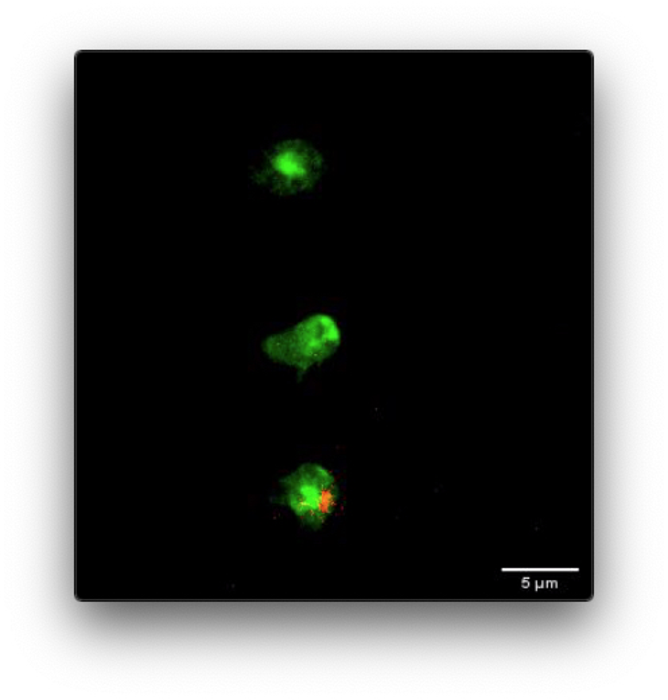
Credit: (C) Professor Tracy Heng
The therapeutic benefit to patients receiving mesenchymal stromal cell (MSC) therapy is not because the injected cells remain viable, but because of cell death, researchers at the Monash Biomedicine Discovery Institute (BDI) have found.
In recent years, significant efforts have been made to develop stem cell-based therapies for difficult-to-treat diseases. MSC therapy is regenerative cell-based therapy for the treatment of these diseases and has shown great promise.
The findings of the BDI study show the therapeutic effects of MSCs are due to the recipient’s immune cells responding to the MSCs undergoing a specific type of cell death, called apoptosis, after injection that brings about anti-inflammatory effects.
Apoptosis is not simply cell death. It is a regulated process that ensures dying cells do not activate unwanted inflammation but instead promote an anti-inflammatory environment.
These apoptotic cells produce extracellular factors that have anti-inflammatory or therapeutic effects which may be possible to harness as alternatives to cell-based therapies.
Led by Associate Professor Tracy Heng, the study found that by disabling apoptosis in MSCs, the cells became ineffective in mitigating disease in models of lung inflammation and multiple sclerosis, diseases in which MSCs are currently being trialled as therapeutic agents.
The findings have now been published in Nature Communications.
Associate Professor Heng says the selection of MSC batches for clinical use in therapeutic cell manufacturing has so far relied on laboratory evaluations that measure the secretion of bioactive factors or expression of certain cell markers by viable MSCs.
“By better understanding how immune cells respond to dying MSCs, we may be able to develop new therapeutic strategies that directly target the responding immune cell population to bring about anti-inflammatory effects,” Associate Professor Heng said.
Cell therapies utilising MSCs have shown promising results in multiple diseases, ranging from inflammatory conditions to autoimmunity and organ transplantation. It is thought that MSCs secrete numerous soluble factors that contribute to their therapeutic effects. But this mode of action does not fit with the finding that injected MSCs do not persist in the body.
“Knowing how MSC therapy works is important in designing treatment protocols that improve disease outcomes,” Associate Professor Heng said.
Read the full paper in Nature Communications titled: Mesenchymal stromal cell apoptosis is required for their therapeutic function.
DOI: 10.1038/s41467-021-26834-3
For media enquiries please contact:
T: +61 (0) 425 725 836
For more Monash media stories, visit our news and events site
About the Monash Biomedicine Discovery Institute at Monash University
Committed to making the discoveries that will relieve the future burden of disease, the newly established Monash Biomedicine Discovery Institute at Monash University brings together more than 120 internationally renowned research teams. Spanning six discovery programs across Cancer, Cardiovascular Disease, Development and Stem Cells, Infection and Immunity, Metabolism, Diabetes and Obesity, and Neuroscience, Monash BDI is one of the largest biomedical research institutes in Australia. Our researchers are supported by world-class technology and infrastructure, and partner with industry, clinicians and researchers internationally to enhance lives through discovery.
Journal
Nature Communications
DOI
10.1038/s41467-021-26834-3
Method of Research
Experimental study
Article Title
Mesenchymal stromal cell apoptosis is required for their therapeutic function.
Article Publication Date
11-Nov-2021