Torquetenovirus (TTV) is one of the viruses most frequently found in the human organism. It is also common in monkeys and domestic animals. Its presence has not been associated with any known disease, but its excessive replication is a sign that something is wrong with the immune system.
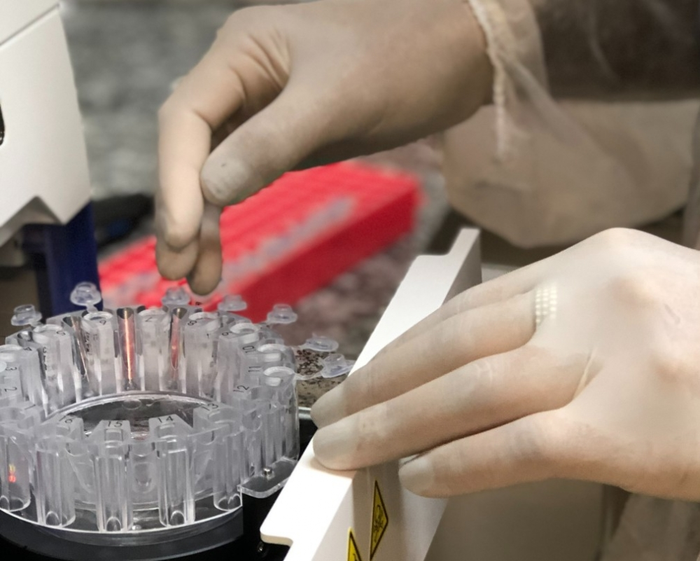
Credit: IMT-USP
Torquetenovirus (TTV) is one of the viruses most frequently found in the human organism. It is also common in monkeys and domestic animals. Its presence has not been associated with any known disease, but its excessive replication is a sign that something is wrong with the immune system.
The correlation between high TTV load and immunosuppression has been used in medicine in certain contexts, such as monitoring transplant patients who take medication to prevent rejection of the transplanted organ. A study by researchers at the University of São Paulo (USP) in Brazil suggests that TTV load in people infected by SARS-CoV-2 can be used as a marker of COVID-19 severity and recovery. The findings are reported in an article in PLOS ONE.
“We used analyzed samples from 91 patients diagnosed with SARS-CoV-2 by RT-PCR, and from 126 people with flu symptoms who tested negative. We found TTV titer to be higher in subjects infected by the novel coronavirus. The higher the titer, the longer they remained sick. Symptoms disappeared as viral load decreased. In uninfected subjects, TTV titer remained stable throughout the symptomatic period,” said Maria Cássia Mendes-Correa, a professor at the Medical School (FM-USP) and first author of the article.
Mendes-Correa heads the Virology Laboratory (LIM52) at the Institute of Tropical Medicine (IMT-USP), where TTV has been analyzed for several years in a variety of contexts. The research line is led by Tania Regina Tozetto-Mendoza, a biologist and second author of the study just published.
“We’re studying TTV as a potential biomarker for certain clinical outcomes measured in different biological fluids,” Tozetto-Mendoza said.
The study was conducted under the aegis of the São Caetano Corona Program, an online platform established to organize remote monitoring of inhabitants of São Caetano do Sul (a city in metropolitan São Paulo) with symptoms of COVID-19 by healthcare workers, and home collection of samples for diagnosis. The program is an initiative of the Municipal University of São Caetano do Sul (USCS) in partnership with IMT-USP, the city government, and a startup called Modular Research System (MRS).
Analyzing samples from patients treated via this program, the IMT-USP researchers have investigated how elimination of SARS-CoV-2 varies over time in different body fluids, such as blood, urine and saliva. The research is supported by FAPESP.
“We then had the idea of analyzing TTV load in these samples in order to find out whether it correlated with COVID-19 severity. The results showed that TTV can indeed serve as a marker of the progression and outcome of this disease. The more symptomatic the patient, the higher the TTV load in the sample,” Mendes-Correa said.
All patients included in the study had mild or moderate COVID-19, she explained. TTV and SARS-CoV-2 viral loads were measured in saliva samples. According to the answers to a questionnaire, none of the participants had diseases that cause immunosuppression, such as cancer or HIV/AIDS.
“COVID-19 appears to lead to a degree of immunodepression by causing an immune system imbalance, and this favors replication of TTV,” Mendes-Correa said.
Support for diagnosis
The discovery has no direct clinical applications, but may in future contribute to improved COVID-19 diagnosis and prognosis. “We’re all looking for ways to obtain rapid and accurate diagnosis,” Mendes-Correa said. “One of the possibilities is to develop a kit that doses several biomarkers of the disease at the same time and then assess the results with the aid of algorithms. Measuring TTV titer is one of several tests that could be included in these algorithms to support diagnosis. This is the direction medicine is going in.”
###
About São Paulo Research Foundation (FAPESP)
The São Paulo Research Foundation (FAPESP) is a public institution with the mission of supporting scientific research in all fields of knowledge by awarding scholarships, fellowships and grants to investigators linked with higher education and research institutions in the State of São Paulo, Brazil. FAPESP is aware that the very best research can only be done by working with the best researchers internationally. Therefore, it has established partnerships with funding agencies, higher education, private companies, and research organizations in other countries known for the quality of their research and has been encouraging scientists funded by its grants to further develop their international collaboration. You can learn more about FAPESP at http://www.fapesp.br/en and visit FAPESP news agency at http://www.agencia.fapesp.br/en to keep updated with the latest scientific breakthroughs FAPESP helps achieve through its many programs, awards and research centers. You may also subscribe to FAPESP news agency at http://agencia.fapesp.br/subscribe.
Journal
PLoS ONE
DOI
10.1371/journal.pone.0256357
Subject of Research
People
Article Title
Torquetenovirus in saliva: A potential biomarker for SARS-CoV-2 infection?
Article Publication Date
24-Aug-2021