• HOME
  • NEWS
  • EXPLORE
    • CAREER
      • Companies
      • Jobs
    • EVENTS
    • iGEM
      • News
      • Team
    • PHOTOS
    • VIDEO
    • WIKI
  • BLOG
  • COMMUNITY
    • FACEBOOK
    • INSTAGRAM
    • TWITTER
Saturday, February 7, 2026
BIOENGINEER.ORG
No Result
View All Result
  • Login
  • HOME
  • NEWS
  • EXPLORE
    • CAREER
      • Companies
      • Jobs
        • Lecturer
        • PhD Studentship
        • Postdoc
        • Research Assistant
    • EVENTS
    • iGEM
      • News
      • Team
    • PHOTOS
    • VIDEO
    • WIKI
  • BLOG
  • COMMUNITY
    • FACEBOOK
    • INSTAGRAM
    • TWITTER
  • HOME
  • NEWS
  • EXPLORE
    • CAREER
      • Companies
      • Jobs
        • Lecturer
        • PhD Studentship
        • Postdoc
        • Research Assistant
    • EVENTS
    • iGEM
      • News
      • Team
    • PHOTOS
    • VIDEO
    • WIKI
  • BLOG
  • COMMUNITY
    • FACEBOOK
    • INSTAGRAM
    • TWITTER
No Result
View All Result
Bioengineer.org
No Result
View All Result
Home NEWS Science News Chemistry

Reduced vs. standard CT dose for lung nodules in children, young adults with cancer

Bioengineer by Bioengineer
July 9, 2021
in Chemistry
Reading Time: 2 mins read
0
IMAGE
Share on FacebookShare on TwitterShare on LinkedinShare on RedditShare on Telegram

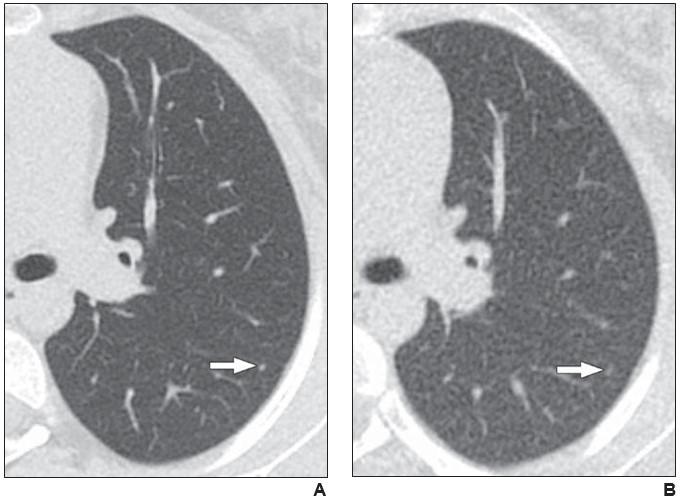
Reduced-dose CT depicts greater than 90% of lung nodules in children and young adults with cancer, identifying the presence of nodules with moderate sensitivity and high specificity
IMAGE

Credit: American Roentgen Ray Society (ARRS), American Journal of Roentgenology (AJR)

Leesburg, VA, July 9, 2021–According to ARRS’ American Journal of Roentgenology (AJR), reduced-dose CT depicts greater than 90% of lung nodules in children and young adults with cancer, identifying the presence of nodules with moderate sensitivity and high specificity.

“CT performed at 0.3 mSv mean effective dose has acceptable diagnostic performance for lung nodule detection in children and young adults and has the potential to reduce patient dose or expand CT utilization (e.g., to replace radiography in screening or monitoring protocols),” wrote corresponding author Andrew T. Trout of Cincinnati Children’s Hospital Medical Center in Ohio.

Trout and colleagues’ prospective study enrolled patients 4-21 years old with known or suspected malignancy who were undergoing clinically indicated chest CT. Study participants underwent an additional investigational reduced-dose chest CT in the same imaging encounter. Three independent radiologists blind-reviewed the separated and deidentified CT examinations, with one radiologist performing a subsequent review to match nodules between the standard- and reduced-dose examinations.

Among the 78 patients (44 male, 34 female; mean age, 15.2 years) with cancer who underwent standard-dose chest CT and reduced-dose chest CT (mean effective dose 0.3 ± 0.1 mSv, representing 83% dose reduction) in the same imaging encounter, the reduced-dose protocol detected greater than 90% of lung nodules identified on the standard-dose examination.

Noting that no prior study has directly compared clinical to reduced-dose CT for detection of lung nodules in children, “reduced-dose CT may be a feasible option for detection of pulmonary metastatic disease in situations in which radiation dose is a primary consideration or as an option to reduce dose in patients undergoing serial chest CT to monitor known disease,” the authors of this AJR article concluded.

###

Founded in 1900, the American Roentgen Ray Society (ARRS) is the first and oldest radiological society in North America, dedicated to the advancement of medicine through the profession of radiology and its allied sciences. An international forum for progress in medical imaging since the discovery of the x-ray, ARRS maintains its mission of improving health through a community committed to advancing knowledge and skills with an annual scientific meeting, monthly publication of the peer-reviewed American Journal of Roentgenology (AJR), quarterly issues of InPractice magazine, AJR Live Webinars and Podcasts, topical symposia, print and online educational materials, as well as awarding scholarships via The Roentgen Fund®.

Media Contact
Logan K. Young
[email protected]

Related Journal Article

http://dx.doi.org/10.2214/AJR.21.26183

Tags: cancerDiagnosticsInternal MedicineMedicine/HealthPediatricsPharmaceutical ChemistryPublic HealthPulmonary/Respiratory Medicine
Share13Tweet8Share2ShareShareShare2

Related Posts

blank

Breakthrough in Environmental Cleanup: Scientists Develop Solar-Activated Biochar for Faster Remediation

February 7, 2026
blank

Cutting Costs: Making Hydrogen Fuel Cells More Affordable

February 6, 2026

Scientists Develop Hand-Held “Levitating” Time Crystals

February 6, 2026

Observing a Key Green-Energy Catalyst Dissolve Atom by Atom

February 6, 2026
Please login to join discussion

POPULAR NEWS

  • Robotic Ureteral Reconstruction: A Novel Approach

    Robotic Ureteral Reconstruction: A Novel Approach

    82 shares
    Share 33 Tweet 21
  • Digital Privacy: Health Data Control in Incarceration

    63 shares
    Share 25 Tweet 16
  • Study Reveals Lipid Accumulation in ME/CFS Cells

    57 shares
    Share 23 Tweet 14
  • Breakthrough in RNA Research Accelerates Medical Innovations Timeline

    53 shares
    Share 21 Tweet 13

About

We bring you the latest biotechnology news from best research centers and universities around the world. Check our website.

Follow us

Recent News

Decoding Prostate Cancer Origins via snFLARE-seq, mxFRIZNGRND

Digital Health Perspectives from Baltic Sea Experts

Florida Cane Toad: Complex Spread and Selective Evolution

Subscribe to Blog via Email

Enter your email address to subscribe to this blog and receive notifications of new posts by email.

Join 73 other subscribers
  • Contact Us

Bioengineer.org © Copyright 2023 All Rights Reserved.

Welcome Back!

Login to your account below

Forgotten Password?

Retrieve your password

Please enter your username or email address to reset your password.

Log In
No Result
View All Result
  • Homepages
    • Home Page 1
    • Home Page 2
  • News
  • National
  • Business
  • Health
  • Lifestyle
  • Science

Bioengineer.org © Copyright 2023 All Rights Reserved.