• HOME
  • NEWS
  • EXPLORE
    • CAREER
      • Companies
      • Jobs
    • EVENTS
    • iGEM
      • News
      • Team
    • PHOTOS
    • VIDEO
    • WIKI
  • BLOG
  • COMMUNITY
    • FACEBOOK
    • INSTAGRAM
    • TWITTER
Saturday, March 28, 2026
BIOENGINEER.ORG
No Result
View All Result
  • Login
  • HOME
  • NEWS
  • EXPLORE
    • CAREER
      • Companies
      • Jobs
        • Lecturer
        • PhD Studentship
        • Postdoc
        • Research Assistant
    • EVENTS
    • iGEM
      • News
      • Team
    • PHOTOS
    • VIDEO
    • WIKI
  • BLOG
  • COMMUNITY
    • FACEBOOK
    • INSTAGRAM
    • TWITTER
  • HOME
  • NEWS
  • EXPLORE
    • CAREER
      • Companies
      • Jobs
        • Lecturer
        • PhD Studentship
        • Postdoc
        • Research Assistant
    • EVENTS
    • iGEM
      • News
      • Team
    • PHOTOS
    • VIDEO
    • WIKI
  • BLOG
  • COMMUNITY
    • FACEBOOK
    • INSTAGRAM
    • TWITTER
No Result
View All Result
Bioengineer.org
No Result
View All Result
Home NEWS Science News

Light pollution has complex effects on animal vision

Bioengineer by Bioengineer
July 6, 2021
in Science News
Reading Time: 3 mins read
0
IMAGE
Share on FacebookShare on TwitterShare on LinkedinShare on RedditShare on Telegram

IMAGE

Credit: Jolyon Troscianko

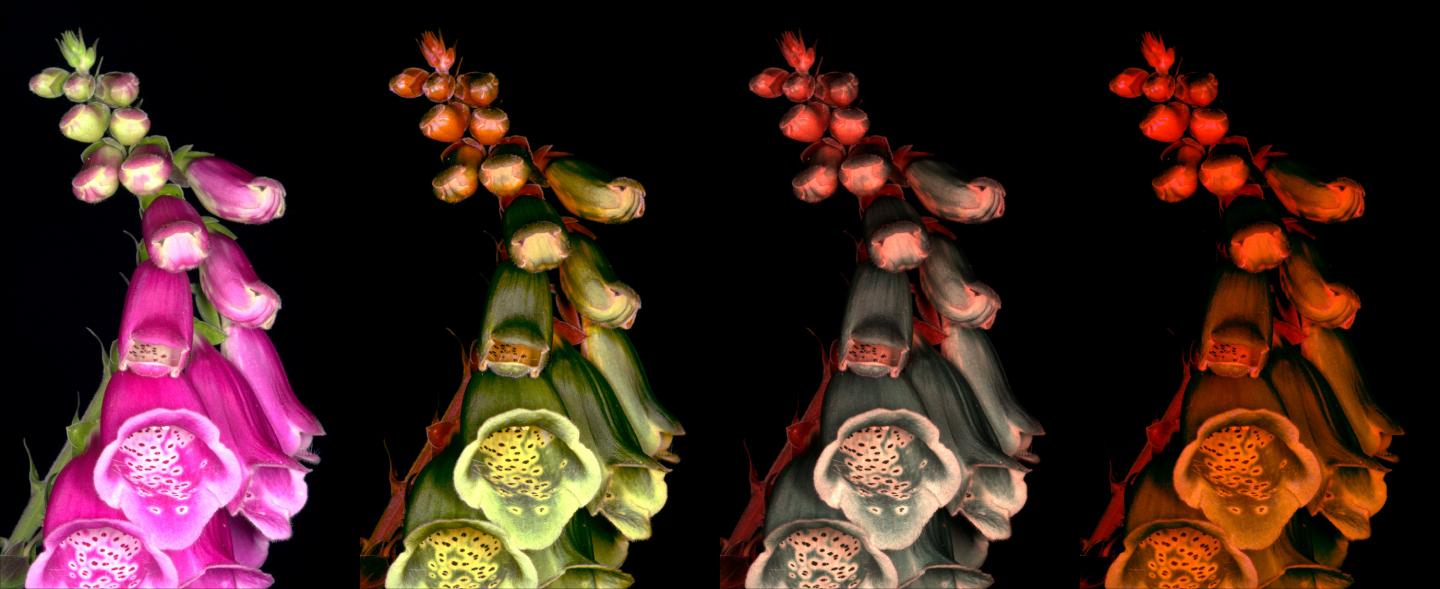
Changes in the colour and intensity of light pollution over the past few decades result in complex and unpredictable effects on animal vision, new research shows.

Insect attraction to light is a well-known phenomenon, but artificial lighting can also have more subtle consequences for species that rely on night-time vision for their behaviour.

To explore these effects, University of Exeter researchers examined the impact of more than 20 kinds of lighting on the vision of moths, and birds that eat them.

The study found that elephant hawkmoth vision was enhanced by some types of lighting and disrupted by others, while the vision of birds that hunt moths was improved by almost any lighting.

Night-time lighting is increasing rapidly worldwide, and has changed dramatically in the last 20 years, as amber (low-pressure sodium) streetlights are replaced with a diverse range of modern lights such as LEDs.

“Modern broad-spectrum lighting allows humans to see colour more easily at night,” said Dr Jolyon Troscianko, of the Centre for Ecology and Conservation on Exeter’s Penryn Campus in Cornwall.

“However, it is difficult to know how these modern light sources affect the vision of other animals.

“Hawkmoth eyes are sensitive to blue, green and ultraviolet, and they use this colour vision to help find flowers just like bees, but at incredibly low light levels – even under starlight.

“Moths are also vitally important pollinators – accounting for a similar proportion of pollination as bees – so we urgently need to investigate how lighting affects them.

“We used animal vision modelling to calculate the ability of moths to see flower colours, and of birds to see camouflaged moths under a wide range of natural and artificial lighting.

“Artificial lights designed for human vision lack the blue and ultraviolet ranges that are key to moth colour vision, and under many conditions will block the moth’s ability to see any colours at all.

“This could make it more difficult for them to find and pollinate wildflowers, and for them to find suitable spots to camouflage them from predators.

“Conversely, bird vision is much more robust, meaning artificial light will help them to find camouflaged moth prey, and will allow them to hunt later into the evening and earlier in the morning.”

The study finds that phosphor converted amber LED lighting – often suggested to be less harmful to nocturnal insects – has unpredictable consequences for insect vision depending on distance from the light source and the colour of the objects viewed.

White lights (with a greater blue component), allow for more natural colour vision in moths, but these light sources are known to be harmful for other species.

Moth numbers are declining across Europe, but this is particularly true of nocturnal species, with growing evidence for a link with light pollution.

The researchers call for a “nuanced approach” to lighting, beyond general efforts to limit the amount and intensity of light where possible.

###

The study was funded by the Natural Environment Research Council.

The paper, published in the journal Nature Communications, is entitled: “Artificial nighttime lighting impacts visual ecology links between flowers, pollinators and predators.”

Media Contact
Alex Morrison
[email protected]

Related Journal Article

http://dx.doi.org/10.1038/s41467-021-24394-0

Tags: BiodiversityBiologyEcology/EnvironmentEvolutionPlant SciencesPollution/RemediationPopulation BiologyZoology/Veterinary Science
Share13Tweet8Share2ShareShareShare2

Related Posts

Cutaneous Lesion Location: Key to Head Injury Risk?

March 27, 2026
Biochar Boosts Forest Resilience Against Acid Rain by Restoring Essential Soil Nitrogen

Biochar Boosts Forest Resilience Against Acid Rain by Restoring Essential Soil Nitrogen

March 27, 2026

Two Salk Scientists Honored as 2025 AAAS Fellows

March 27, 2026

Starburst Winds Drain Supernova Energy Quickly

March 26, 2026
Please login to join discussion

POPULAR NEWS

  • blank

    Revolutionary AI Model Enhances Precision in Detecting Food Contamination

    96 shares
    Share 38 Tweet 24
  • Imagine a Social Media Feed That Challenges Your Views Instead of Reinforcing Them

    1004 shares
    Share 397 Tweet 248
  • Uncovering Functions of Cavernous Malformation Proteins in Organoids

    54 shares
    Share 22 Tweet 14
  • Promising Outcomes from First Clinical Trials of Gene Regulation in Epilepsy

    51 shares
    Share 20 Tweet 13

About

We bring you the latest biotechnology news from best research centers and universities around the world. Check our website.

Follow us

Recent News

In-Sensor Cryptography Links Physical Process to Digital Identity

Can Psychosocial Factors Influence Cancer Risk?

Depression Factors in Elderly: Pre vs. Post-COVID Analysis

Subscribe to Blog via Email

Enter your email address to subscribe to this blog and receive notifications of new posts by email.

Join 78 other subscribers
  • Contact Us

Bioengineer.org © Copyright 2023 All Rights Reserved.

Welcome Back!

Login to your account below

Forgotten Password?

Retrieve your password

Please enter your username or email address to reset your password.

Log In
No Result
View All Result
  • Homepages
    • Home Page 1
    • Home Page 2
  • News
  • National
  • Business
  • Health
  • Lifestyle
  • Science

Bioengineer.org © Copyright 2023 All Rights Reserved.