• HOME
  • NEWS
  • EXPLORE
    • CAREER
      • Companies
      • Jobs
    • EVENTS
    • iGEM
      • News
      • Team
    • PHOTOS
    • VIDEO
    • WIKI
  • BLOG
  • COMMUNITY
    • FACEBOOK
    • INSTAGRAM
    • TWITTER
Thursday, February 5, 2026
BIOENGINEER.ORG
No Result
View All Result
  • Login
  • HOME
  • NEWS
  • EXPLORE
    • CAREER
      • Companies
      • Jobs
        • Lecturer
        • PhD Studentship
        • Postdoc
        • Research Assistant
    • EVENTS
    • iGEM
      • News
      • Team
    • PHOTOS
    • VIDEO
    • WIKI
  • BLOG
  • COMMUNITY
    • FACEBOOK
    • INSTAGRAM
    • TWITTER
  • HOME
  • NEWS
  • EXPLORE
    • CAREER
      • Companies
      • Jobs
        • Lecturer
        • PhD Studentship
        • Postdoc
        • Research Assistant
    • EVENTS
    • iGEM
      • News
      • Team
    • PHOTOS
    • VIDEO
    • WIKI
  • BLOG
  • COMMUNITY
    • FACEBOOK
    • INSTAGRAM
    • TWITTER
No Result
View All Result
Bioengineer.org
No Result
View All Result
Home NEWS Science News

Scientists mine the rich seam of body wearable motion sensors

Bioengineer by Bioengineer
September 6, 2025
in Science News
Reading Time: 2 mins read
0
IMAGE
Share on FacebookShare on TwitterShare on LinkedinShare on RedditShare on Telegram

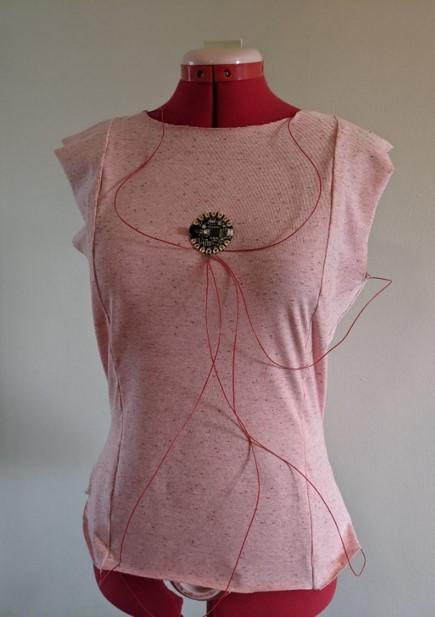
A new study from the University of Bath in the UK finds that conductive seams, when strategically placed in clothing, can accurately track body motion

When positioned strategically, garment seams sewn with conductive yarn can be used to accurately track body motion, according to computer scientists at the University of Bath in the UK. Best of all, these charged seams are able to respond to subtle movements that aren’t picked up by popular fitness trackers, such as watches and wristbands.

In a new study, the Bath researchers found that clothing made with conductive seams can be analysed to identify the wearer’s movements.

Groups of scientists have been creating flexible, textile sensors for garments for some time, but the Bath project is the first where researchers have experimented with the location and concentration of conductive seams. They found that where seams are placed on a garment, and the number of seams that are added, are important considerations in the design of a movement-tracking smart garment.

Ms Ruston said: “There’s great potential to exploit the wearing of clothing and tech – a lot of people are experimenting with e-textiles, but we don’t have a coherent understanding between technologists and fashion designers, and we need to link these groups up so we can come up with the best ideas for embedding tech into clothing.”

The yarn used by Ms Ruston and her team comprises a conductive core that is a hybrid metal-polymer resistive material intended for stretch and pressure sensing. Once incorporated into a garment’s seam, it is activated at low voltages. The resistance fluctuates as body movement varies the tension across the seams.

In the study, the seams were connected to a microcontroller, and then a computer, where the voltage signal was recorded.

Professor Mike Fraser, co-author and head of Computer Science, said: “Our work provides implications for sensing-driven clothing design. As opportunities for novel clothing functionality emerge, we believe intelligent seam placement will play a key role in influencing design and manufacturing processes. Ultimately, this could influence what is considered fashionable.”

###

Video explainer:
More than it seams: garment stitching in wearable e-textiles

Media Contact
Vittoria D’Alessio
[email protected]

Original Source

https://www.bath.ac.uk/announcements/scientists-mine-the-rich-seam-of-body-wearable-motion-sensors/

Related Journal Article

http://dx.doi.org/10.1145/3461778.3462103

Tags: Computer ScienceDiet/Body WeightGerontologyMedicine/HealthRehabilitation/Prosthetics/Plastic SurgeryResearch/DevelopmentSoftware EngineeringSports/RecreationTechnology/Engineering/Computer Science
Share12Tweet8Share2ShareShareShare2

Related Posts

Human ILC1 Cells Fight Leukemia Stem Growth

February 5, 2026

Gut Microbe–Produced Butyrate Boosts Immune Cell Activation to Improve Vaccine Effectiveness

February 5, 2026

Mindless Marvels: Insights Robots Can Gain from Sea Stars

February 5, 2026

Muscle Synergy Adjustments Aid Stability in Older Adults

February 5, 2026
Please login to join discussion

POPULAR NEWS

  • Robotic Ureteral Reconstruction: A Novel Approach

    Robotic Ureteral Reconstruction: A Novel Approach

    81 shares
    Share 32 Tweet 20
  • Digital Privacy: Health Data Control in Incarceration

    63 shares
    Share 25 Tweet 16
  • Study Reveals Lipid Accumulation in ME/CFS Cells

    57 shares
    Share 23 Tweet 14
  • Breakthrough in RNA Research Accelerates Medical Innovations Timeline

    53 shares
    Share 21 Tweet 13

About

We bring you the latest biotechnology news from best research centers and universities around the world. Check our website.

Follow us

Recent News

Human ILC1 Cells Fight Leukemia Stem Growth

Gut Microbe–Produced Butyrate Boosts Immune Cell Activation to Improve Vaccine Effectiveness

Mindless Marvels: Insights Robots Can Gain from Sea Stars

Subscribe to Blog via Email

Enter your email address to subscribe to this blog and receive notifications of new posts by email.

Join 73 other subscribers
  • Contact Us

Bioengineer.org © Copyright 2023 All Rights Reserved.

Welcome Back!

Login to your account below

Forgotten Password?

Retrieve your password

Please enter your username or email address to reset your password.

Log In
No Result
View All Result
  • Homepages
    • Home Page 1
    • Home Page 2
  • News
  • National
  • Business
  • Health
  • Lifestyle
  • Science

Bioengineer.org © Copyright 2023 All Rights Reserved.