• HOME
  • NEWS
  • EXPLORE
    • CAREER
      • Companies
      • Jobs
    • EVENTS
    • iGEM
      • News
      • Team
    • PHOTOS
    • VIDEO
    • WIKI
  • BLOG
  • COMMUNITY
    • FACEBOOK
    • INSTAGRAM
    • TWITTER
Tuesday, May 12, 2026
BIOENGINEER.ORG
No Result
View All Result
  • Login
  • HOME
  • NEWS
  • EXPLORE
    • CAREER
      • Companies
      • Jobs
        • Lecturer
        • PhD Studentship
        • Postdoc
        • Research Assistant
    • EVENTS
    • iGEM
      • News
      • Team
    • PHOTOS
    • VIDEO
    • WIKI
  • BLOG
  • COMMUNITY
    • FACEBOOK
    • INSTAGRAM
    • TWITTER
  • HOME
  • NEWS
  • EXPLORE
    • CAREER
      • Companies
      • Jobs
        • Lecturer
        • PhD Studentship
        • Postdoc
        • Research Assistant
    • EVENTS
    • iGEM
      • News
      • Team
    • PHOTOS
    • VIDEO
    • WIKI
  • BLOG
  • COMMUNITY
    • FACEBOOK
    • INSTAGRAM
    • TWITTER
No Result
View All Result
Bioengineer.org
No Result
View All Result
Home NEWS Science News Biology

Fossil research shows woodlice cousins roamed Ireland 360 million years ago

Bioengineer by Bioengineer
September 6, 2025
in Biology
Reading Time: 2 mins read
0
IMAGE
Share on FacebookShare on TwitterShare on LinkedinShare on RedditShare on Telegram

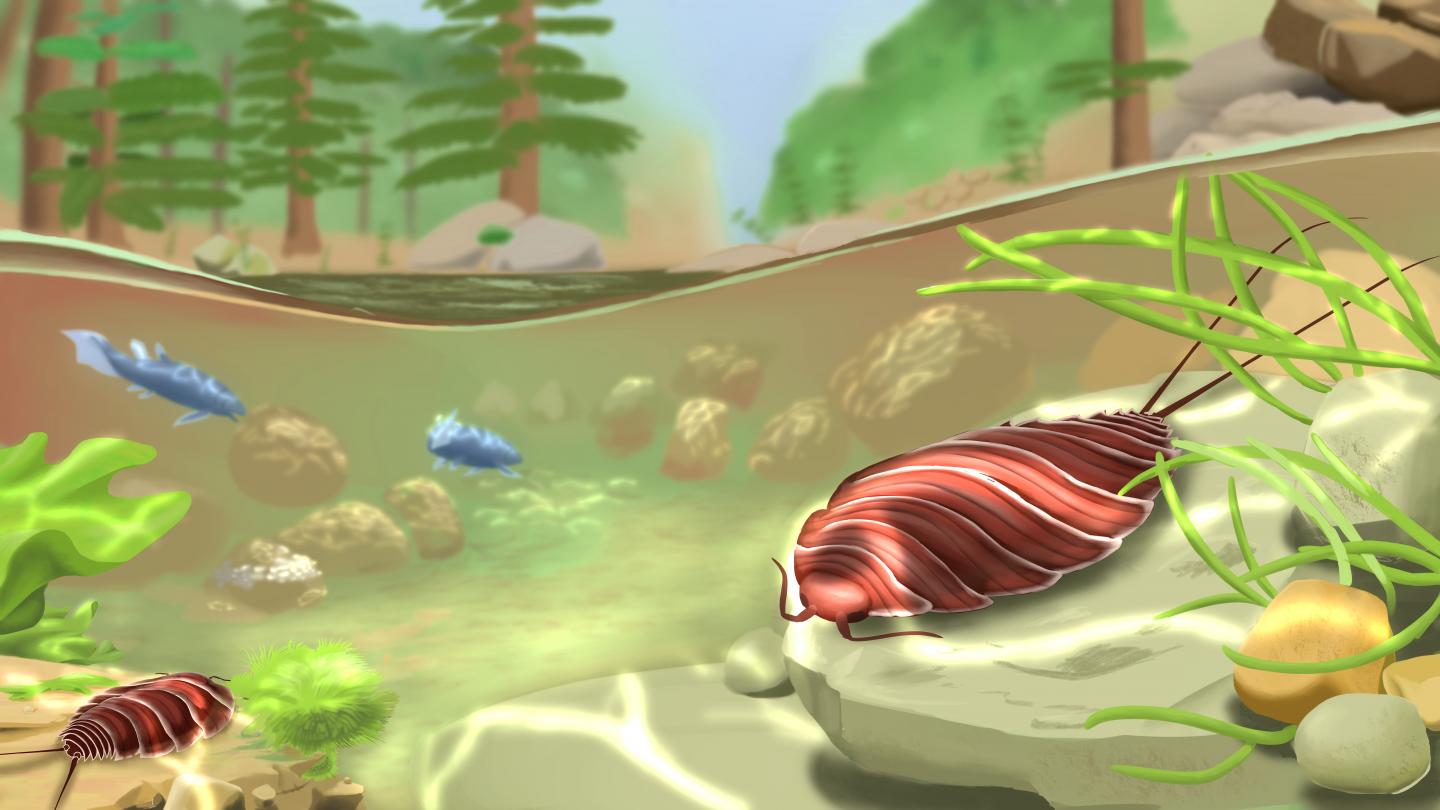
New techniques used to recreate the image of the Oxyuropoda – the cousin of the garden woodlice

The old cousins of the common woodlice were crawling on Irish land as long as 360 million years ago, according to new analysis of a fossil found in Kilkenny.

The research, published today (00.01 Wednesday 16 June) in the science journal Biology Letters, used state-of-the-art modern imaging technology to create a new picture of the Oxyuropoda – a land-based creature larger than the modern woodlice – using a fossil found in Kiltorcan, Co Kilkenny in 1908.

Lead researcher Dr Ninon Robin, a postdoctoral researcher at University College Cork’s (UCC) School of Biological, Earth and Environmental Sciences said that their work advances science’s understanding of when land-dwelling species of crustaceans roamed the earth, and what they looked like.

Dr Robin said:

“Woodlice, and their relatives form a group of crustaceans named peracarids that are as species-rich as the more famous group comprising krill, crabs and shrimps named eucarids. From their ancestral marine habitat some peracarids have, unlike eucarids, evolved fully terrestrial ground-crawling ecologies, inhabiting even commonly our gardens, for example pillbugs and sowbugs, which are very common in Ireland.

“Using new modern imaging techniques, we determined that Oxyuropoda was actually a peracarid crustacean, even the oldest known one; which supports the theory that woodlice cousins were already crawling on Irish lands at that very early time, 360 million years ago.

“From previous genomic and molecular studies, scientists had suggested that this group ofcrustaceans must have appeared around 450 million years ago. However their fossils were very rare in the Paleozoic era, which was 560-250 million years ago, so we had no idea at all how they looked at that time, nor if they were marine or yet terrestrial.

“Our work is an advance in the field of the evolution of invertebrate animals, especially crustaceans, and in our knowledge of the timing of their colonisation of land,” she said.

The fossil that formed the basis of this research was found in 1908 in a quarry at Kiltorcan, Co Kilkenny. The site has been internationally known since the mid 19th-century as the location of a number of plant, freshwater bivalve, fish, and crustacean fossils.

###

The international team behind this research includes Dr David Jarvis, also of UCC, and scientists from University of Lausanne in Switzerland, Harvard University in the US, and Naturalis Biodiversity Center of Leiden the Netherlands.

Media Contact
Dr Ninon Robin
[email protected]

Related Journal Article

http://dx.doi.org/10.1098/rsbl.2021.0226

Tags: BiologyEcology/EnvironmentEvolutionGeology/SoilHistoryMolecular BiologyPaleontology
Share13Tweet8Share2ShareShareShare2

Related Posts

From Complexity to Clarity: Unraveling the “Topological Laws” Governing Cell Death — Biology

From Complexity to Clarity: Unraveling the “Topological Laws” Governing Cell Death

May 11, 2026
New Classification Framework Identifies Tumor-Associated Bacterial Effectors as Crucial Drivers of Tumor Biology and Immune Response — Biology

New Classification Framework Identifies Tumor-Associated Bacterial Effectors as Crucial Drivers of Tumor Biology and Immune Response

May 11, 2026

HIV-1 Strains Reveal Varied Paths to Antibody Escape

May 11, 2026

CRISPRi Screening Identifies Fungal-Specific Drug Targets

May 11, 2026
Please login to join discussion

POPULAR NEWS

  • Research Indicates Potential Connection Between Prenatal Medication Exposure and Elevated Autism Risk

    841 shares
    Share 336 Tweet 210
  • New Study Reveals Plants Can Detect the Sound of Rain

    728 shares
    Share 290 Tweet 182
  • Salmonella Haem Blocks Macrophages, Boosts Infection

    62 shares
    Share 25 Tweet 16
  • Breastmilk Balances E. coli and Beneficial Bacteria in Infant Gut Microbiomes

    57 shares
    Share 23 Tweet 14

About

We bring you the latest biotechnology news from best research centers and universities around the world. Check our website.

Follow us

Recent News

Humans and Zebra Finches Share Similar Speech Learning Techniques #ASA190

New Study Uncovers How Fungal Parasites Attack Strawberries and Raspberries

City of Hope Researchers to Present Groundbreaking Immunotherapy and Precision Medicine Advances Across Multiple Cancer Types at ASCO 2026

Subscribe to Blog via Email

Enter your email address to subscribe to this blog and receive notifications of new posts by email.

Join 82 other subscribers
  • Contact Us

Bioengineer.org © Copyright 2023 All Rights Reserved.

Welcome Back!

Login to your account below

Forgotten Password?

Retrieve your password

Please enter your username or email address to reset your password.

Log In
No Result
View All Result
  • Homepages
    • Home Page 1
    • Home Page 2
  • News
  • National
  • Business
  • Health
  • Lifestyle
  • Science

Bioengineer.org © Copyright 2023 All Rights Reserved.