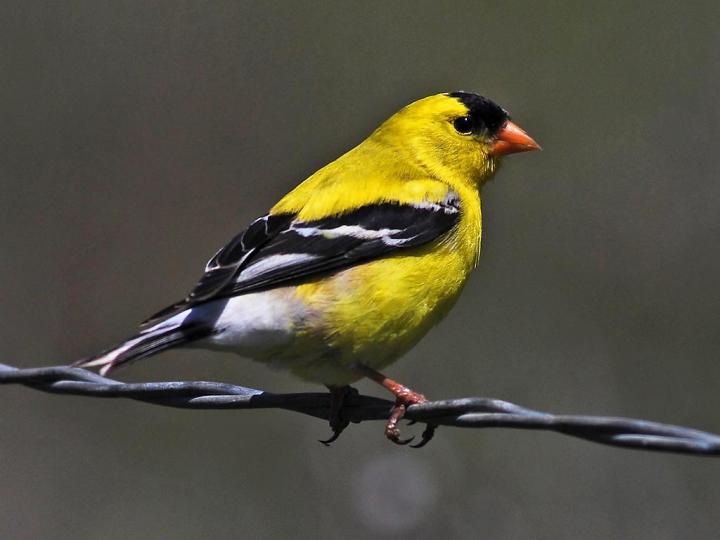
A new study reports that birds across the continental US tend to avoid backyard feeders in louder areas; when light and noise pollution were both present, even more species stayed away
A new study reports that birds across the continental U.S. tend to avoid backyard feeders in louder areas. When light and noise pollution were both present, even more species stayed away.
The study, published in Global Change Biology, used data from the community science program Program FeederWatch. The research team analyzed more than 3.4 million observations of 140 different bird species across the continental U.S.
“Broadly speaking, we are just starting to dive into the consequences of light and noise for animals,” said Ashley Wilson, a graduate student at California Polytechnic State University who led the study. “Most studies focus on a single species’ responses to noise or light pollution. As such, our study involving 140 species provides the most comprehensive assessment of how noise and light influence which birds we see in our backyards and neighborhoods.”
Common bird species such as American goldfinches, cedar waxwings, and white-breasted nuthatches all avoided areas with excessive noise. In areas where light and noise pollution both occurred, many additional species avoided backyard feeders. While certain species may be able to cope with one pollutant, the addition of a second might overwhelm their coping abilities.
“These responses would have been overlooked completely if we only focused on the influence of light or noise individually rather than considering the total exposure to both sensory pollutants,” Wilson said. “Our overall influence on sensitive species could be more widespread than we originally thought.”
Researchers also found that noise and light pollution affect birds differently across distinct environments. For example, birds that live in forests tend to be more sensitive to noise and light than those that live in grasslands.
Seasonal patterns and variation in the length of night also influenced how species respond to light pollution. For example, during longer nights nearly 50 species increased in abundance with light pollution.
“That many species are more abundant in lit areas when nights are longer could be because winter nights present challenging conditions, especially farther North where temperatures drop below freezing and birds use a lot of energy to stay warm and survive,” said Cal Poly biology professor and senior author Clint Francis. “It is possible that light at night provides the opportunity to stay active and continue eating into the night time hours. Still, exposure to light could create problems that we could not measure in this study, like altered sleep patterns and increased stress.”
Globally, light and noise are continuing to spread each year. These pollutants not only impact urban areas but also are starting to leak into protected natural areas.
“If birds cannot tolerate the increased intensity and presence of these pollutants, then we may end up seeing fewer species in brightly lit and loud places, even in protected areas” said Wilson.
Further research is needed to learn how to manage these pollutants, added Wilson. How species respond to noise and light may also be influenced by a species’ innate ability to detect and comprehend sensory cues. Additionally, studying light and noise together may allow scientists to identify sensory danger zones that have the highest risk of impacting vulnerable and rare species.
###
The research was funded by NASA and the Alexander von Humboldt Foundation.
Media Contact
Clinton Francis
[email protected]
Related Journal Article
http://dx.