• HOME
  • NEWS
  • EXPLORE
    • CAREER
      • Companies
      • Jobs
    • EVENTS
    • iGEM
      • News
      • Team
    • PHOTOS
    • VIDEO
    • WIKI
  • BLOG
  • COMMUNITY
    • FACEBOOK
    • INSTAGRAM
    • TWITTER
Sunday, May 10, 2026
BIOENGINEER.ORG
No Result
View All Result
  • Login
  • HOME
  • NEWS
  • EXPLORE
    • CAREER
      • Companies
      • Jobs
        • Lecturer
        • PhD Studentship
        • Postdoc
        • Research Assistant
    • EVENTS
    • iGEM
      • News
      • Team
    • PHOTOS
    • VIDEO
    • WIKI
  • BLOG
  • COMMUNITY
    • FACEBOOK
    • INSTAGRAM
    • TWITTER
  • HOME
  • NEWS
  • EXPLORE
    • CAREER
      • Companies
      • Jobs
        • Lecturer
        • PhD Studentship
        • Postdoc
        • Research Assistant
    • EVENTS
    • iGEM
      • News
      • Team
    • PHOTOS
    • VIDEO
    • WIKI
  • BLOG
  • COMMUNITY
    • FACEBOOK
    • INSTAGRAM
    • TWITTER
No Result
View All Result
Bioengineer.org
No Result
View All Result
Home NEWS Science News Chemistry

New research a ‘step change’ for diabetes patients

Bioengineer by Bioengineer
September 6, 2025
in Chemistry
Reading Time: 3 mins read
0
IMAGE
Share on FacebookShare on TwitterShare on LinkedinShare on RedditShare on Telegram

Researchers at Staffordshire University have developed a new low-cost method to help prevent life-threatening foot ulcers in diabetic patients

Millions of people with diabetes are at risk of developing foot ulcers, which often lead to amputations and other health complications. Now, Scientists from the Centre for Biomechanics and Rehabilitation Technologies (CRBT) have developed a new method to reliably detect this risk without the need for complex electronic in-shoe sensors.

Dr Panagiotis Chatzistergos, Associate Professor in Orthopaedic Biomechanics, explained: “In the UK alone, 169 people have a toe, foot or limb amputated as a result of diabetes every week, yet importantly up to 80% of these amputations could have been prevented with correct management.

“Routine overloading of the sole of the foot during daily activities can trigger the onset of foot ulcers, so being able to identify which areas in the sole of the foot are most affected is extremely important.”

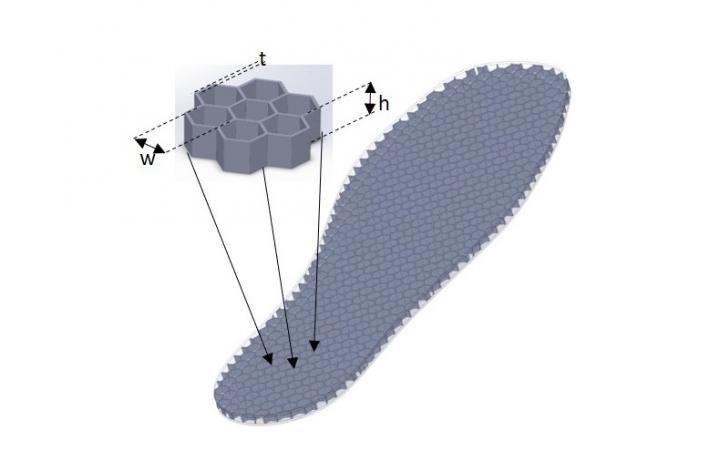
A common method involves assessing plantar pressure to prescribe special footwear or insoles, however many clinicians cannot use this because it is expensive and difficult to use. Dr Chatzistergos and colleagues have developed a novel concept to address this problem, using 3D-printed, tuneable structures that will help clinicians better understand the cause of ulcer development and lead to improved patient outcomes.

Dr Chatzistergos, who led the study, said: “Our work has demonstrated a method to reliably detect overloading using a low-cost non-electronic technique. We have used a 3D-printed thin-wall structure that changes its properties when repeatedly loaded above or below a tuneable threshold. We believe that this is a step change from current practice.”

Patients would be required to wear the sensor-insoles in their everyday footwear for a representative time period, for example a day or a week, before returning them for analysis. During the analysis of the sensor-insole, plantar areas that were routinely subjected to higher pressures should be identifiable, against those where pressure was below that threshold.

The concepts behind the work, published in Royal Society Open Science, have been fully developed at Staffordshire University and the intellectual property has been protected.

Professor Nachi Chockalingam, Director for CRBT who co-authored the study, said: “Plantar pressure assessment is common amongst clinical practice and it contributes to insoles and footwear prescription. However, the current technologies are expensive and difficult to use in an everyday clinic.

“Each year more than 26 million people worldwide develop diabetic foot ulcers and the lifetime incidence of foot ulcers in developing countries is more than 20% among people with diabetes. Establishing low-cost methods to help prevent foot ulcers will reduce the global socioeconomic burden of diabetes and ultimately save lives. The concept reported within this paper, with further development, has the potential to transform clinical management of foot ulcer risk across the world.”

###

A novel concept for low-cost non-electronic detection of overloading in the foot during activities of daily living is published in Royal Society Open Science.

Media Contact
Amy Platts
[email protected]

Original Source

https://www.staffs.ac.uk/news/2021/06/new-research-a-step-change-for-diabetes-patients

Related Journal Article

http://dx.doi.org/10.1098/rsos.202035

Tags: Biomechanics/BiophysicsDiabetesMedicine/Health
Share12Tweet8Share2ShareShareShare2

Related Posts

Miniature Sensor Uses Light to Detect Touch — Chemistry

Miniature Sensor Uses Light to Detect Touch

May 8, 2026
Iron Minerals Determine Whether Dissolved Organic Matter Fuels Microbes or Becomes Long-Term Carbon Storage — Chemistry

Iron Minerals Determine Whether Dissolved Organic Matter Fuels Microbes or Becomes Long-Term Carbon Storage

May 8, 2026

Kate Evans Appointed Associate Lab Director for Biological and Environmental Systems Science at ORNL

May 8, 2026

Advancing Multiscale Modeling and Overcoming Operational Challenges in Autothermal COâ‚‚-to-Methanol Reactors

May 8, 2026
Please login to join discussion

POPULAR NEWS

  • Research Indicates Potential Connection Between Prenatal Medication Exposure and Elevated Autism Risk

    840 shares
    Share 336 Tweet 210
  • New Study Reveals Plants Can Detect the Sound of Rain

    727 shares
    Share 290 Tweet 181
  • Scientists Investigate Possible Connection Between COVID-19 and Increased Lung Cancer Risk

    68 shares
    Share 27 Tweet 17
  • Salmonella Haem Blocks Macrophages, Boosts Infection

    61 shares
    Share 24 Tweet 15

About

We bring you the latest biotechnology news from best research centers and universities around the world. Check our website.

Follow us

Recent News

Urdu Fall Risk Questionnaire Adapted for Elderly

Key Pharmacological Markers for HIV Prevention in MSM

Taking 8,500 Steps Daily May Aid Long-Term Weight Management, Study Finds

Subscribe to Blog via Email

Success! An email was just sent to confirm your subscription. Please find the email now and click 'Confirm' to start subscribing.

Join 82 other subscribers
  • Contact Us

Bioengineer.org © Copyright 2023 All Rights Reserved.

Welcome Back!

Login to your account below

Forgotten Password?

Retrieve your password

Please enter your username or email address to reset your password.

Log In
No Result
View All Result
  • Homepages
    • Home Page 1
    • Home Page 2
  • News
  • National
  • Business
  • Health
  • Lifestyle
  • Science

Bioengineer.org © Copyright 2023 All Rights Reserved.