An important step in the battle against antibiotic-resistant bacteria
The battle against antibiotic-resistant bacteria: A new study at Tel Aviv University revealed a mechanism through which “good” viruses can attack the systems of “bad” bacteria, destroy them and block their reproduction. The researchers demonstrated that the “good” virus (bacteriophage) is able to block the replication mechanism of the bacteria’s DNA without damaging its own, and note that the ability to distinguish between oneself and others is crucial in nature. They explain that their discovery reveals one more fascinating aspect of the mutual relations between bacteria and bacteriophages and may lead to a better understanding of bacterial mechanisms for evading bacteriophages, as well as ways for using bacteriophages to combat bacteria.
The study, published recently in PNAS – Proceedings of the National Academy of Sciences, was led by Prof. Udi Qimron, Dr. Dor Salomon, Dr. Tridib Mahata and Shahar Molshanski-Mor of the Sackler Faculty of Medicine. Other participants included Prof. Tal Pupko, Head of the Shmunis School of Biomedicine and Cancer Research and also of the new AI and Data Science Center ; Dr. Oren Avram of the George S. Wise Faculty of Life Sciences; and Dr. Ido Yosef, Dr. Moran Goren, Dr. Miriam Kohen-Manor and Dr. Biswanath Jana of the Sackler Faculty of Medicine.
Prof. Qimron explains that the antibiotic resistance of bacteria is one of the greatest challenges faced by scientists today. One potential solution may lie in further investigation of the targeted eradication of bacteria by “good” bacteriophages; namely, understanding bacteriophage mechanisms for taking over bacteria as a basis for the development of new tools to combat bacterial pathogens.
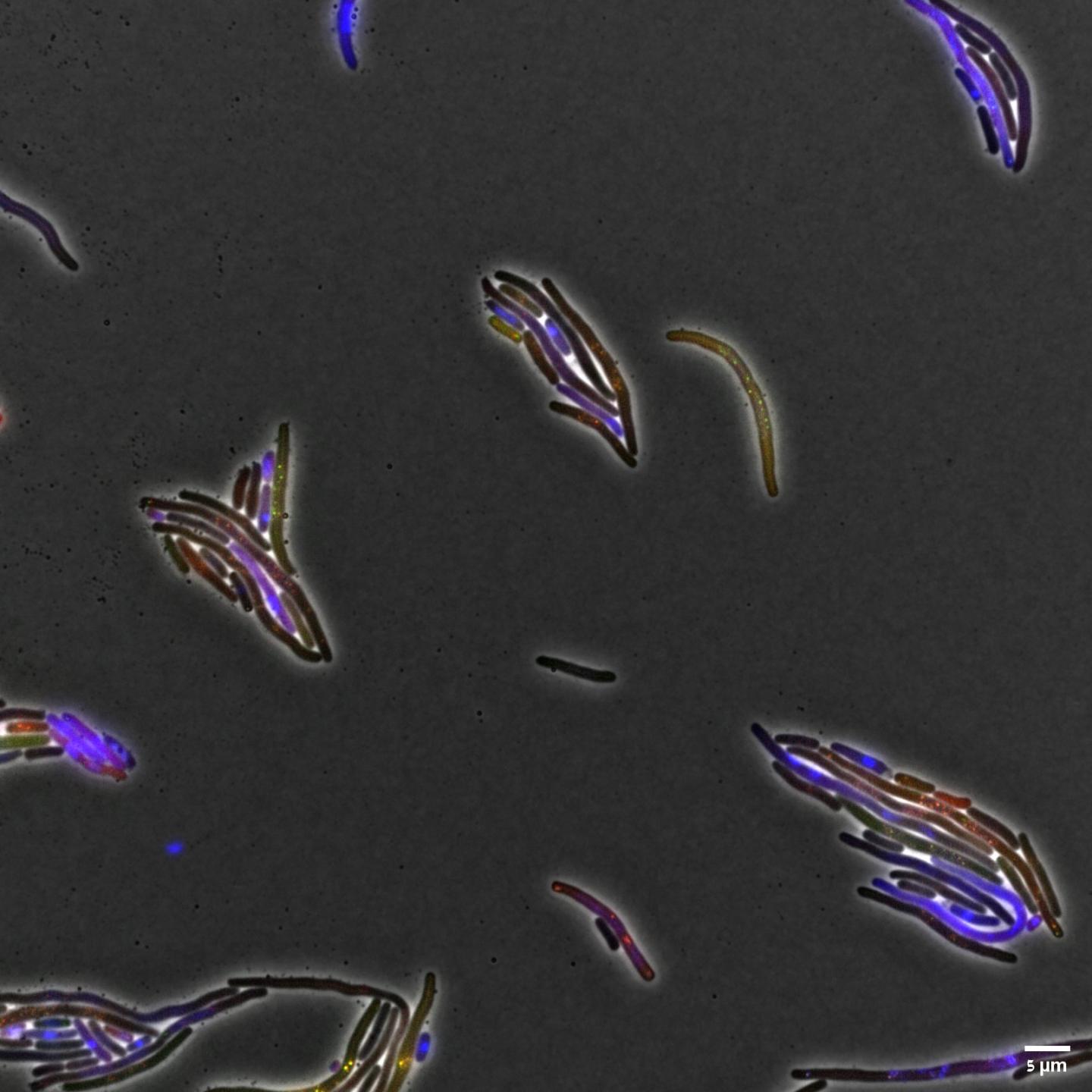
With this intention in mind, the current study unveiled the mechanism by which the bacteriophage takes control of the bacteria. The researchers found that a bacteriophage protein uses a DNA-repair protein in the bacteria to “cunningly” cut the bacteria’s DNA as it is being repaired. Since the bacteriophage’s own DNA has no need for this specific repair protein, it is protected from this nicking procedure. In this way the “good” bacteriophage does three important things: it distinguishes between its own DNA and that of the bacteria, destroys the bacteria’s genetic material, and blocks the bacteria’s propagation and cell division.
Prof. Qimron adds: “The bacteriophage takes advantage of the bacterial DNA’s need for repair, while the bacteriophage itself has no need for this specific kind of repair. In this way the bacteriophage destroys the bacteria without suffering any damage to itself. The ability to distinguish between oneself and others is of enormous importance in nature and in various biological applications. Thus, for example, all antibiotic mechanisms identify and neutralize bacteria only, with minimal effect on human cells. Another example is our immune system, which is geared toward maximum damage to foreign factors, with minimal self-injury.”
The researchers discovered the process by searching for types of bacterial variants not impacted by this bacteriophage mechanism – those that have developed “immunity” to it. This inquiry led them to the specific bacterial mechanisms affected by the bacteriophage takeover. “We found that the ‘immune’ bacterial variants simply stopped repairing their DNA in ways that are vulnerable to the bacteriophage attack, thereby evading the bacteriophage’s destructive mechanism. Shedding more light on the ways in which bacteriophages attack bacteria, our findings may serve as a tool in the endless battle against antibiotic-resistant bacteria,” concludes Prof. Qimron.
###
Media Contact
Noga Shahar
[email protected]
Related Journal Article
http://dx.