• HOME
  • NEWS
  • EXPLORE
    • CAREER
      • Companies
      • Jobs
    • EVENTS
    • iGEM
      • News
      • Team
    • PHOTOS
    • VIDEO
    • WIKI
  • BLOG
  • COMMUNITY
    • FACEBOOK
    • INSTAGRAM
    • TWITTER
Monday, March 30, 2026
BIOENGINEER.ORG
No Result
View All Result
  • Login
  • HOME
  • NEWS
  • EXPLORE
    • CAREER
      • Companies
      • Jobs
        • Lecturer
        • PhD Studentship
        • Postdoc
        • Research Assistant
    • EVENTS
    • iGEM
      • News
      • Team
    • PHOTOS
    • VIDEO
    • WIKI
  • BLOG
  • COMMUNITY
    • FACEBOOK
    • INSTAGRAM
    • TWITTER
  • HOME
  • NEWS
  • EXPLORE
    • CAREER
      • Companies
      • Jobs
        • Lecturer
        • PhD Studentship
        • Postdoc
        • Research Assistant
    • EVENTS
    • iGEM
      • News
      • Team
    • PHOTOS
    • VIDEO
    • WIKI
  • BLOG
  • COMMUNITY
    • FACEBOOK
    • INSTAGRAM
    • TWITTER
No Result
View All Result
Bioengineer.org
No Result
View All Result
Home NEWS Science News Health

How platelets help resolve lung inflammation

Bioengineer by Bioengineer
September 6, 2025
in Health
Reading Time: 2 mins read
0
IMAGE
Share on FacebookShare on TwitterShare on LinkedinShare on RedditShare on Telegram

Scientists at the University of Münster provide new insights into interactions between platelets and white blood cells in mice

Treating patients with acute respiratory failure is a constant challenge in intensive care medicine. In most cases, the underlying cause is lung inflammation triggered by a bacterial infection or – more rarely, despite being frequently observed at present due to the corona pandemic – a viral infection. During the inflammation, cells of the immune system – the white blood cells – migrate to the lungs and fight the pathogens. At the same time, however, they also cause “collateral damage” in the lung tissue. If the inflammatory reaction is not resolved in time, this can result in chronic inflammation with permanent impairment of lung function. Together with colleagues from London, Madrid and Munich, a research team at the University of Münster headed by Prof Jan Rossaint and Prof Alexander Zarbock, two specialists in anaesthesiology and intensive care medicine, has gained new insight into the cellular processes involved in bacterial lung inflammation. In a study on mice, the researchers found that the interaction between platelets and certain white blood cells – the regulatory T cells – play a significant role in resolving the inflammation. The study has been published in the Journal of Experimental Medicine.

Platelets partner with regulatory T cells and send signals to scavenger cells

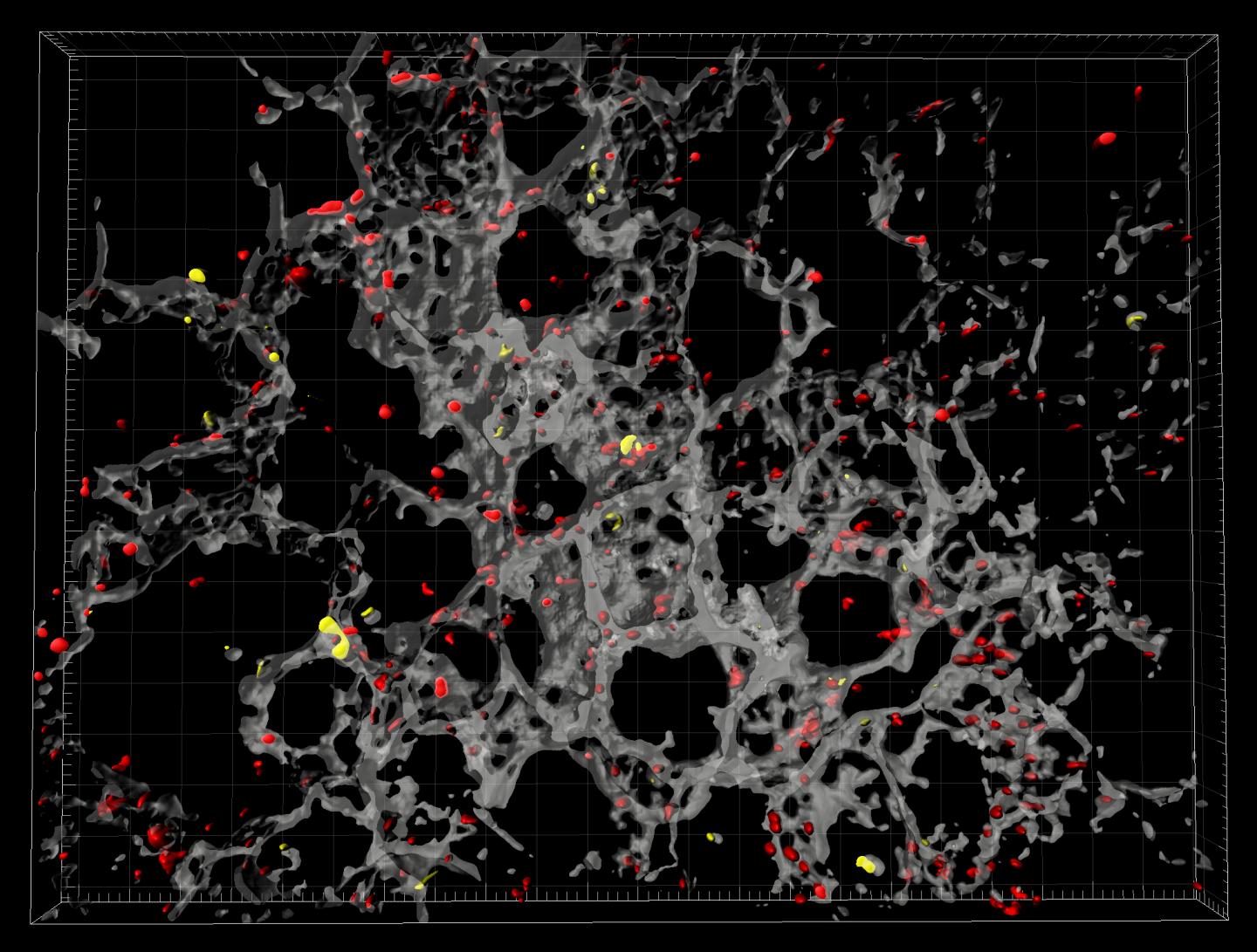
It was already known that, at the beginning of an inflammatory reaction in the lungs, as is the case with other organs, platelets work together with neutrophil granulocytes – a subgroup of white blood cells that specialize in fighting off pathogens. However, for the first time, the team of scientists has now shown that, as the inflammation progresses, platelets bind to regulatory T cells and that this binding is needed for the migration of the T cells, together with the platelets, to the site of inflammation in the lungs. Upon their arrival, they work together secreting anti-inflammatory messenger substances which “reprogramme” the macrophages in the lungs. These white blood cells, also known as scavenger cells, then stop directing neutrophil granulocytes to the site of inflammation, instead eliminating the neutrophil granulocytes that are no longer needed. This helps the inflammation subside and prevents further tissue damage.

Search for new therapy concepts

“When treating patients with acute lung failure, we have various measures we can take to support lung function and focus on combating the causative pathogens with antibiotics, for example,” explains Jan Rossaint. “However, we lack other therapeutic options which can be used to target the causes and regulate the course of the inflammation.” These latest investigations have provided a basis for such therapy concepts. In further steps, the researchers will examine whether the inflammatory mechanisms they observed in mice also occur in humans and look for starting points to test specific therapies.

###

Media Contact
Prof Jan Rossaint
[email protected]

Original Source

https://www.uni-muenster.de/Cells-in-Motion/newsviews/2021/06-02.html

Related Journal Article

http://dx.doi.org/10.1084/jem.20201353

Tags: Medicine/Health
Share12Tweet8Share2ShareShareShare2

Related Posts

MAU2 Mutations Define Unique Cornelia de Lange Syndrome

March 30, 2026

Holistic Strategy in New Brain-Heart Guidelines Revolutionizes Chronic Disease Management

March 30, 2026

AI Reveals NPC1’s Role in COVID-19 Risk

March 30, 2026

Life Satisfaction and Cognitive Reserve Shape Aging Brains

March 30, 2026
Please login to join discussion

POPULAR NEWS

  • blank

    Revolutionary AI Model Enhances Precision in Detecting Food Contamination

    96 shares
    Share 38 Tweet 24
  • Imagine a Social Media Feed That Challenges Your Views Instead of Reinforcing Them

    1005 shares
    Share 397 Tweet 248
  • Promising Outcomes from First Clinical Trials of Gene Regulation in Epilepsy

    51 shares
    Share 20 Tweet 13
  • Advancements in EV Battery Technology to Surpass Climate Change-Induced Degradation

    45 shares
    Share 18 Tweet 11

About

We bring you the latest biotechnology news from best research centers and universities around the world. Check our website.

Follow us

Recent News

MAU2 Mutations Define Unique Cornelia de Lange Syndrome

Designable Vectorial Lasing via Möbius-Like Quasi-BICs

Holistic Strategy in New Brain-Heart Guidelines Revolutionizes Chronic Disease Management

Subscribe to Blog via Email

Success! An email was just sent to confirm your subscription. Please find the email now and click 'Confirm' to start subscribing.

Join 78 other subscribers
  • Contact Us

Bioengineer.org © Copyright 2023 All Rights Reserved.

Welcome Back!

Login to your account below

Forgotten Password?

Retrieve your password

Please enter your username or email address to reset your password.

Log In
No Result
View All Result
  • Homepages
    • Home Page 1
    • Home Page 2
  • News
  • National
  • Business
  • Health
  • Lifestyle
  • Science

Bioengineer.org © Copyright 2023 All Rights Reserved.