• HOME
  • NEWS
  • EXPLORE
    • CAREER
      • Companies
      • Jobs
    • EVENTS
    • iGEM
      • News
      • Team
    • PHOTOS
    • VIDEO
    • WIKI
  • BLOG
  • COMMUNITY
    • FACEBOOK
    • INSTAGRAM
    • TWITTER
Wednesday, June 24, 2026
BIOENGINEER.ORG
No Result
View All Result
  • Login
  • HOME
  • NEWS
  • EXPLORE
    • CAREER
      • Companies
      • Jobs
        • Lecturer
        • PhD Studentship
        • Postdoc
        • Research Assistant
    • EVENTS
    • iGEM
      • News
      • Team
    • PHOTOS
    • VIDEO
    • WIKI
  • BLOG
  • COMMUNITY
    • FACEBOOK
    • INSTAGRAM
    • TWITTER
  • HOME
  • NEWS
  • EXPLORE
    • CAREER
      • Companies
      • Jobs
        • Lecturer
        • PhD Studentship
        • Postdoc
        • Research Assistant
    • EVENTS
    • iGEM
      • News
      • Team
    • PHOTOS
    • VIDEO
    • WIKI
  • BLOG
  • COMMUNITY
    • FACEBOOK
    • INSTAGRAM
    • TWITTER
No Result
View All Result
Bioengineer.org
No Result
View All Result
Home NEWS Science News Biology

Sick bats also employ ‘social distancing’ which prevents the outbreak of epidemics

Bioengineer by Bioengineer
September 6, 2025
in Biology
Reading Time: 3 mins read
0
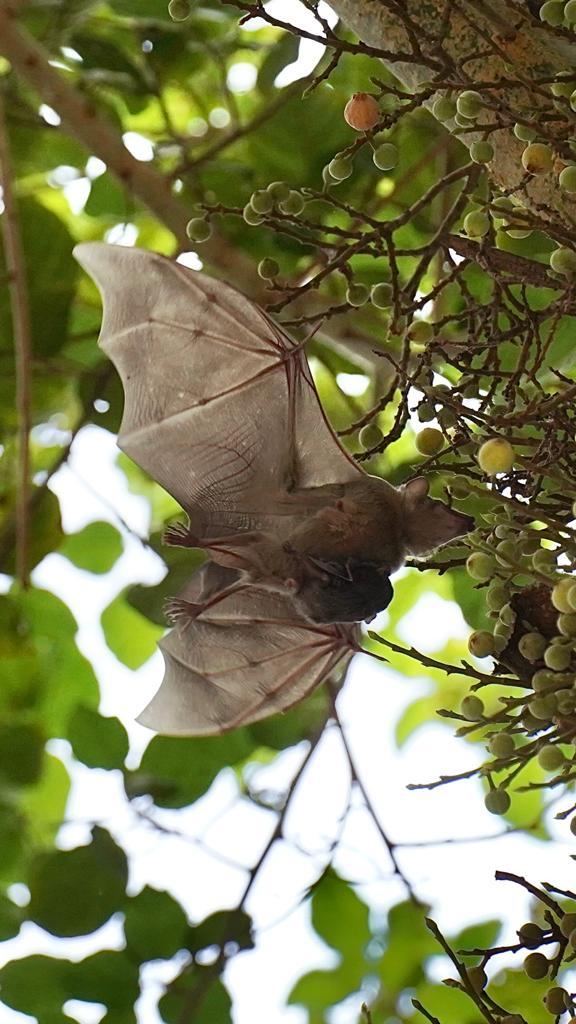
IMAGE
Share on FacebookShare on TwitterShare on LinkedinShare on RedditShare on Telegram

New study from Tel Aviv University reveals that bats also resort to isolation which can assist in preventing mass contagion

The Covid-19 pandemic has introduced us to expressions like ‘lockdown’, ‘isolation’ and ‘social distancing’, which became part of social conduct all over the world. Now it appears that bats also maintain social distancing which might help prevent the spread of contagious diseases in their colonies. In a new study published in Annals of the New York Academy of Science, researchers from Tel Aviv University demonstrate that sick bats, just like ill humans, prefer to stay away from their communities, probably as a means for recovery, and possibly also as a measure for protecting others. The study was conducted by postdoctoral researcher Dr. Kelsey Moreno and PhD candidate Maya Weinberg at the laboratory of Prof. Yossi Yovel, Head of the Sagol School of Neuroscience and a researcher at School of Zoology at the George S. wise Faculty of Life Sciences.

The study monitored two colonies of Egyptian fruit bats – one living in an enclosure and the other in its natural environment. To examine the behavior of bats when they get sick, the researchers injected several bats in each group with a bacteria-like protein, thereby stimulating their immune response without generating any real danger to the bats. Tests revealed symptoms such as a high fever, fatigue and weight loss, and the ‘ill’ bats’ behavior was tracked with GPS.

The researchers discovered that the ‘sick’ bats chose to keep away from the colony. In the first group, they left the bat cluster of their own accord and kept their distance. In the second group the ‘ill’ bats likewise moved away from the other bats in the colony, and also stayed in the colony and did not go out in search of food for two successive nights.

Research student Maya Weinberg explains that this social distancing behavior is probably caused by the need to conserve energy – by avoiding the energy-consuming social interactions in the group. Weinberg emphasizes, however, that this behavior can also protect the group and prevent the pathogen from spreading within the colony. Moreover, the fact that sick bats don’t leave the cave, prevents the disease from spreading to other colonies. “The bats’ choice to stay away from the group is highly unusual for these animals. Normally these bats are extremely social creatures, living in caves in very crowded conditions,” says Weinberg. “In fact, the ‘sick’ bats’ behavior is very reminiscent of our own during recovery from an illness. Just as we prefer to stay home quietly under the blanket when we are ill, sick bats, living in very crowded caves, also seek solitude and peace as they recuperate.”

Prof. Yovel adds that the study’s findings suggest that the likelihood of bats passing pathogens to humans under regular conditions is very low, because sick bats tend to isolate themselves and stay in the cave. “We observed that during illness bats choose to stay away from the colony and don’t leave the cave, and thus avoid mixing with other bats. This suggests that in order to encounter a sick bat, people must actually invade the bats’ natural environment or eliminate their habitats. In other words, if we protect them, they will also protect us.”

###

Media Contact
Noga Shahar
[email protected]

Related Journal Article

http://dx.doi.org/10.1111/nyas.14600

Tags: BehaviorBiologyEvolutionPets/EthologySocial/Behavioral ScienceZoology/Veterinary Science
Share12Tweet8Share2ShareShareShare2

Related Posts

Copal Tree Genetics Reveal Tropical Forest Connectivity — Biology

Copal Tree Genetics Reveal Tropical Forest Connectivity

June 24, 2026
How Intestinal Mucus Influences Klebsiella pneumoniae Colonization and Antibiotic Effectiveness — Biology

How Intestinal Mucus Influences Klebsiella pneumoniae Colonization and Antibiotic Effectiveness

June 24, 2026

From Darkness to Light: How Blind Mexican Cavefish Reveal Brain Evolution

June 24, 2026

Reevaluating the Impact of ‘Yo-Yo Dieting’: Is It Less Harmful Than Commonly Thought?

June 24, 2026
Please login to join discussion

POPULAR NEWS

  • Saying Goodbye to PGY-6: Pediatric Fellowship Realities

    103 shares
    Share 41 Tweet 26
  • Multi-Hospital Study Reveals Long Covid Burden Is Twice as High as Current Estimates

    92 shares
    Share 36 Tweet 23
  • Detection of EDCs in Breast Milk and Infant Urine Up to Six Months Highlights Early Exposure Risks

    77 shares
    Share 31 Tweet 19
  • New Drug Candidate Developed at McMaster Shows Potential for Treating Brain Cancer

    58 shares
    Share 23 Tweet 15

About

We bring you the latest biotechnology news from best research centers and universities around the world. Check our website.

Follow us

Recent News

Silencing of TRAIL-R2 Associated with Increased Aggressiveness in Breast Cancer

Light-Based Imaging Advances Promise Enhanced Thyroid Cancer Diagnosis and Fewer Surgeries

Water-Activated PVA Film Transforms from Bioplastic to High-Performance Wood Adhesive

Subscribe to Blog via Email

Enter your email address to subscribe to this blog and receive notifications of new posts by email.

Join 82 other subscribers
  • Contact Us

Bioengineer.org © Copyright 2023 All Rights Reserved.

Welcome Back!

Login to your account below

Forgotten Password?

Retrieve your password

Please enter your username or email address to reset your password.

Log In
No Result
View All Result
  • Homepages
    • Home Page 1
    • Home Page 2
  • News
  • National
  • Business
  • Health
  • Lifestyle
  • Science

Bioengineer.org © Copyright 2023 All Rights Reserved.