Research team shows that physical intervention plans that include walking, not just standing, may enhance multiple measures of bowel function
East Hanover, NJ. May 28, 2021. A team of researchers has shown that physical intervention plans that included exoskeleton-assisted walking helped people with spinal cord injury evacuate more efficiently and improved the consistency of their stool. This finding was reported in Journal of Clinical Medicine on March 2, 2021, in the article “The Effect of Exoskeletal-Assisted Walking on Spinal Cord Injury Bowel Function: Results from a Randomized Trial and Comparison to Other Physical Interventions” (doi: 10.3390/jcm10050964).
The authors are Peter H. Gorman, MD, of the University of Maryland School of Medicine, Gail F. Forrest, PhD, of Kessler Foundation’s Tim and Caroline Reynolds Center for Spinal Stimulation, Dr. William Scott, of VA Maryland Healthcare System, Pierre K. Asselin, MS, Stephen Kornfeld, MD, Eunkyoung Hong, PhD, and Ann M. Spungen, EdD, of the James J. Peters VA Medical Center.
Bowel dysfunction, a common experience after spinal cord injury, can lead to chronic constipation and incontinence, causing discomfort and frustration. In one survey, more than a third of men with spinal cord injury reported that bowel and bladder dysfunction had the most significant effect on their lives post-injury. Unfortunately, these issues are not easily managed.
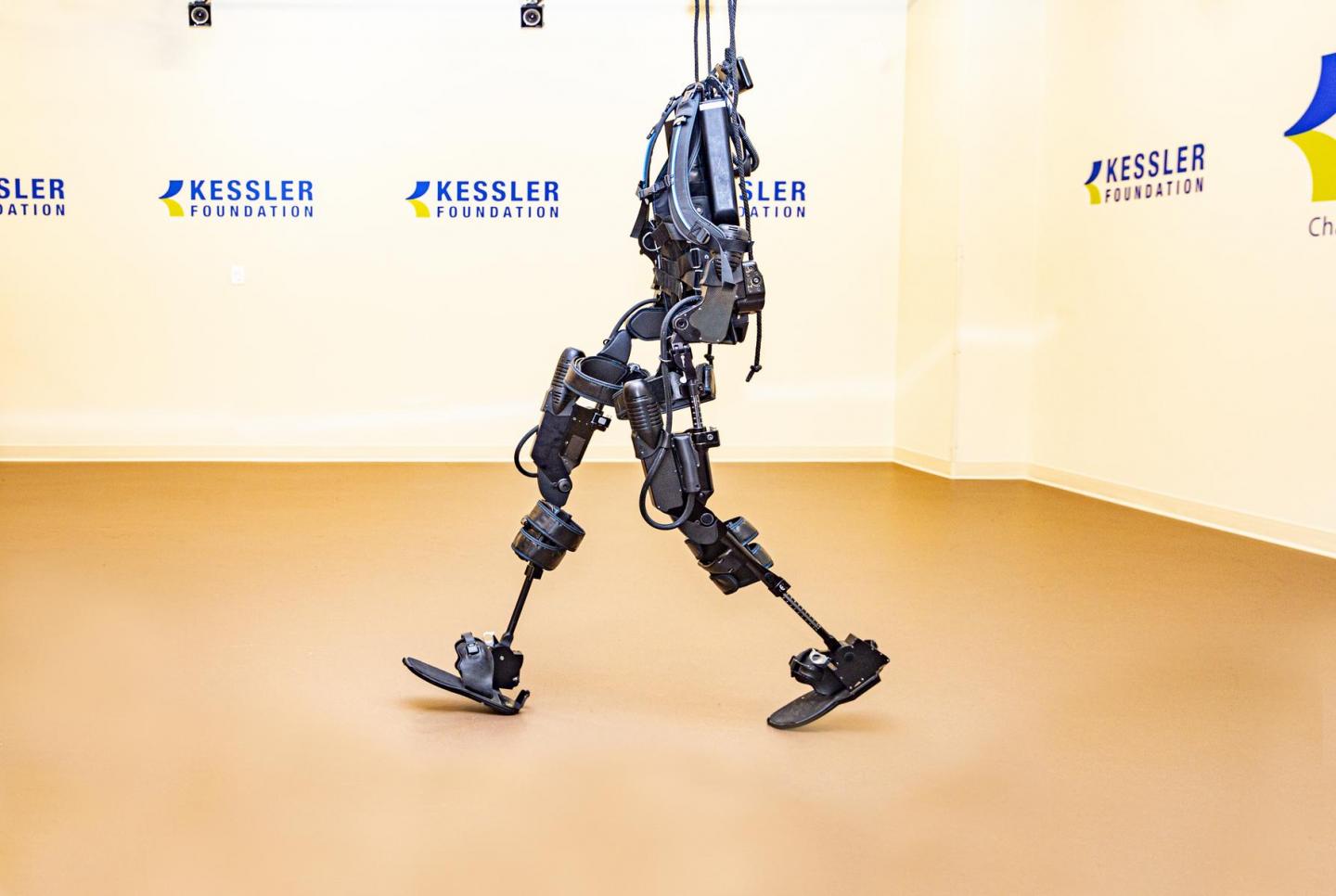
Rehabilitation professionals have traditionally managed bowel dysfunction using approaches that target the gastrointestinal system or require manual intervention, but some newer research suggests that physical activity and upright posture may enhance bowel motility. However, few studies have explored the possibility that exoskeletal-assisted walking–in which a person with spinal cord injury wears a robotic suit, enabling them to stand and walk–may be an effective addition to existing intervention plans.
Results showed that the exoskeletal-assisted walking program provided some improvement in bowel function when compared to a control group. “We saw a notable reduction in bowel evacuation time, with 24 percent of participants reporting an improved experience,” said Dr. Forrest, co-author and associate director of the Center for Mobility and Rehabilitation Engineering Research at Kessler Foundation. “We also noted that participants’ stools trended toward better consistency, supporting our hypothesis that this intervention may improve several measures of bowel function.”
“Our results support the idea that walking, and not just standing, may have a beneficial effect on bowel function,” said Dr. Gorman, co-author and chief of the Division of Rehabilitation Medicine at the University of Maryland Rehabilitation and Orthopaedic Institute. “Our goal is to improve the quality of life of those with chronic spinal cord injury, and these encouraging results will help inform future studies on the emerging field of mobility intervention.”
###
Funding: Department of Defense/CDMRP SC130234, Award: W81XWH-14-2-0170, and National Center for the Medical Consequences of SCI (B9212-C, B2020-C) at the James J. Peters Veterans Affairs Medical Center. Additional local support was provided by the James Lawrence Kernan Endowment Fund, Baltimore, Maryland; a philanthropic gift from Dr. Bert Glaser at the Baltimore site; and The Bronx Veterans Medical Research Foundation at the Bronx site.
For information on current research studies, visit https:/
About Kessler Foundation
Kessler Foundation, a major nonprofit organization in the field of disability, is a global leader in rehabilitation research that improves cognition, mobility and long-term outcomes, including employment, for people with neurological disabilities caused by diseases and injuries of the brain and spinal cord. Kessler Foundation leads the nation in funding innovative programs that expand opportunities for employment for people with disabilities. Learn more by visiting http://www.
Learn more about ongoing studies at Kessler Foundation at Join Our Research Studies | Kessler Foundation
Contact: Carolann Murphy, PA, Assistant Editor; [email protected]
Media Contact
Carolann Murphy
[email protected]
Original Source
https:/
Related Journal Article
http://dx.