• HOME
  • NEWS
  • EXPLORE
    • CAREER
      • Companies
      • Jobs
    • EVENTS
    • iGEM
      • News
      • Team
    • PHOTOS
    • VIDEO
    • WIKI
  • BLOG
  • COMMUNITY
    • FACEBOOK
    • INSTAGRAM
    • TWITTER
Sunday, May 10, 2026
BIOENGINEER.ORG
No Result
View All Result
  • Login
  • HOME
  • NEWS
  • EXPLORE
    • CAREER
      • Companies
      • Jobs
        • Lecturer
        • PhD Studentship
        • Postdoc
        • Research Assistant
    • EVENTS
    • iGEM
      • News
      • Team
    • PHOTOS
    • VIDEO
    • WIKI
  • BLOG
  • COMMUNITY
    • FACEBOOK
    • INSTAGRAM
    • TWITTER
  • HOME
  • NEWS
  • EXPLORE
    • CAREER
      • Companies
      • Jobs
        • Lecturer
        • PhD Studentship
        • Postdoc
        • Research Assistant
    • EVENTS
    • iGEM
      • News
      • Team
    • PHOTOS
    • VIDEO
    • WIKI
  • BLOG
  • COMMUNITY
    • FACEBOOK
    • INSTAGRAM
    • TWITTER
No Result
View All Result
Bioengineer.org
No Result
View All Result
Home NEWS Science News

Plant flowering in low-nitrogen soils: A mechanism revealed

Bioengineer by Bioengineer
September 6, 2025
in Science News
Reading Time: 2 mins read
0
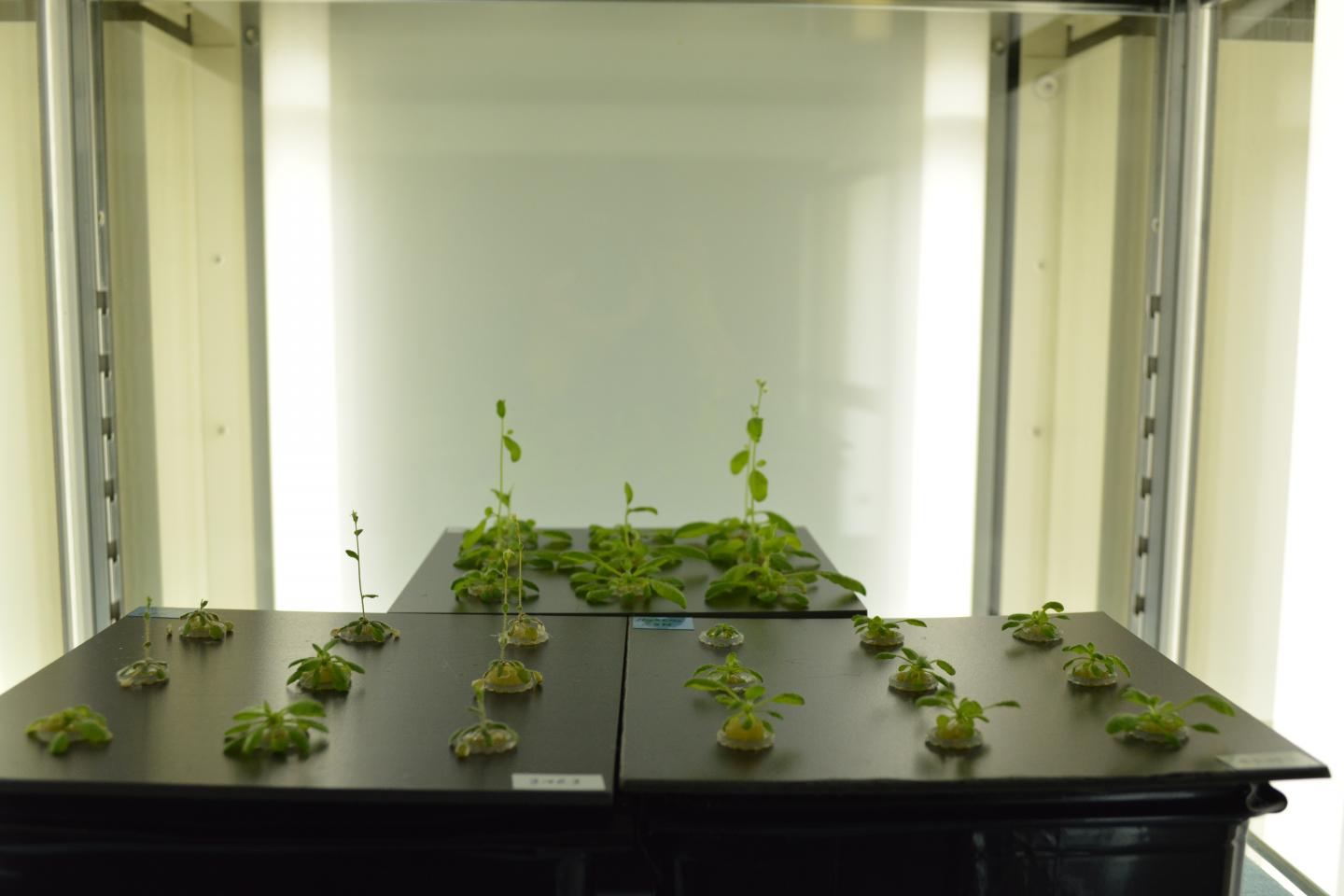
IMAGE
Share on FacebookShare on TwitterShare on LinkedinShare on RedditShare on Telegram

Scientists from Japan, Europe and the USA have described a pathway leading to the accelerated flowering of plants in low-nitrogen soils. These findings could eventually lead to increases in agricultural production.

Nitrogen is one of the three macronutrients required by plants for growth and development, along with phosphorus and potassium. Nitrogen-rich condition induces plant growth, particularly the growth of stems and leaves, while delaying flowering. On the other hand, in some plants, low-nitrogen conditions lead to a change from growth mode to reproductive mode, therefore accelerating flowering. However, the molecular mechanisms that regulate flowering under these conditions are not known.

A team of scientists led by Associate Professor Takeo Sato of Hokkaido University’s Graduate School of Life Science has revealed the molecular mechanism responsible for the acceleration of flowering in Arabidopsis under low nitrogen conditions. Their findings were published in the journal Proceedings of the National Academy of Sciences of the United States of America (PNAS).

Arabidopsis, a cruciferous plant, is well known as a model plant in biology and has an extensive database of its protein expression. In the current study, the team first identified a set of proteins involved in flowering that became active as a result of changes in nitrogen level. One of these was the gene regulation factor FLOWERING BHLH 4 (FBH4). Through experiments using FBH4 deficient plants, this protein was found to be responsible for accelerated flowering under low-nitrogen conditions.

Further investigation suggested that FBH4 is extensively phosphorylated by another protein called SnRK1. Low-nitrogen conditions suppress SnRK1 activity, which in turn results in the dephosphorylation of FBH4. The dephosphorylated FBH4 moves to the nucleus to activate genes responsible for flowering. Dephosphorylated FBH4 is also responsible for controlling the expression of other genes vital for plant survival under low nitrogen conditions, particularly those related to nitrogen recycling and remobilization.

The scientists concluded that, in response to inadequate nitrogen, Arabidopsis plants appear to precisely control gene expression related to developmental and metabolic processes required for flowering through FBH4. “The FBH family of genes is present in major crop plants,” says Takeo Sato. “Crop plants exhibit early flowering under low-nitrogen conditions; if we can control FBH activities in these crop plants, it might be an effective way to sustainably increase agricultural production.”

###

Media Contact
Sohail Keegan Pinto
[email protected]

Original Source

https://www.global.hokudai.ac.jp/blog/plant-flowering-in-low-nitrogen-soils-a-mechanism-revealed/

Related Journal Article

http://dx.doi.org/10.1073/pnas.2022942118

Tags: Agricultural Production/EconomicsBiochemistryBiologyBiotechnologyCell BiologyMolecular BiologyPlant Sciences
Share12Tweet8Share2ShareShareShare2

Related Posts

Evaluating Digoxin Use in Patients with Symptomatic Rheumatic Heart Disease

May 10, 2026

Evaluating the Effectiveness and Safety of Digitalis Glycosides in Treating Heart Failure

May 10, 2026

Urdu Fall Risk Questionnaire Adapted for Elderly

May 10, 2026

Key Pharmacological Markers for HIV Prevention in MSM

May 10, 2026
Please login to join discussion

POPULAR NEWS

  • Research Indicates Potential Connection Between Prenatal Medication Exposure and Elevated Autism Risk

    840 shares
    Share 336 Tweet 210
  • New Study Reveals Plants Can Detect the Sound of Rain

    727 shares
    Share 290 Tweet 181
  • Scientists Investigate Possible Connection Between COVID-19 and Increased Lung Cancer Risk

    68 shares
    Share 27 Tweet 17
  • Salmonella Haem Blocks Macrophages, Boosts Infection

    61 shares
    Share 24 Tweet 15

About

We bring you the latest biotechnology news from best research centers and universities around the world. Check our website.

Follow us

Recent News

Evaluating Digoxin Use in Patients with Symptomatic Rheumatic Heart Disease

Evaluating the Effectiveness and Safety of Digitalis Glycosides in Treating Heart Failure

Urdu Fall Risk Questionnaire Adapted for Elderly

Subscribe to Blog via Email

Enter your email address to subscribe to this blog and receive notifications of new posts by email.

Join 82 other subscribers
  • Contact Us

Bioengineer.org © Copyright 2023 All Rights Reserved.

Welcome Back!

Login to your account below

Forgotten Password?

Retrieve your password

Please enter your username or email address to reset your password.

Log In
No Result
View All Result
  • Homepages
    • Home Page 1
    • Home Page 2
  • News
  • National
  • Business
  • Health
  • Lifestyle
  • Science

Bioengineer.org © Copyright 2023 All Rights Reserved.