• HOME
  • NEWS
  • EXPLORE
    • CAREER
      • Companies
      • Jobs
    • EVENTS
    • iGEM
      • News
      • Team
    • PHOTOS
    • VIDEO
    • WIKI
  • BLOG
  • COMMUNITY
    • FACEBOOK
    • INSTAGRAM
    • TWITTER
Sunday, November 15, 2026
BIOENGINEER.ORG
No Result
View All Result
  • Login
  • HOME
  • NEWS
  • EXPLORE
    • CAREER
      • Companies
      • Jobs
        • Lecturer
        • PhD Studentship
        • Postdoc
        • Research Assistant
    • EVENTS
    • iGEM
      • News
      • Team
    • PHOTOS
    • VIDEO
    • WIKI
  • BLOG
  • COMMUNITY
    • FACEBOOK
    • INSTAGRAM
    • TWITTER
No Result
View All Result
Bioengineer.org
No Result
View All Result
Home NEWS Science News Health

Helping doctors manage COVID-19

Bioengineer by Bioengineer
September 6, 2025
in Health
Reading Time: 2 mins read
0
IMAGE
Share on FacebookShare on TwitterShare on LinkedinShare on RedditShare on Telegram

New tool uses AI technology to assess the severity of lung infections and inform treatment

Artificial intelligence (AI) technology developed by researchers at the University of Waterloo is capable of assessing the severity of COVID-19 cases with a promising degree of accuracy.

A study, which is part of the COVID-Net open-source initiative launched more than a year ago, involved researchers from Waterloo and spin-off start-up company DarwinAI, as well as radiologists at the Stony Brook School of Medicine and the Montefiore Medical Center in New York.

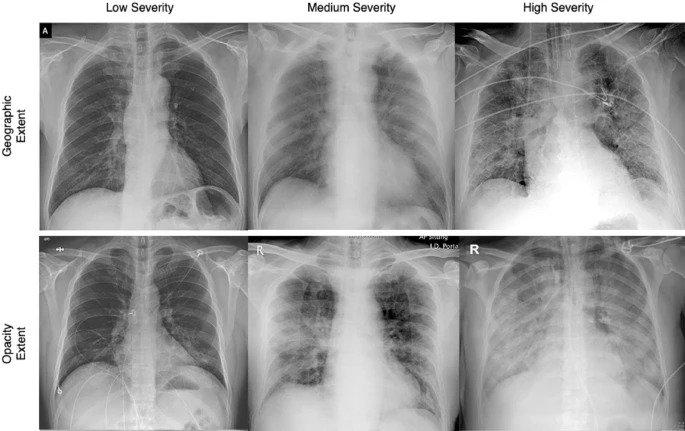
Deep-learning AI was trained to analyze the extent and opacity of infection in the lungs of COVID-19 patients based on chest x-rays. Its scores were then compared to assessments of the same x-rays by expert radiologists.

For both extent and opacity, important indicators of the severity of infections, predictions made by the AI software were in good alignment with scores provided by the human experts.

Alexander Wong, a systems design engineering professor and co-founder of DarwinAI, said the technology could give doctors an important tool to help them manage cases.

“Assessing the severity of a patient with COVID-19 is a critical step in the clinical workflow for determining the best course of action for treatment and care, be it admitting the patient to ICU, giving a patient oxygen therapy, or putting a patient on a mechanical ventilator,” Wong said.

“The promising results in this study show that artificial intelligence has a strong potential to be an effective tool for supporting frontline healthcare workers in their decisions and improving clinical efficiency, which is especially important given how much stress the ongoing pandemic has placed on healthcare systems around the world.”

A paper on the research, Towards computer-aided severity assessment via deep neural networks for geographic and opacity extent scoring of SARS-CoV-2 chest X-rays, appears in the journal Scientific Reports.

###

Media Contact
Ryon Jones
rnjones@uwaterloo.ca

Tags: Critical Care/Emergency MedicineDiagnosticsHealth CareHealth Care Systems/ServicesHealth ProfessionalsImmunology/Allergies/AsthmaInfectious/Emerging DiseasesMedicine/HealthPublic HealthPulmonary/Respiratory Medicine
Share12Tweet8Share2ShareShareShare2

Related Posts

Prescribed GLP-1 Use Reported by Half of Binge Eating Disorder Patients

Prescribed GLP-1 Use Reported by Half of Binge Eating Disorder Patients

November 15, 2026
African Biomedical Symposium Advances Next-Generation Research

African Biomedical Symposium Advances Next-Generation Research

November 15, 2026

MicroRNA-337-5p Levels Differentiate Diabetic Retinopathy Severity and Protect Retinal Cells via WNK1

November 15, 2026

Ginsenoside Rg1 Reduces Fatty Liver Damage by Curbing Ferroptosis in Lab Models

November 15, 2026
Please login to join discussion

POPULAR NEWS

  • Ginsenoside Rg1 Reduces Fatty Liver Damage by Curbing Ferroptosis in Lab Models

    Ginsenoside Rg1 Reduces Fatty Liver Damage by Curbing Ferroptosis in Lab Models

    29 shares
    Share 12 Tweet 7
  • Supramolecular Eutectic Solvents Boost Propolis Flavonoid Recovery and Molecular Stability

    29 shares
    Share 12 Tweet 7
  • Increasing Weak Interlayers Reduces Rock Compressive Strength and Increases Fracture Density

    29 shares
    Share 12 Tweet 7
  • Somali Nurses Show Moderate Emergency Competence Amid Low Healthcare Facility Readiness

    29 shares
    Share 12 Tweet 7

About

We bring you the latest biotechnology news from best research centers and universities around the world. Check our website.

Follow us

Recent News

Prescribed GLP-1 Use Reported by Half of Binge Eating Disorder Patients

African Biomedical Symposium Advances Next-Generation Research

MicroRNA-337-5p Levels Differentiate Diabetic Retinopathy Severity and Protect Retinal Cells via WNK1

Subscribe to Blog via Email

Enter your email address to subscribe to this blog and receive notifications of new posts by email.

Join 87 other subscribers
  • Contact Us

Bioengineer.org © Copyright 2023 All Rights Reserved.

Welcome Back!

Login to your account below

Forgotten Password?

Retrieve your password

Please enter your username or email address to reset your password.

Log In
No Result
View All Result
  • Homepages
    • Home Page 1
    • Home Page 2
  • News
  • National
  • Business
  • Health
  • Lifestyle
  • Science

Bioengineer.org © Copyright 2023 All Rights Reserved.