Database curates info on inner workings of saliva, an attractive tool for noninvasive diagnostics and precision medicine
Credit: National Institute of Dental and Craniofacial Research
BUFFALO, N.Y. – To improve the development of new saliva-based diagnostic tests and personalized medicine, the National Institute of Dental and Craniofacial Research (NIDCR) has supported the development of the Human Salivary Proteome Wiki, the first public platform that catalogs and curates data on each of the thousands of proteins within our saliva.
Detailed in an article published on Tuesday, May 25 in the Journal of Dental Research, the wiki provides researchers and clinicians with rich, unbiased evidence from multiple independent studies to help explore the dynamic and complex nature of saliva, as well as analytical tools to search for data by tissue type, disease and more.
“This community-based data and knowledge base will pave the way to harness the full potential of the salivary proteome for diagnosis, risk prediction, and therapy for oral and systemic diseases, and increase preparedness for future emerging diseases and pandemics,” says Stefan Ruhl, DDS, PhD, lead investigator of the study, curator of the Human Salivary Proteome Wiki, and professor of oral biology in the University at Buffalo School of Dental Medicine.
Saliva facilitates digestion, taste, swallowing and speech, and serves as the first line of defense against pathogens in the mouth, shielding the body from harmful microbes. Saliva’s role in immune responses, as well as the ease with which it may be collected as a fluid sample, make it a desirable tool in precision medicine and noninvasive diagnostics. During the COVID-19 pandemic, it was widely used to detect the virus and track the body’s immune response.
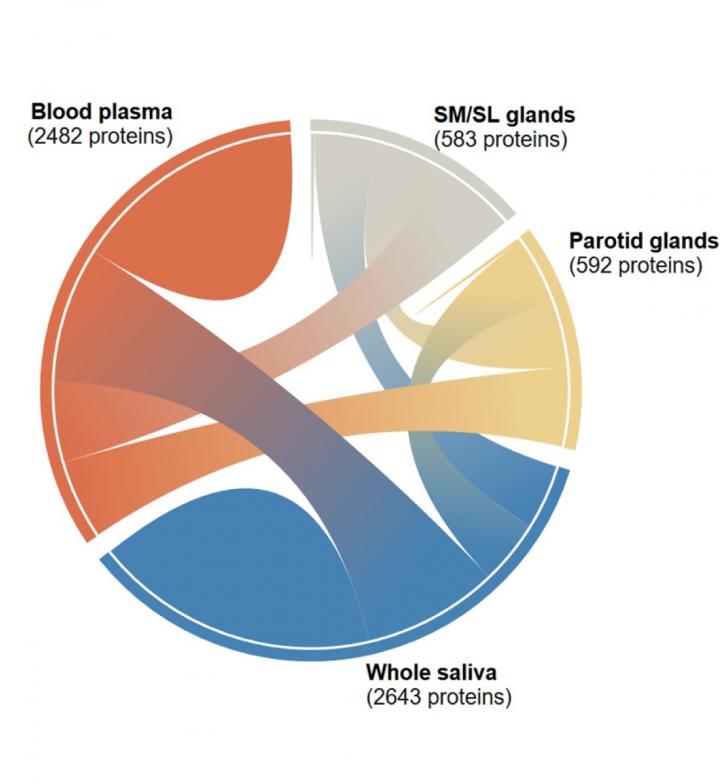
A challenge in saliva’s study, however, is the high level of variability in the thousands of salivary proteins. Therefore, normal ranges for the composition of saliva need to be established to define the status of health, says Ruhl, who in 2020, co-authored research on how saliva is made, pinpointing the origins of proteins in human saliva back to its sources.
“Saliva has become an attractive body fluid for on-site, remote and real-time monitoring of oral and systemic health. The scientific community needs a saliva-centered information platform that keeps pace with the rapid accumulation of new data and knowledge,” says William Lau, PhD, of the National Institutes of Health (NIH) and first author of the study.
“The Human Salivary Proteome Wiki will improve salivary sciences, saliva-based diagnostics, precision medicine and dentistry, and ultimately facilitate personalized treatment for both oral and systemic diseases,” says Preethi Chander, PhD, program director of the NIDCR Salivary Biology and Immunology Program.
Modernized to ‘harness the full potential of the salivary proteome’
Funded by NIDCR and developed in collaboration with the NIH Center for Information Technology, the Human Salivary Proteome Wiki was released in 2019 as a user-friendly public database to provide rich analytical, curation, and annotation tools for the biomedical research community.
The database compiles information and research on the salivary proteome, genome, transcriptome (types and levels of mRNA expressed in salivary gland tissue), and glycome (array of sugars attached to salivary glycoproteins).
Users may submit proposals to add, and remove or modify data to an interdisciplinary team of curators who ensure information is accurate and supported by sound scientific evidence. Annotations are also credited to the researchers and clinicians who submit them to the wiki, helping drive references to critical research.
The researchers will also host a series of activities that bring contributors together to inspire novel ideas and foster cross-discipline collaborations.
###
Other investigators and curators include Markus Hardt, PhD, mass spectrometry core leader at The Forsyth Institute; Yanhui Zhang, PhD, associate professor at The University of Tennessee Health Science Center; and Marcelo Freire, DDS, PhD, associate professor at the J. Craig Venter Institute.
Media Contact
Marcene Robinson
[email protected]
Original Source
http://www.
Related Journal Article
http://dx.