• HOME
  • NEWS
  • EXPLORE
    • CAREER
      • Companies
      • Jobs
    • EVENTS
    • iGEM
      • News
      • Team
    • PHOTOS
    • VIDEO
    • WIKI
  • BLOG
  • COMMUNITY
    • FACEBOOK
    • INSTAGRAM
    • TWITTER
Friday, March 27, 2026
BIOENGINEER.ORG
No Result
View All Result
  • Login
  • HOME
  • NEWS
  • EXPLORE
    • CAREER
      • Companies
      • Jobs
        • Lecturer
        • PhD Studentship
        • Postdoc
        • Research Assistant
    • EVENTS
    • iGEM
      • News
      • Team
    • PHOTOS
    • VIDEO
    • WIKI
  • BLOG
  • COMMUNITY
    • FACEBOOK
    • INSTAGRAM
    • TWITTER
  • HOME
  • NEWS
  • EXPLORE
    • CAREER
      • Companies
      • Jobs
        • Lecturer
        • PhD Studentship
        • Postdoc
        • Research Assistant
    • EVENTS
    • iGEM
      • News
      • Team
    • PHOTOS
    • VIDEO
    • WIKI
  • BLOG
  • COMMUNITY
    • FACEBOOK
    • INSTAGRAM
    • TWITTER
No Result
View All Result
Bioengineer.org
No Result
View All Result
Home NEWS Science News Chemistry

Ion-selective smart porous membranes

Bioengineer by Bioengineer
May 13, 2021
in Chemistry
Reading Time: 2 mins read
0
IMAGE
Share on FacebookShare on TwitterShare on LinkedinShare on RedditShare on Telegram

IMAGE

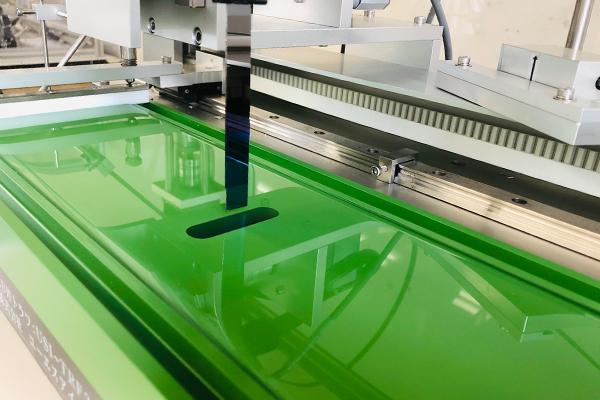
Credit: Yuya Ishizaki

A research group has developed an ion-selective smart porous membrane that can respond to outer stimuli, potentially paving the way for new applications in molecular separation and sensing applications.

Porous thin films have attracted the attention of scientists because of their potential use in sensors, energy harvesting, and ion/molecular separation.

Nanostructure properties, such as pore size, thickness, and film density, affect molecular selectivity and molecular permeability. Surface properties also have a significant impact on molecular selectivity.

Thus it is important to be able to control both the 3D nanostructures and surface properties of ultrathin porous films.

Previous research shed light on smart porous membranes, which are covered with molecules that can respond to external stimuli such as light, temperature, and pH. Yet their application to porous thin-films with an extremely thin film thickness of below 10 nm has proved immensely challenging for scientists.

“In our study, we succeeded in developing responsive porous SiO2 thin films with an extremely thin film thickness of 8 nm with a uniformly covered surface in a pH-responsive silane coupling agent,” said Yuya Ishizaki from the Graduate School of Engineering at Tohoku University and co-author of the study. “The responsive porous thin film can adjust the surface charge depending on the pH change in the solution, resulting in selective ion permeation.”

To prepare the porous films with a controlled structure to nm-scale accuracy, the research group focused on polymer thin films containing silsesquioxanes, which have unique cage structures.

The polymer films were fabricated using the Langmuir-Blodgett technique, chosen because it provides molecular-scale controllability in the film thickness. Langmuir-Blodgett polymer nanosheets also make it possible to fabricate porous SiO2 thin films with controlled nanostructures by simple UV-right irradiation under ambient conditions.

“We plan to develop highly efficient separation membranes and sensing materials that take advantage of the extremely thin film thickness and controlled surface properties in the future,” added Ishizaki.

###

Media Contact
Masaya Mitsuishi
[email protected]

Original Source

https://www.tohoku.ac.jp/en/press/ion_selective_smart_porous_membranes.html

Related Journal Article

http://dx.doi.org/10.1021/acs.langmuir.1c00486

Tags: Chemistry/Physics/Materials SciencesMaterials
Share12Tweet8Share2ShareShareShare2

Related Posts

Isolated H2-Reduced Clusters Boost CO2-to-Methanol Catalysis

Isolated H2-Reduced Clusters Boost CO2-to-Methanol Catalysis

March 25, 2026
blank

Physicists Identify Electronic Drivers Behind Flat Band Quantum Materials

March 21, 2026

Würzburg Chemistry Professor Claudia Höbartner Receives Prestigious Honor

March 20, 2026

Scientists Reveal How Magnets Control Metamaterial Behavior

March 20, 2026
Please login to join discussion

POPULAR NEWS

  • blank

    Revolutionary AI Model Enhances Precision in Detecting Food Contamination

    96 shares
    Share 38 Tweet 24
  • Imagine a Social Media Feed That Challenges Your Views Instead of Reinforcing Them

    1003 shares
    Share 397 Tweet 248
  • Uncovering Functions of Cavernous Malformation Proteins in Organoids

    54 shares
    Share 22 Tweet 14
  • Promising Outcomes from First Clinical Trials of Gene Regulation in Epilepsy

    51 shares
    Share 20 Tweet 13

About

We bring you the latest biotechnology news from best research centers and universities around the world. Check our website.

Follow us

Recent News

In-Sensor Cryptography Links Physical Process to Digital Identity

Can Psychosocial Factors Influence Cancer Risk?

Depression Factors in Elderly: Pre vs. Post-COVID Analysis

Subscribe to Blog via Email

Success! An email was just sent to confirm your subscription. Please find the email now and click 'Confirm' to start subscribing.

Join 78 other subscribers
  • Contact Us

Bioengineer.org © Copyright 2023 All Rights Reserved.

Welcome Back!

Login to your account below

Forgotten Password?

Retrieve your password

Please enter your username or email address to reset your password.

Log In
No Result
View All Result
  • Homepages
    • Home Page 1
    • Home Page 2
  • News
  • National
  • Business
  • Health
  • Lifestyle
  • Science

Bioengineer.org © Copyright 2023 All Rights Reserved.