• HOME
  • NEWS
  • EXPLORE
    • CAREER
      • Companies
      • Jobs
    • EVENTS
    • iGEM
      • News
      • Team
    • PHOTOS
    • VIDEO
    • WIKI
  • BLOG
  • COMMUNITY
    • FACEBOOK
    • INSTAGRAM
    • TWITTER
Saturday, February 7, 2026
BIOENGINEER.ORG
No Result
View All Result
  • Login
  • HOME
  • NEWS
  • EXPLORE
    • CAREER
      • Companies
      • Jobs
        • Lecturer
        • PhD Studentship
        • Postdoc
        • Research Assistant
    • EVENTS
    • iGEM
      • News
      • Team
    • PHOTOS
    • VIDEO
    • WIKI
  • BLOG
  • COMMUNITY
    • FACEBOOK
    • INSTAGRAM
    • TWITTER
  • HOME
  • NEWS
  • EXPLORE
    • CAREER
      • Companies
      • Jobs
        • Lecturer
        • PhD Studentship
        • Postdoc
        • Research Assistant
    • EVENTS
    • iGEM
      • News
      • Team
    • PHOTOS
    • VIDEO
    • WIKI
  • BLOG
  • COMMUNITY
    • FACEBOOK
    • INSTAGRAM
    • TWITTER
No Result
View All Result
Bioengineer.org
No Result
View All Result
Home NEWS Science News Biology

Ankle and foot bone evolution gave prehistoric mammals a leg up

Bioengineer by Bioengineer
May 13, 2021
in Biology
Reading Time: 2 mins read
0
IMAGE
Share on FacebookShare on TwitterShare on LinkedinShare on RedditShare on Telegram

IMAGE

Credit: Sarah Shelley

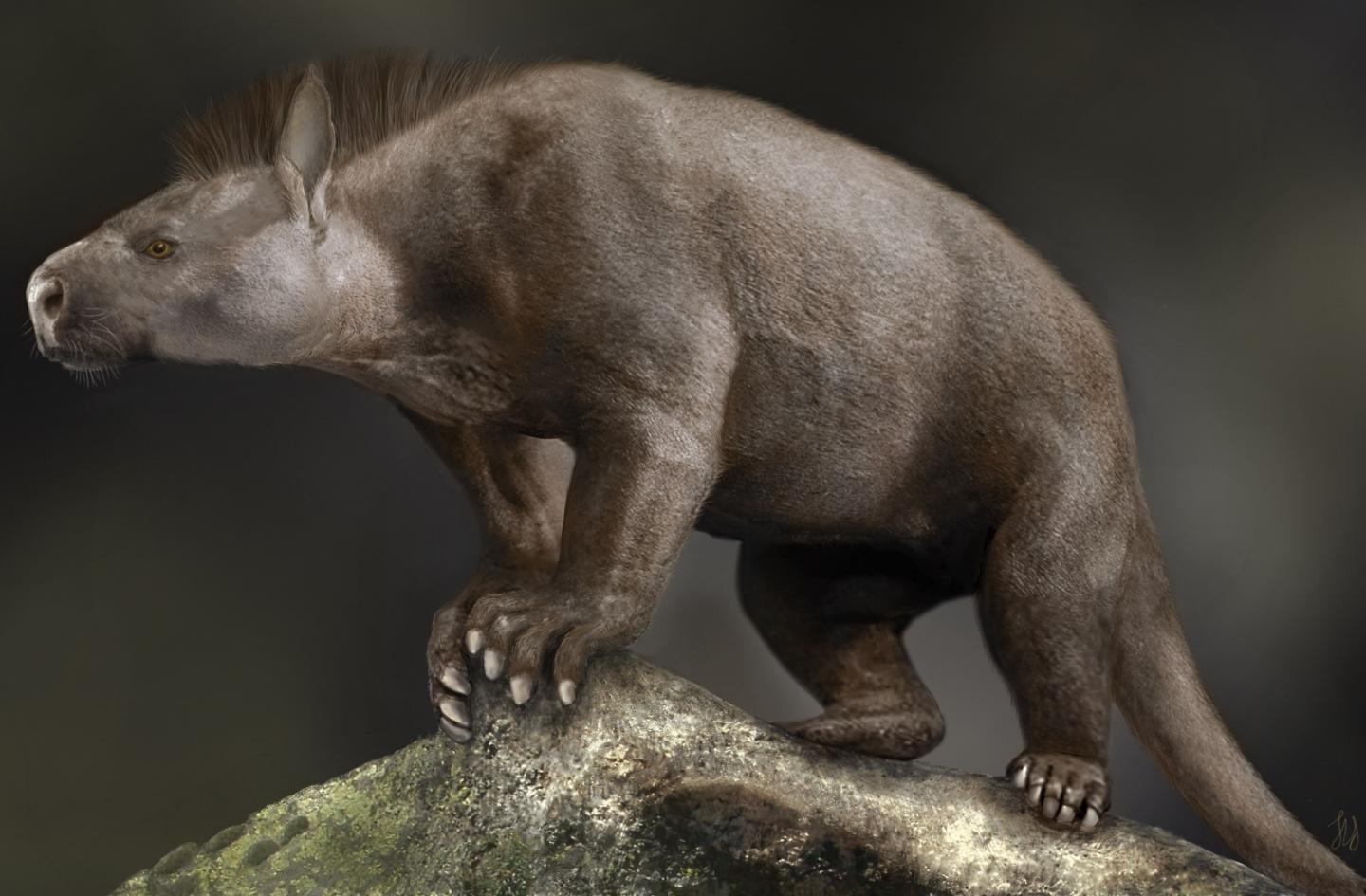
The evolution of ankle and foot bones into different shapes and sizes helped mammals adapt and thrive after the extinction of the dinosaurs, a study suggests.

A surge of evolution following the mass extinction 66 million years ago enabled mammals to diversify and prosper during a period of major global change, researchers say.

Analysis of bones that form part of the ankle and the heel of the foot reveal that mammals during this time – the Paleocene Period – were less primitive than previously thought.

Palaeontologists from the University of Edinburgh made the discovery by comparing the anatomy of Paleocene mammals with species from the earlier Cretaceous Period and those that exist today.

They analysed foot and ankle bone measurements – which provide insights into animals’ lifestyle and body size – of 40 Paleocene species. The team contrasted the results with data from living mammal species and mammals that existed during the Cretaceous Period.

Their findings show that Paleocene mammals had stockier, more muscular builds than those from the Cretaceous or present day. The animals’ joints were also very mobile, supported by ligaments and tendons – rather than bony features as in some living mammals – which the team hypothesise enabled them to adapt and evolve more rapidly following the extinction.

Many species’ ankles and feet closely resembled those of ground-dwelling and burrowing mammals that exist today, indicating that these lifestyles were key to surviving and thriving after the mass extinction, which was caused by an asteroid impact.

The ability to dig underground, for example, is likely to have helped mammals survive the initial devastation, while a loss of tree habitats after the extinction period may have favoured ground-dwelling species, the team says.

The study is published in the journal Proceedings of the Royal Society B. An Open Access version of the paper is available here: https://www.research.ed.ac.uk/en/publications/quantitative-assessment-of-tarsal-morphology-illuminates-locomoto. It was funded by a Marie Curie Career Integration Grant, the Natural Environment Research Council, National Science Foundation and European Research Council.

Dr Sarah Shelley, from the University of Edinburgh’s School of GeoSciences, who led the study, said: “At the core of our study, we wanted to figure out what Paleocene mammals were doing in terms of their anatomy and how this related to aspects of their lifestyle and evolution in the wake of the dinosaur extinction. Paleocene mammals have this tendency to combine unusual mish-mashes of anatomy but are often seen as ‘archaic’ and unspecialised precursors to living mammal groups. What we found was this incredible diversity – they’re adapting and evolving their robustly built bodies in ways that are different to living mammals. Our results show one of the many ways mammals were able to adapt and thrive following the catastrophic devastation of the end-Cretaceous extinction.”

###

Media Contact
Corin Campbell
[email protected]

Related Journal Article

http://dx.doi.org/10.1098/rspb.2021.0393

Tags: BiodiversityClimate ChangeEarth ScienceEvolutionPaleontology
Share13Tweet8Share2ShareShareShare2

Related Posts

Florida Cane Toad: Complex Spread and Selective Evolution

Florida Cane Toad: Complex Spread and Selective Evolution

February 7, 2026
New Study Uncovers Mechanism Behind Burn Pit Particulate Matter–Induced Lung Inflammation

New Study Uncovers Mechanism Behind Burn Pit Particulate Matter–Induced Lung Inflammation

February 6, 2026

DeepBlastoid: Advancing Automated and Efficient Evaluation of Human Blastoids with Deep Learning

February 6, 2026

Navigating the Gut: The Role of Formic Acid in the Microbiome

February 6, 2026
Please login to join discussion

POPULAR NEWS

  • Robotic Ureteral Reconstruction: A Novel Approach

    Robotic Ureteral Reconstruction: A Novel Approach

    82 shares
    Share 33 Tweet 21
  • Digital Privacy: Health Data Control in Incarceration

    63 shares
    Share 25 Tweet 16
  • Study Reveals Lipid Accumulation in ME/CFS Cells

    57 shares
    Share 23 Tweet 14
  • Breakthrough in RNA Research Accelerates Medical Innovations Timeline

    53 shares
    Share 21 Tweet 13

About

We bring you the latest biotechnology news from best research centers and universities around the world. Check our website.

Follow us

Recent News

Digital Health Perspectives from Baltic Sea Experts

Florida Cane Toad: Complex Spread and Selective Evolution

Exploring Decision-Making in Dementia Caregivers’ Mobility

Subscribe to Blog via Email

Enter your email address to subscribe to this blog and receive notifications of new posts by email.

Join 73 other subscribers
  • Contact Us

Bioengineer.org © Copyright 2023 All Rights Reserved.

Welcome Back!

Login to your account below

Forgotten Password?

Retrieve your password

Please enter your username or email address to reset your password.

Log In
No Result
View All Result
  • Homepages
    • Home Page 1
    • Home Page 2
  • News
  • National
  • Business
  • Health
  • Lifestyle
  • Science

Bioengineer.org © Copyright 2023 All Rights Reserved.