UToledo researchers are collaborating with municipal water treatment plants in Ohio
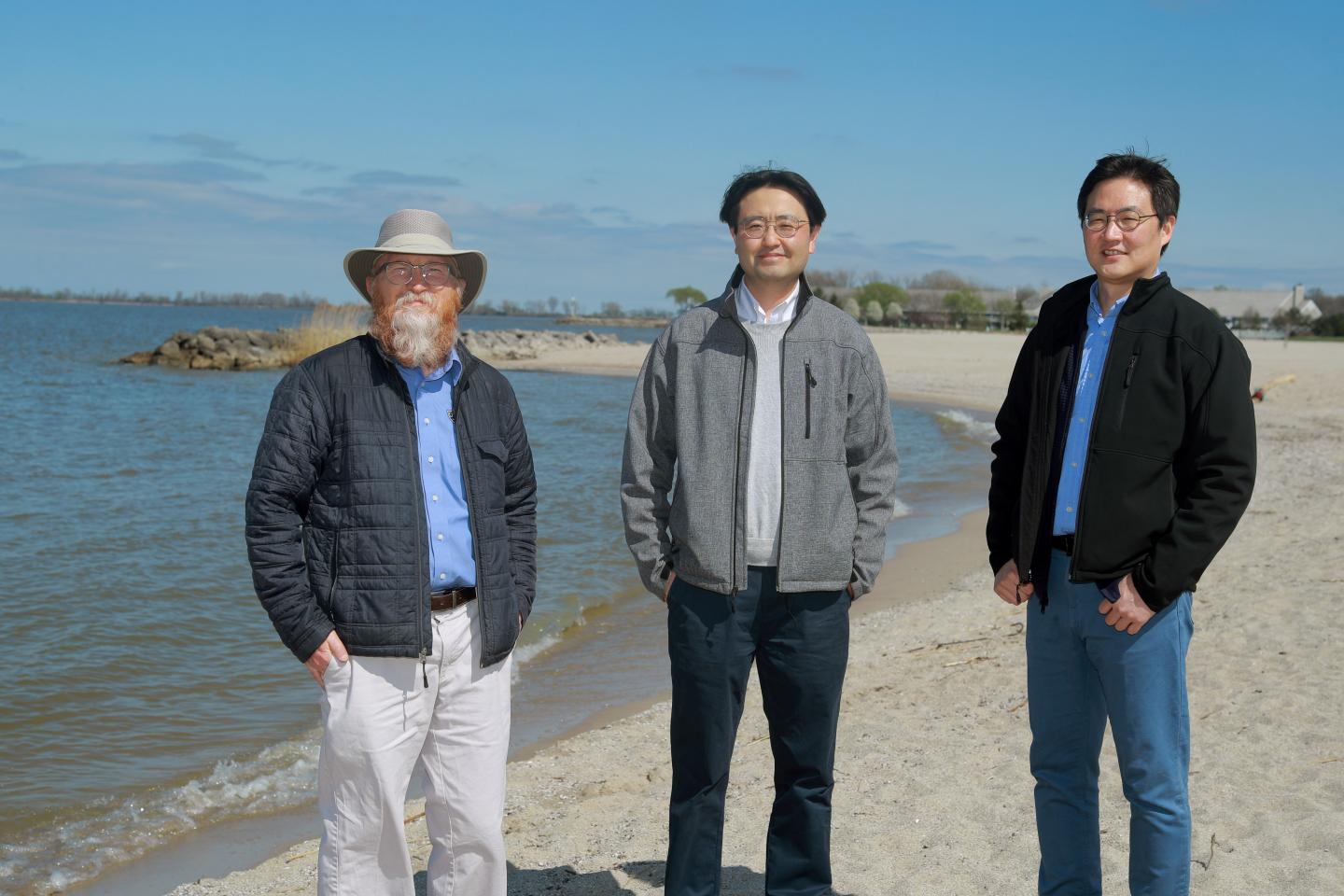
Credit: Daniel Miller, The University of Toledo
The U.S. Army Corps of Engineers awarded researchers at The University of Toledo $1.4 million to develop enhanced technology for early detection and management of harmful algal blooms, Lake Erie’s environmental menace and a worldwide problem.
Dr. Youngwoo Seo, professor of civil and environmental engineering and chemical engineering in the UToledo College of Engineering, leads the three-year project to improve water quality from the source to the tap.
Some of the technology and techniques being tested by UToledo are new to water treatment plants in the western hemisphere. Water treatment plants in northwest Ohio are collaborating on the project along with the U.S. Environmental Protection Agency, Ohio State University and Sepro Inc. Participating municipal water treatment plants include Toledo, Bowling Green, Celina and Oregon.
The project features two different parts working together:
- Advanced monitoring sensors and molecular genetic analyses to enhance early harmful algal bloom detection and real-time condition diagnostic capability; and
- Nature-inspired biological treatment methods coupled with algaecides to attack cyanobacteria and degrade toxins produced by cyanobacteria.
“We are excited that our proposed method and new techniques can make real changes for water utilities and the water quality in the lake,” Seo said. “It has great potential to be a more sustainable way to handle the cyanobacteria and their toxins.”
“Harmful algal blooms are a growing and costly problem affecting the nation,” said Dr. Jen Seiter-Moser, the U.S. Army Engineer Research and Development Center’s acting technical director for civil works, environmental engineering and sciences. “At ERDC, we benefit from collaboration with other federal, academic and industry partners. We’re looking forward to working with our UToledo partners to find solutions that can be applied regionally and then scaled up for nationwide application.”
Dr. Thomas Bridgeman, professor of ecology in the UToledo College of Natural Sciences and Mathematics and director of the UToledo Lake Erie Center, will lead the monitoring. First, he will test new instruments called fluoroprobes in the lab using algal cultures. The second stage will be to use them in Lake Erie, and finally work with water treatment plants to incorporate these instruments as part of their source water monitoring.
The sensors can detect the health, or physiological condition, of the cyanobacteria — whether the cyanobacterial cells are becoming fragile and leaky, releasing their toxins into the water — along with the concentration of cyanobacteria and how blooms react to water treatment chemicals.
“These monitoring sensors made by the German company bbe Moldaenke are capable of easily detecting when cyanobacterial cells are starting to rupture, which could be a powerful tool for water utility managers to respond to and minimize toxin release,” Bridgeman said.
Dr. Dae-Wook Kang, assistant professor of civil and environmental engineering in the UToledo College of Engineering, will lead a molecular approach to develop a robust detection method. He will obtain rich microbial DNA, RNA and metabolomic information from samples, which can be an indicator of cell metabolism, and try to better identify the biomarker for the harmful algal bloom.
“Harmful algal blooms are outcomes of a complex network between cyanobacteria and neighboring competitors such as cyanophages and eukaryotes. By integrating these dynamic microbiome data together with sensor and water chemical data, we aim to develop an early and rapid detection tool of harmful algal blooms,” Kang said.
“In the lake we have harmful algal blooms but also other bacteria that interact with each other,” Seo said. “Sometimes cyanobacteria don’t produce high concentrations of toxins even when the bloom is large. Sometimes we have a small bloom, but have high concentrations of toxins.”
Kang is using molecular techniques to decipher how the water conditions affect algal blooms and the bloom conditions and how other microorganisms in the water interact with cyanobacteria and impact bloom conditions.
That analysis will help better understand what triggers the toxin gene production of cyanobacteria.
Seo is focused on mitigation and the treatment method for toxin removal. His lab is working on biological degradation of cyanobacteria and their toxins using the naturally occurring bacteria and viruses from the lake and NSF-approved chemical treatments.
“Once we detect the harmful algal bloom, we will try to reduce the algal bloom in early stages, using bacteria and algicide treatments of the cyanobacteria and their toxin directly in the lake to control the toxin from spreading,” Seo said. “We are collaborating with microbiologists at the Ohio State University who have isolated different viruses of the cyanobacteria, and we are evaluating their effectiveness to control the harmful algal bloom.”
Seo says the goal is to introduce new techniques to mitigate the harmful algal blooms through early detection and work with water treatment plants to optimize and improve their treatment methods.
###
Media Contact
Christine Billau
[email protected]