Research offers much-needed guidance for early detection in nursing homes, dorms, barracks
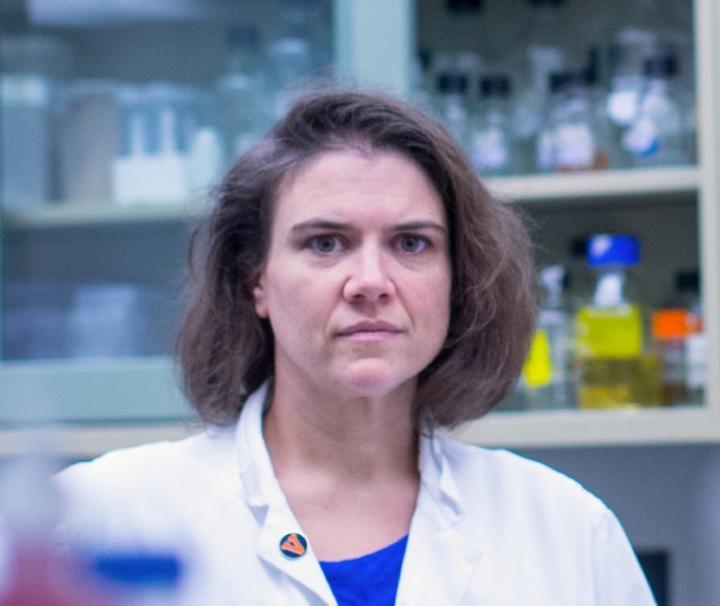
Credit: Sanjay Suchak | UVA Communications
Wastewater testing is an effective way to identify new cases of COVID-19 in nursing homes and other congregate living settings, and it may be particularly useful for preventing outbreaks in college dormitories, a new University of Virginia study finds.
The research, a collaboration of UVA’s School of Medicine and School of Engineering, was led by UVA Health’s Amy Mathers, MD. It offers some of the first clear guidance on the most effective methods to perform testing to detect COVID-19 in wastewater.
The researchers evaluated and compared sampling and analysis techniques by testing them within buildings with known numbers of positive cases. They were then able to determine wastewater testing’s strengths and limitations as a tool for monitoring COVID-19 in a building population. For example, the technique proved better at detecting initial infections than determining the number of occupants infected or how long they had been infected.
One important answer revealed by the research: Wastewater testing can detect even small numbers of asymptomatic cases, something not previously documented.
“This work could be applied to surveillance in buildings where people live in groups, where transmission may be hard to control but the risk of spread could be high,” said Mathers, an infectious disease expert in the School of Medicine’s Department of Pathology. “Since we can identify new infections with high sensitivity, it provides an early warning signal of when to test everyone in the building to find and isolate the newly infected persons before an outbreak becomes large.”
Wastewater Testing for COVID-19
To evaluate the effectiveness of wastewater testing for detecting COVID-19, Mathers collaborated with Lisa Colosi-Peterson, PhD, an associate professor in UVA Engineering’s Department of Engineering Systems and Environment, who connected with Mathers through UVA’s Center for Engineering in Medicine. They and their colleagues monitored wastewater from two student dormitory complexes for eight weeks. The researchers found that the wastewater testing caught more than 96% of cases.
One limitation of wastewater testing: It could not distinguish between new infections and virus found in stool from those who had recovered and were no longer contagious. That means the wastewater testing detected both active and former cases. “The inability to distinguish recently infected but no longer contagious persons from new contagious infections within a building is an important finding, as it means that wastewater testing would be best for identifying new cases and isolating individuals in groups without recent infections,” Mathers said.
UVA’s new research also establishes useful protocols for wastewater testing. In a scientific paper outlining their findings, the researchers describe how they collected and tested the samples, noting that refrigerating the samples on ice adequately preserved them for testing that same day. Institutions that plan to send their samples elsewhere for testing, however, may need to take additional steps to preserve the samples for longer, the researchers note. Cleansers and disinfectants used in the facilities could also degrade the viral RNA over time, they caution.
While the researchers are urging further study, they conclude that wastewater testing holds great promise for detecting and controlling COVID-19 in places where people live in close quarters. “Passive pooled surveillance of wastewater is now serving as an early warning system in many dormitories, barracks and prisons to identify new cases in situations where transmission risk is high,” Mathers said. “Applications for wastewater surveillance to inform and control infectious disease transmission will continue to evolve, but it is hard to believe how far and how fast we have come in the last year.”
###
Findings Published
The project was a collaborative effort of UVA’s School of Medicine, School of Engineering, School of Data Science and UVA Health’s Facilities Management. The research team consisted of Colosi-Peterson, Katie E. Barry, Shireen M. Kotay, Michael D. Porter, Melinda D. Poulter, Cameron Ratliff, William Simmons, Limor I. Steinberg, D. Derek Wilson, Rena Morse, Paul Zmick and Mathers.
The researchers have published their findings in the scientific journal Applied and Environmental Microbiology.
The work was supported by a UVA Engineering in Medicine Seed Grant and support from the University Reopening Committee.
To keep up with the latest medical research news from UVA, subscribe to the Making of Medicine blog at http://makingofmedicine.
Media Contact
Josh Barney
[email protected]
Original Source
https:/
Related Journal Article
http://dx.