Credit: Modification of work by CXC/MPE/V. Springel
The detection of the axion would mark a key episode in the history of science. This hypothetical particle could resolve two fundamental problems of Modern Physics at the same time: the problema of Charge and Parity in the strong interaction, and the mystery of dark matter. However, in spite of the high scientific interest in finding it, the search at high radio frequency -above 6 GHz- has been almost left aside for the lack of the high sensitivity technology which could be built at reasonable cost. Until now.
The Instituto de Astrofísica de Canarias (IAC) will participate in an international collaboration to develop the DALI (Dark-photons & Axion-Like particles Interferometer) experiment, an astro-particle telescope for dark matter whose scientific objective is the search for axions and paraphotons in the 6 to 60 GHz band. The prototype, proof of concept, is currently in the design and fabrication phase at the IAC. The white-paper describing the experiment has been accepted for publication in the Journal of Cosmology and Astroparticle Physics (JCAP).
Predicted by theory in the 1970’s, the axion is a hypothetical low mass particle which interacts weakly with standard particles such as nucleons and electrons, as well as with photons. These proposed interactions are studied to try to detect the axion with different types of instruments. One promising technique is to study the interaction of axions with standard photons.
“Axions ‘mix’ with photons under the action of a strong external magnetic field, such as those produced by the superconducting magnets in particle detectors or those used for medical diagnostics by magnetic resonance, and produce a weak radio or microwave signal. This signal has been looked for in a variety of experiments since the end of the 80’s, and it is just the signal that we want to detect now with DALI, although in a new almost unexplored range of parameters, which will be accessible for the first time thanks to this experiment”, explains Javier De Miguel, an IAC researcher and the first author of the study.
The first axion detectors, made in the 80’s and 90’s, used a resonant cavity which, inside a super-magnet, amplified the weak microwave signal predicted from the axion, trying to bring it into a power range detectable by scientific instruments. Unfortunately, the size of the cavity is inversely proportional to the scanning frequency and, for the axion, the cavies were too small to be made for frequencies greater than some 6 GHz.
For this reason, the new experiment brings together the most promising techniques for scanning at high frequencies, and includes it in a practical design to which is also added the capacity of astro-particle detectors for axionic dark matter. In this way, DALI comprises a powerful superconducting magnet, an axion detector with a novel resonator to make the weak signal caused by the axions detectable, and an altazimuth mount to allow it to scan objects and regions in the sky looking for dark matter.
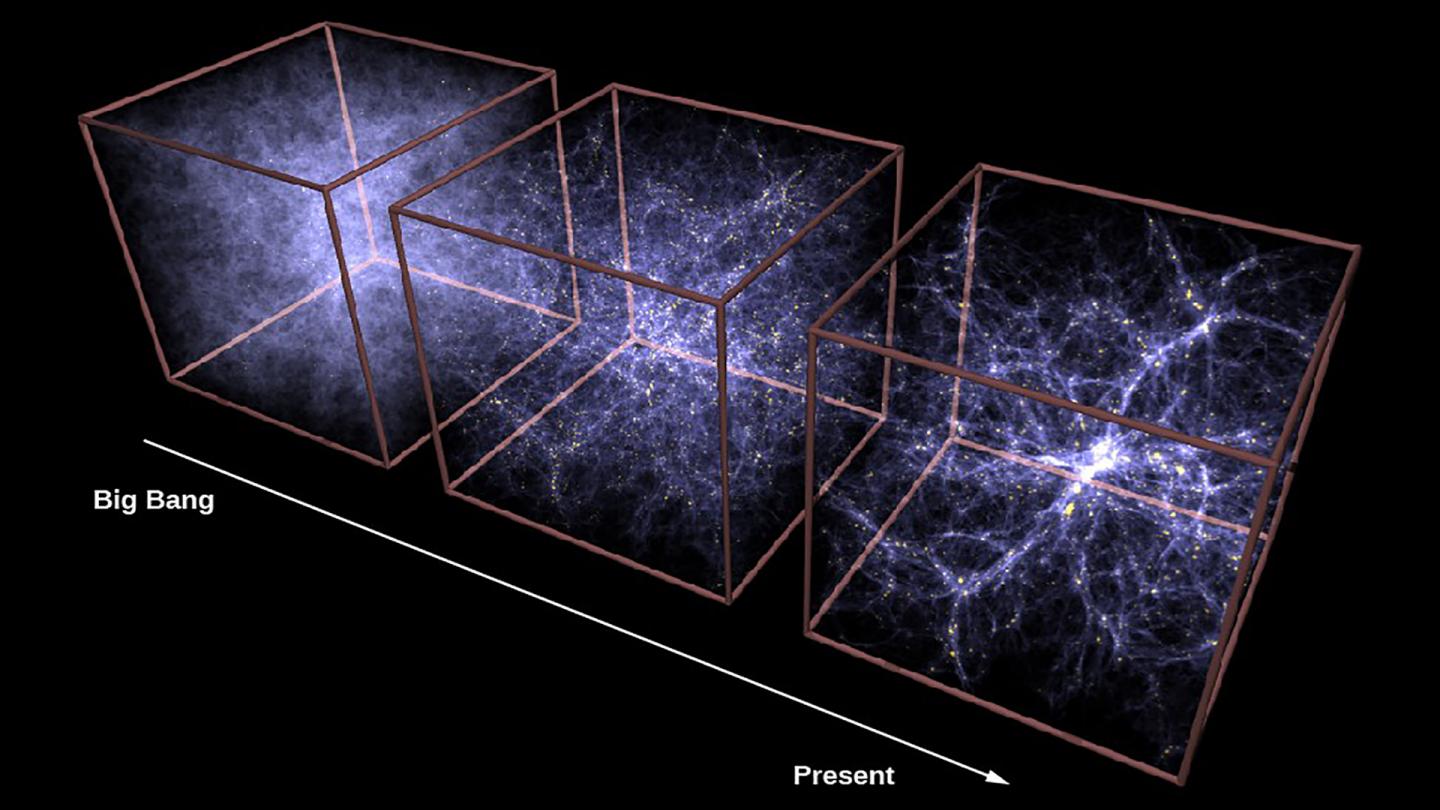
This way, DALI could help in the detection of the axion, a pseudo-scalar particle whose nature is similar to that of the Higgs boson, discovered in 2012 at CERN, and a promising candidate for dark matter. Dark matter is a fundamental constituent of the Universe which interacts very weakly with ordinary matter, and so is very difficult to detect directly, but whose discovery would allow us to explain the rotation curves of the spiral galaxies, and why the formation of structure in the Universe has developed in the way it has until now, among other mysteries.
###
Article: Javier De Miguel. “A dark matter telescope probing the 6 to 60 GHz band”. Journal of Cosmology and Astroparticle Physics, May 10th, 2020. DOI: https:/
– Arxiv: https:/
Media Contact
Prensa IAC
[email protected]
Original Source
https:/
Related Journal Article
http://dx.