• HOME
  • NEWS
  • EXPLORE
    • CAREER
      • Companies
      • Jobs
    • EVENTS
    • iGEM
      • News
      • Team
    • PHOTOS
    • VIDEO
    • WIKI
  • BLOG
  • COMMUNITY
    • FACEBOOK
    • INSTAGRAM
    • TWITTER
Thursday, September 24, 2026
BIOENGINEER.ORG
No Result
View All Result
  • Login
  • HOME
  • NEWS
  • EXPLORE
    • CAREER
      • Companies
      • Jobs
        • Lecturer
        • PhD Studentship
        • Postdoc
        • Research Assistant
    • EVENTS
    • iGEM
      • News
      • Team
    • PHOTOS
    • VIDEO
    • WIKI
  • BLOG
  • COMMUNITY
    • FACEBOOK
    • INSTAGRAM
    • TWITTER
  • HOME
  • NEWS
  • EXPLORE
    • CAREER
      • Companies
      • Jobs
        • Lecturer
        • PhD Studentship
        • Postdoc
        • Research Assistant
    • EVENTS
    • iGEM
      • News
      • Team
    • PHOTOS
    • VIDEO
    • WIKI
  • BLOG
  • COMMUNITY
    • FACEBOOK
    • INSTAGRAM
    • TWITTER
No Result
View All Result
Bioengineer.org
No Result
View All Result
Home NEWS Science News

Research gives trees an edge in landfill clean-up

Bioengineer by Bioengineer
April 28, 2021
in Science News
Reading Time: 2 mins read
0
IMAGE
Share on FacebookShare on TwitterShare on LinkedinShare on RedditShare on Telegram

IMAGE

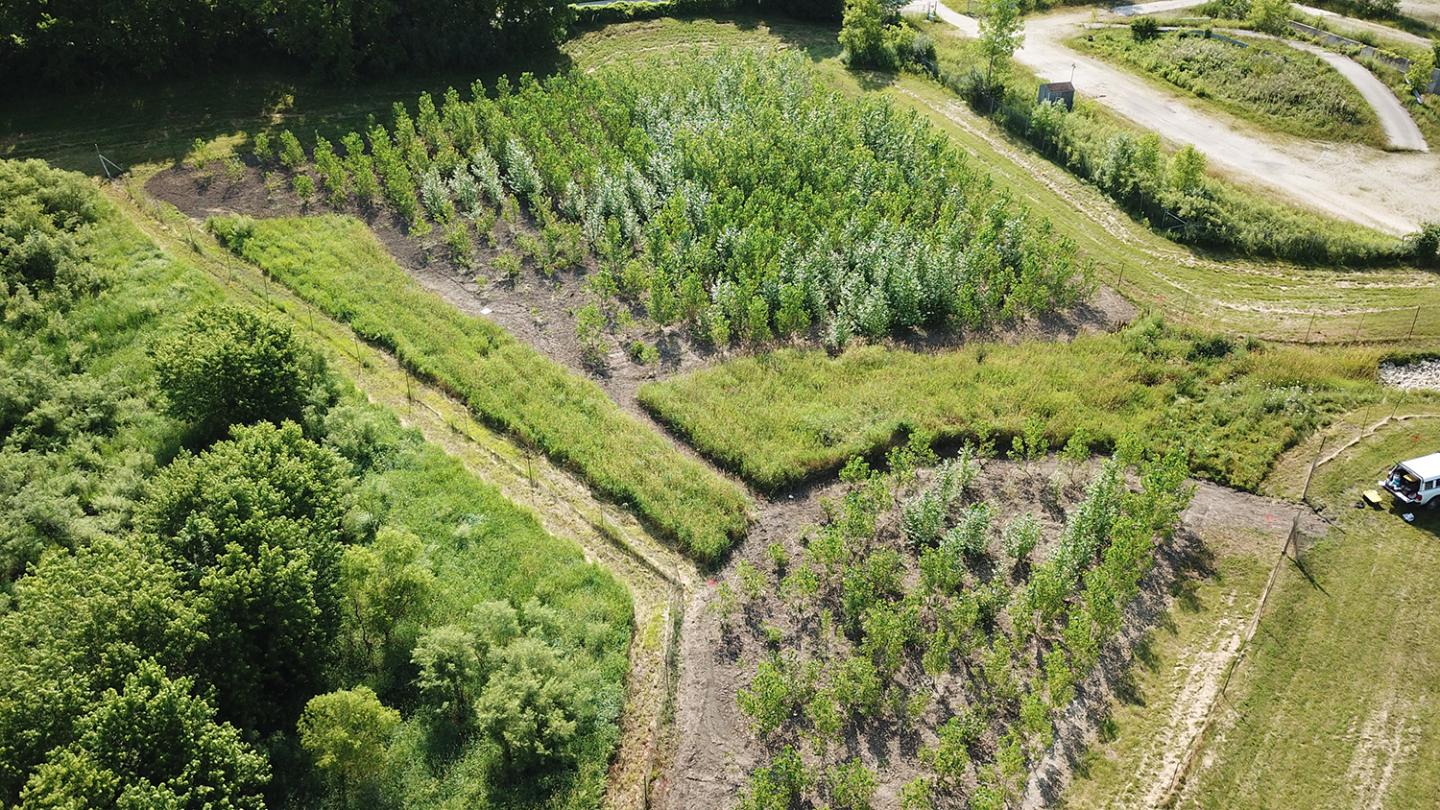
Credit: Paul Manley, Missouri University of Science and Technology; used with permission

Rhinelander, Wis., April 28, 2021– A research team from the USDA Forest Service and the University of Missouri has developed a new contaminant prioritization tool that has the potential to increase the effectiveness of environmental approaches to landfill clean-up.

Phytoremediation – an environmental approach in which trees and other plants are used to control leachate and treat polluted water and soil – hinges on matching the capability of different tree species with the types of contaminants present in soil and water. Identifying the worst contaminants within the dynamic conditions of a landfill has been challenging.

“Thousands of contaminants can be present in landfill leachate, and contamination can vary by location and over time, so it can be difficult to determine what needs to be, or even can be targeted with environmental remediation,” said Elizabeth Rogers, a USDA Forest Service Pathways intern and the lead author of the study. “This tool allows site managers to prioritize the most hazardous contaminants or customize the tool to address local concerns.”

Rogers and co-authors Ron Zalesny, Jr., a supervisory research plant geneticist with the Northern Research Station, and Chung-Ho Lin, a Research Associate Professor at the University of Missouri’s Center for Agroforestry, combined multiple sources of data to develop a pollutant prioritization tool that systematically prioritizes contaminants according to reported toxicity values. The study, “A systematic approach for prioritizing landfill pollutants based on toxicity: Applications and opportunities,” is available through the Northern Research Station at: https://www.nrs.fs.fed.us/pubs/62410

Knowing which contaminants are the most hazardous allows scientists like Zalesny to better match trees and tree placement in landfills. “Phytoremediation research has focused on discovering which trees work best in particular soils and sites,” Zalesny said. “The ability to home in on specific contaminants will enhance phytoremediation outcomes.”

The pollutant prioritization tool allows for greater transparency on the benefits of phytoremediation. “When you know what you are targeting, you can provide better information to your community on how long remediation will take and how effective it is,” Lin said.

###

Media Contact
Jane Hodgins
[email protected]

Original Source

https://www.nrs.fs.fed.us/news/release/prioritizing-trees-for-landfill-clean-up

Related Journal Article

http://dx.doi.org/10.1016/j.jenvman.2021.112031

Tags: AgricultureEcology/EnvironmentForestry
Share12Tweet8Share2ShareShareShare2

Related Posts

Weasel Bite Linked to Deadly Tick-Borne Virus in Rare Chinese Case

Weasel Bite Linked to Deadly Tick-Borne Virus in Rare Chinese Case

September 24, 2026
Brain’s Waste-Clearance System Emerges as New Alzheimer’s Treatment Frontier

Brain’s Waste-Clearance System Emerges as New Alzheimer’s Treatment Frontier

September 24, 2026

New Risk Model Predicts Kidney Disease Years Before It Strikes People With Prediabetes

September 24, 2026

Heart Cells Have a 24-Hour Molecular Switch That Turns Sleep Apnea Damage On

September 24, 2026
Please login to join discussion

POPULAR NEWS

  • Weasel Bite Linked to Deadly Tick-Borne Virus in Rare Chinese Case

    29 shares
    Share 12 Tweet 7
  • Brain’s Waste-Clearance System Emerges as New Alzheimer’s Treatment Frontier

    29 shares
    Share 12 Tweet 7
  • New Risk Model Predicts Kidney Disease Years Before It Strikes People With Prediabetes

    29 shares
    Share 12 Tweet 7
  • Heart Cells Have a 24-Hour Molecular Switch That Turns Sleep Apnea Damage On

    29 shares
    Share 12 Tweet 7

About

We bring you the latest biotechnology news from best research centers and universities around the world. Check our website.

Follow us

Recent News

Weasel Bite Linked to Deadly Tick-Borne Virus in Rare Chinese Case

Brain’s Waste-Clearance System Emerges as New Alzheimer’s Treatment Frontier

New Risk Model Predicts Kidney Disease Years Before It Strikes People With Prediabetes

Subscribe to Blog via Email

Enter your email address to subscribe to this blog and receive notifications of new posts by email.

Join 85 other subscribers
  • Contact Us

Bioengineer.org © Copyright 2023 All Rights Reserved.

Welcome Back!

Login to your account below

Forgotten Password?

Retrieve your password

Please enter your username or email address to reset your password.

Log In
No Result
View All Result
  • Homepages
    • Home Page 1
    • Home Page 2
  • News
  • National
  • Business
  • Health
  • Lifestyle
  • Science

Bioengineer.org © Copyright 2023 All Rights Reserved.