• HOME
  • NEWS
  • EXPLORE
    • CAREER
      • Companies
      • Jobs
    • EVENTS
    • iGEM
      • News
      • Team
    • PHOTOS
    • VIDEO
    • WIKI
  • BLOG
  • COMMUNITY
    • FACEBOOK
    • INSTAGRAM
    • TWITTER
Thursday, March 26, 2026
BIOENGINEER.ORG
No Result
View All Result
  • Login
  • HOME
  • NEWS
  • EXPLORE
    • CAREER
      • Companies
      • Jobs
        • Lecturer
        • PhD Studentship
        • Postdoc
        • Research Assistant
    • EVENTS
    • iGEM
      • News
      • Team
    • PHOTOS
    • VIDEO
    • WIKI
  • BLOG
  • COMMUNITY
    • FACEBOOK
    • INSTAGRAM
    • TWITTER
  • HOME
  • NEWS
  • EXPLORE
    • CAREER
      • Companies
      • Jobs
        • Lecturer
        • PhD Studentship
        • Postdoc
        • Research Assistant
    • EVENTS
    • iGEM
      • News
      • Team
    • PHOTOS
    • VIDEO
    • WIKI
  • BLOG
  • COMMUNITY
    • FACEBOOK
    • INSTAGRAM
    • TWITTER
No Result
View All Result
Bioengineer.org
No Result
View All Result
Home NEWS Science News Chemistry

Scientists at IRB Barcelona discover the cause of neurodegeneration in Lafora disease

Bioengineer by Bioengineer
April 20, 2021
in Chemistry
Reading Time: 2 mins read
0
IMAGE
Share on FacebookShare on TwitterShare on LinkedinShare on RedditShare on Telegram

IMAGE

Credit: IRB Barcelona

Lafora disease is an inherited neurodegenerative condition that initially develops with seizures in adolescence and evolves with progressive degeneration of the nervous system to death, about ten years after its onset. It is characterised by the accumulation of abnormal glycogen aggregates called Lafora bodies in the brain. There is currently no treatment for this condition, although some therapies are being tested in clinical trials.

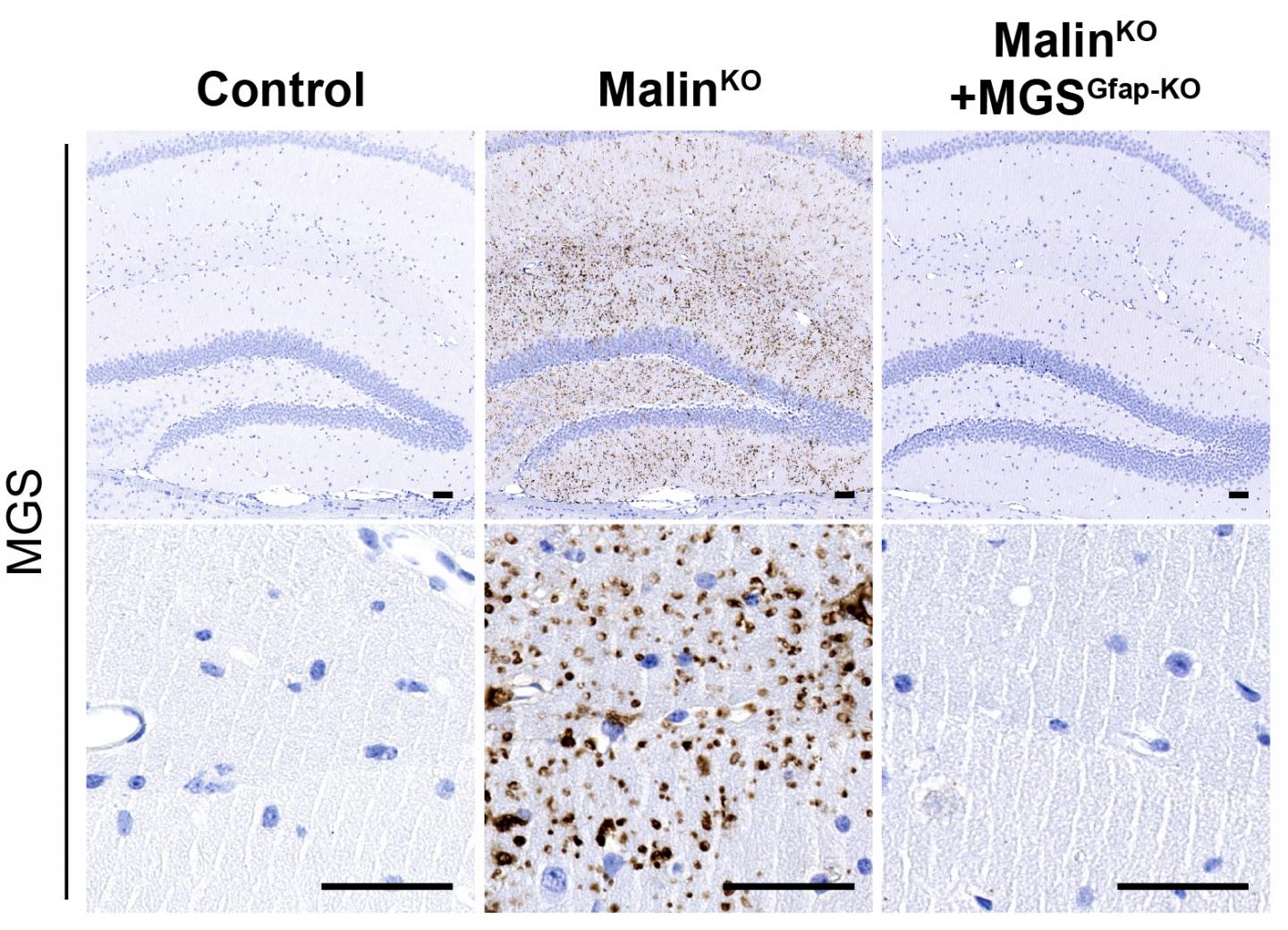
Led by Dr. Joan Guinovart, emeritus professor of the University of Barcelona (UB) and also group leader of CIBERDEM, the Metabolic Engineering lab at IRB Barcelona has discovered that Lafora bodies that accumulate in glial cells, which are essential for the proper functioning of the nervous system, are responsible for the neurodegeneration associated with the disease.

For this study, Dr. Guinovart’s group generated a mouse model of Lafora disease, in which they prevented glycogen from accumulating in glial cells. They found that these mice did not develop neurodegeneration.

“For years, it was believed that the disease was caused by the accumulation of Lafora bodies only in neurons, but now we have shown that neurodegeneration is caused by accumulations in glial cells,” says Dr. Jordi Duran, co-director of the study.

“This discovery has important implications for the design of treatments for the disease and we now intend to investigate the mechanism by which glycogen deposits cause this damage. We will also study the possible role of this pathological mechanism in other neurodegenerative diseases,” explains Dr. Duran.

The study also involved the laboratories led by Dr. José Antonio del Río, full professor of the UB (at the Institute for Bioengineering of Catalonia and the UB’s Institute of Neurosciences) and Professor Matthew Gentry (at the University of Kentucky)..

A consortium supported by the association of affected families

This project has been developed within the framework of a global consortium for the study of Lafora disease, coordinated by the University of Kentucky in the US. In 2016, the consortium received $7.7 M from NIH (U.S. National Institutes of Health) for a period of five years. The consortium was promoted by Chelsea’s Hope, an association of families in the US affected by Lafora disease, which in 2014 brought together leading specialists to foster research into the disease.

###

Media Contact
Nahia Barberia
[email protected]

Original Source

https://www.irbbarcelona.org/en/news/scientists-at-irb-barcelona-discover-the-cause-of-neurodegeneration-in-lafora-disease

Related Journal Article

http://dx.doi.org/10.1093/brain/awab110

Tags: BiologyCell BiologyGenesGeneticsMedicine/HealthMetabolism/Metabolic DiseasesneurobiologyNeurochemistryPediatrics
Share12Tweet8Share2ShareShareShare2

Related Posts

Isolated H2-Reduced Clusters Boost CO2-to-Methanol Catalysis

Isolated H2-Reduced Clusters Boost CO2-to-Methanol Catalysis

March 25, 2026
blank

Physicists Identify Electronic Drivers Behind Flat Band Quantum Materials

March 21, 2026

Würzburg Chemistry Professor Claudia Höbartner Receives Prestigious Honor

March 20, 2026

Scientists Reveal How Magnets Control Metamaterial Behavior

March 20, 2026
Please login to join discussion

POPULAR NEWS

  • blank

    Revolutionary AI Model Enhances Precision in Detecting Food Contamination

    96 shares
    Share 38 Tweet 24
  • Imagine a Social Media Feed That Challenges Your Views Instead of Reinforcing Them

    1003 shares
    Share 397 Tweet 248
  • Uncovering Functions of Cavernous Malformation Proteins in Organoids

    54 shares
    Share 22 Tweet 14
  • Promising Outcomes from First Clinical Trials of Gene Regulation in Epilepsy

    51 shares
    Share 20 Tweet 13

About

We bring you the latest biotechnology news from best research centers and universities around the world. Check our website.

Follow us

Recent News

In-Sensor Cryptography Links Physical Process to Digital Identity

Can Psychosocial Factors Influence Cancer Risk?

Depression Factors in Elderly: Pre vs. Post-COVID Analysis

Subscribe to Blog via Email

Success! An email was just sent to confirm your subscription. Please find the email now and click 'Confirm' to start subscribing.

Join 78 other subscribers
  • Contact Us

Bioengineer.org © Copyright 2023 All Rights Reserved.

Welcome Back!

Login to your account below

Forgotten Password?

Retrieve your password

Please enter your username or email address to reset your password.

Log In
No Result
View All Result
  • Homepages
    • Home Page 1
    • Home Page 2
  • News
  • National
  • Business
  • Health
  • Lifestyle
  • Science

Bioengineer.org © Copyright 2023 All Rights Reserved.