• HOME
  • NEWS
  • EXPLORE
    • CAREER
      • Companies
      • Jobs
    • EVENTS
    • iGEM
      • News
      • Team
    • PHOTOS
    • VIDEO
    • WIKI
  • BLOG
  • COMMUNITY
    • FACEBOOK
    • INSTAGRAM
    • TWITTER
Saturday, December 20, 2025
BIOENGINEER.ORG
No Result
View All Result
  • Login
  • HOME
  • NEWS
  • EXPLORE
    • CAREER
      • Companies
      • Jobs
        • Lecturer
        • PhD Studentship
        • Postdoc
        • Research Assistant
    • EVENTS
    • iGEM
      • News
      • Team
    • PHOTOS
    • VIDEO
    • WIKI
  • BLOG
  • COMMUNITY
    • FACEBOOK
    • INSTAGRAM
    • TWITTER
  • HOME
  • NEWS
  • EXPLORE
    • CAREER
      • Companies
      • Jobs
        • Lecturer
        • PhD Studentship
        • Postdoc
        • Research Assistant
    • EVENTS
    • iGEM
      • News
      • Team
    • PHOTOS
    • VIDEO
    • WIKI
  • BLOG
  • COMMUNITY
    • FACEBOOK
    • INSTAGRAM
    • TWITTER
No Result
View All Result
Bioengineer.org
No Result
View All Result
Home NEWS Science News Chemistry

Chemists at St. Petersburg University create renewable plant-based polymers

Bioengineer by Bioengineer
April 12, 2021
in Chemistry
Reading Time: 2 mins read
0
IMAGE
Share on FacebookShare on TwitterShare on LinkedinShare on RedditShare on Telegram

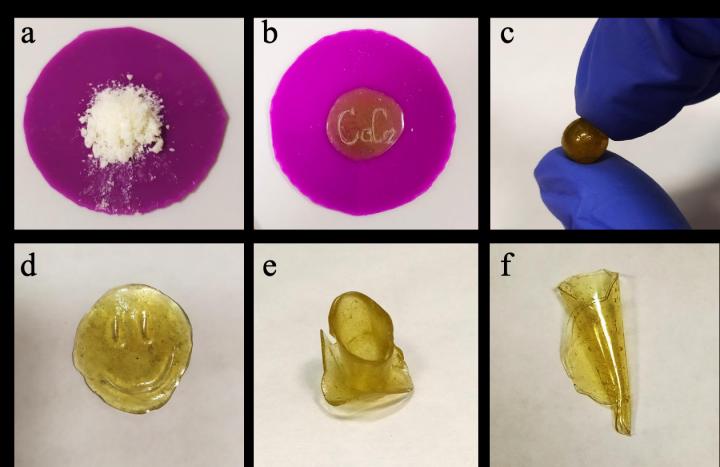
What makes them different is that they can be easily recycled
IMAGE

Credit: SPbU

Researchers at the Laboratory of Cluster Catalysis at St Petersburg University have synthesised polymers from biomass. What makes them different is that they can be easily recycled.

Today, our life is simply unthinkable without polymers. Plastics, fibres, films, paint and lacquer coating – they are all polymers. We use them both in our everyday life and in industry. Yet the goods made from polymers, e.g. bottles, bags, or disposable tableware, are used just once or for a short period of time before they are thrown away. Due to the chemical compounds that they may release during recycling, they pose a real threat to our environment.

There are few polymers that can be recycled many times. This stirs up interest in secondary recycling. However, the goods made from secondary raw materials are lower in quality compared to the goods from primary raw materials.

The new polymers are based on biomass compounds. Biomass is a renewable source of raw materials for the chemical industry of the future. The key component of these polymers is terpenols, i.e. compounds from natural alcohols. Among them are such well-known examples as: menthol derived from the essential oil in mint; and borneol – a large quantity of which can be found in the essential oil in the white fir tree.

The synthesised polymers may well be used for primary and secondary recycling. During secondary recycling, the polymer-based products can be converted into the primary compounds. This may be further followed by polymerisation. These polymers can be recycled at moderate temperatures.

‘This can be said about recycling the materials based on our polymers. If they are recycled without oxygen, we can get natural alcohols or their derivatives that can be restored to the same alcohols. Because they are widely found in nature, they do not harm the environment,’ said Svetlana Metlyaeva, the first author of the article and a researcher at the Laboratory of Cluster Catalysis at St Petersburg University.

The polymers of this type can be melted at about 120°C and shaped in another way, she said. When cooling, they become hard. Interestingly, the chemists repeated this cycle seven times and concluded that the polymers, when melted more than once, did not change their properties.

The researchers are planning to continue their work at the Research Park at St Petersburg University. They will study the mechanical properties of the polymers, including resilience, elasticity, strength, and others. This is an important step towards our understating of how to use them in industry.

‘What we have achieved so far is only the ability to synthesise these polymers. Yet the properties of the polymer-based materials can vary. This depends on the way in which we synthesise them and what compounds we use. Now we have to modify the polymers themselves and the materials based on them. Then we will be able to talk about how we can use them,’ said Svetlana Metlyaeva.

###

Media Contact
Polina Ogorodnikova
[email protected]

Related Journal Article

http://dx.doi.org/10.1039/D0GC04170J

Tags: Chemistry/Physics/Materials SciencesEcology/EnvironmentIndustrial Engineering/ChemistryPolymer Chemistry
Share13Tweet8Share2ShareShareShare2

Related Posts

Cutting Electrolyte Reduction Boosts High-Energy Battery Performance

Cutting Electrolyte Reduction Boosts High-Energy Battery Performance

December 19, 2025
Microenvironment Shapes Gold-Catalysed CO2 Electroreduction

Microenvironment Shapes Gold-Catalysed CO2 Electroreduction

December 11, 2025

Photoswitchable Olefins Enable Controlled Polymerization

December 11, 2025

Cation Hydration Entropy Controls Chloride Ion Diffusion

December 10, 2025
Please login to join discussion

POPULAR NEWS

  • Nurses’ Views on Online Learning: Effects on Performance

    Nurses’ Views on Online Learning: Effects on Performance

    70 shares
    Share 28 Tweet 18
  • NSF funds machine-learning research at UNO and UNL to study energy requirements of walking in older adults

    71 shares
    Share 28 Tweet 18
  • Unraveling Levofloxacin’s Impact on Brain Function

    53 shares
    Share 21 Tweet 13
  • Exploring Audiology Accessibility in Johannesburg, South Africa

    51 shares
    Share 20 Tweet 13

About

We bring you the latest biotechnology news from best research centers and universities around the world. Check our website.

Follow us

Recent News

Immune and Metabolic Markers Define Parkinson’s Constipation Types

MicroRNAs in Breastmilk of Overweight Mothers Reviewed

Trial Tests Sensorimotor Stimulation for High-Risk Newborns

Subscribe to Blog via Email

Enter your email address to subscribe to this blog and receive notifications of new posts by email.

Join 70 other subscribers
  • Contact Us

Bioengineer.org © Copyright 2023 All Rights Reserved.

Welcome Back!

Login to your account below

Forgotten Password?

Retrieve your password

Please enter your username or email address to reset your password.

Log In
No Result
View All Result
  • Homepages
    • Home Page 1
    • Home Page 2
  • News
  • National
  • Business
  • Health
  • Lifestyle
  • Science

Bioengineer.org © Copyright 2023 All Rights Reserved.