• HOME
  • NEWS
  • EXPLORE
    • CAREER
      • Companies
      • Jobs
    • EVENTS
    • iGEM
      • News
      • Team
    • PHOTOS
    • VIDEO
    • WIKI
  • BLOG
  • COMMUNITY
    • FACEBOOK
    • INSTAGRAM
    • TWITTER
Saturday, January 3, 2026
BIOENGINEER.ORG
No Result
View All Result
  • Login
  • HOME
  • NEWS
  • EXPLORE
    • CAREER
      • Companies
      • Jobs
        • Lecturer
        • PhD Studentship
        • Postdoc
        • Research Assistant
    • EVENTS
    • iGEM
      • News
      • Team
    • PHOTOS
    • VIDEO
    • WIKI
  • BLOG
  • COMMUNITY
    • FACEBOOK
    • INSTAGRAM
    • TWITTER
  • HOME
  • NEWS
  • EXPLORE
    • CAREER
      • Companies
      • Jobs
        • Lecturer
        • PhD Studentship
        • Postdoc
        • Research Assistant
    • EVENTS
    • iGEM
      • News
      • Team
    • PHOTOS
    • VIDEO
    • WIKI
  • BLOG
  • COMMUNITY
    • FACEBOOK
    • INSTAGRAM
    • TWITTER
No Result
View All Result
Bioengineer.org
No Result
View All Result
Home NEWS Science News Chemistry

MOF data set provides 10k structures free for academic research

Bioengineer by Bioengineer
April 8, 2021
in Chemistry
Reading Time: 2 mins read
0
IMAGE
Share on FacebookShare on TwitterShare on LinkedinShare on RedditShare on Telegram

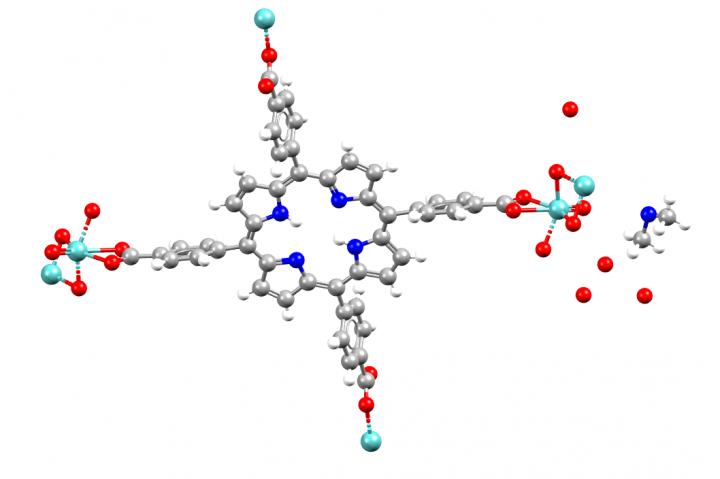
The new CSD MOF Collection provides free access for academic research to 10,636 metal — organic framework crystal structures
IMAGE

Credit: Cambridge Crystallographic Data Centre

The Cambridge Crystallographic Data Centre (CCDC) has made around 10,000 metal–organic framework structures free to academics in the new CSD MOF Collection. This has been announced in a letter in Matter.

“We have seen incredible growth in the number and variety of MOFs synthesised and over the past 50 years, and now the variety of applications is growing too. We hope that access to this data collection will support research in this important field.” said Seth Wiggin, Senior Scientific Editor at the CCDC.

The CSD MOF Collection includes the crystal structure data for 10,636 MOFs from the Cambridge Structural Database (CSD). In order to make the data more ready for computational calculations, the structures have been simplified to space group P1 and all guests have been stripped out to leave just the framework itself. The data is provided as single-block CIF files along with CSV indexes, allowing researchers to search and view the structures, or apply analytical or learning techniques to the data. The collection has been built to provide a simplified and focused data set for computational research including just the 3D porous frameworks, rather than the complete collection of 107,980 MOFs in the full CSD with all the user-led filtering options available in the CSD Software Portfolio.

To build the collection, the CCDC worked with researchers at the University of Cambridge Department of Chemical Engineering and Biotechnology. Here the molecular mechanisms and applications surrounding porous materials like MOFs are researched, including their use in drug delivery systems, hydrogen storage and carbon capture.

“It’s great to see experimentally derived structures from the CSD made available for free in this MOF collection.” said Dr David Fairen-Jimenez, who leads the Adsorption and Advanced Materials lab there. “The potential of MOFs is still being explored in a wide range of applications – and having this trusted data freely available will help to advance work further.”

Indeed reports estimate that the global MOF market will grow by around 34% from 2021 to 2026, with big industry players like BASF and Strem Chemicals active in R&D. As this industry interest grows, fundamental research to understand properties, mechanisms and emerging applications of MOFs will be of increasing importance.

The CSD MOF Collection is available to download now from http://www.ccdc.cam.ac.uk.

###

Media Contact
Sophie Bryant
[email protected]

Original Source

https://www.ccdc.cam.ac.uk/News/List/CCDC-MOF-CIF-collection/

Related Journal Article

http://dx.doi.org/10.1016/j.matt.2021.03.006

Tags: Chemistry/Physics/Materials SciencesMaterials
Share12Tweet8Share2ShareShareShare2

Related Posts

blank

Mapping Arginine Reactivity Across the Human Proteome

January 3, 2026
Stepwise Catalytic Method Enables Diverse P(V) Stereochemistry

Stepwise Catalytic Method Enables Diverse P(V) Stereochemistry

January 2, 2026

Cutting Electrolyte Reduction Boosts High-Energy Battery Performance

December 19, 2025

Microenvironment Shapes Gold-Catalysed CO2 Electroreduction

December 11, 2025
Please login to join discussion

POPULAR NEWS

  • blank

    PTSD, Depression, Anxiety in Childhood Cancer Survivors, Parents

    127 shares
    Share 51 Tweet 32
  • NSF funds machine-learning research at UNO and UNL to study energy requirements of walking in older adults

    71 shares
    Share 28 Tweet 18
  • Exploring Audiology Accessibility in Johannesburg, South Africa

    52 shares
    Share 21 Tweet 13
  • SARS-CoV-2 Subvariants Affect Outcomes in Elderly Hip Fractures

    44 shares
    Share 18 Tweet 11

About

We bring you the latest biotechnology news from best research centers and universities around the world. Check our website.

Follow us

Recent News

Biomechanical Insights into Skeletal Injuries from Falls

Early-Career Voices Unite: Tackling Antimicrobial Resistance

Forensic Maceration: Literature vs. Practical Application

Subscribe to Blog via Email

Enter your email address to subscribe to this blog and receive notifications of new posts by email.

Join 71 other subscribers
  • Contact Us

Bioengineer.org © Copyright 2023 All Rights Reserved.

Welcome Back!

Login to your account below

Forgotten Password?

Retrieve your password

Please enter your username or email address to reset your password.

Log In
No Result
View All Result
  • Homepages
    • Home Page 1
    • Home Page 2
  • News
  • National
  • Business
  • Health
  • Lifestyle
  • Science

Bioengineer.org © Copyright 2023 All Rights Reserved.