• HOME
  • NEWS
  • EXPLORE
    • CAREER
      • Companies
      • Jobs
    • EVENTS
    • iGEM
      • News
      • Team
    • PHOTOS
    • VIDEO
    • WIKI
  • BLOG
  • COMMUNITY
    • FACEBOOK
    • INSTAGRAM
    • TWITTER
Saturday, February 7, 2026
BIOENGINEER.ORG
No Result
View All Result
  • Login
  • HOME
  • NEWS
  • EXPLORE
    • CAREER
      • Companies
      • Jobs
        • Lecturer
        • PhD Studentship
        • Postdoc
        • Research Assistant
    • EVENTS
    • iGEM
      • News
      • Team
    • PHOTOS
    • VIDEO
    • WIKI
  • BLOG
  • COMMUNITY
    • FACEBOOK
    • INSTAGRAM
    • TWITTER
  • HOME
  • NEWS
  • EXPLORE
    • CAREER
      • Companies
      • Jobs
        • Lecturer
        • PhD Studentship
        • Postdoc
        • Research Assistant
    • EVENTS
    • iGEM
      • News
      • Team
    • PHOTOS
    • VIDEO
    • WIKI
  • BLOG
  • COMMUNITY
    • FACEBOOK
    • INSTAGRAM
    • TWITTER
No Result
View All Result
Bioengineer.org
No Result
View All Result
Home NEWS Science News

3D imaging creates molecular maps of hidden microbial communities on coral reefs

Bioengineer by Bioengineer
April 8, 2021
in Science News
Reading Time: 3 mins read
0
IMAGE
Share on FacebookShare on TwitterShare on LinkedinShare on RedditShare on Telegram

IMAGE

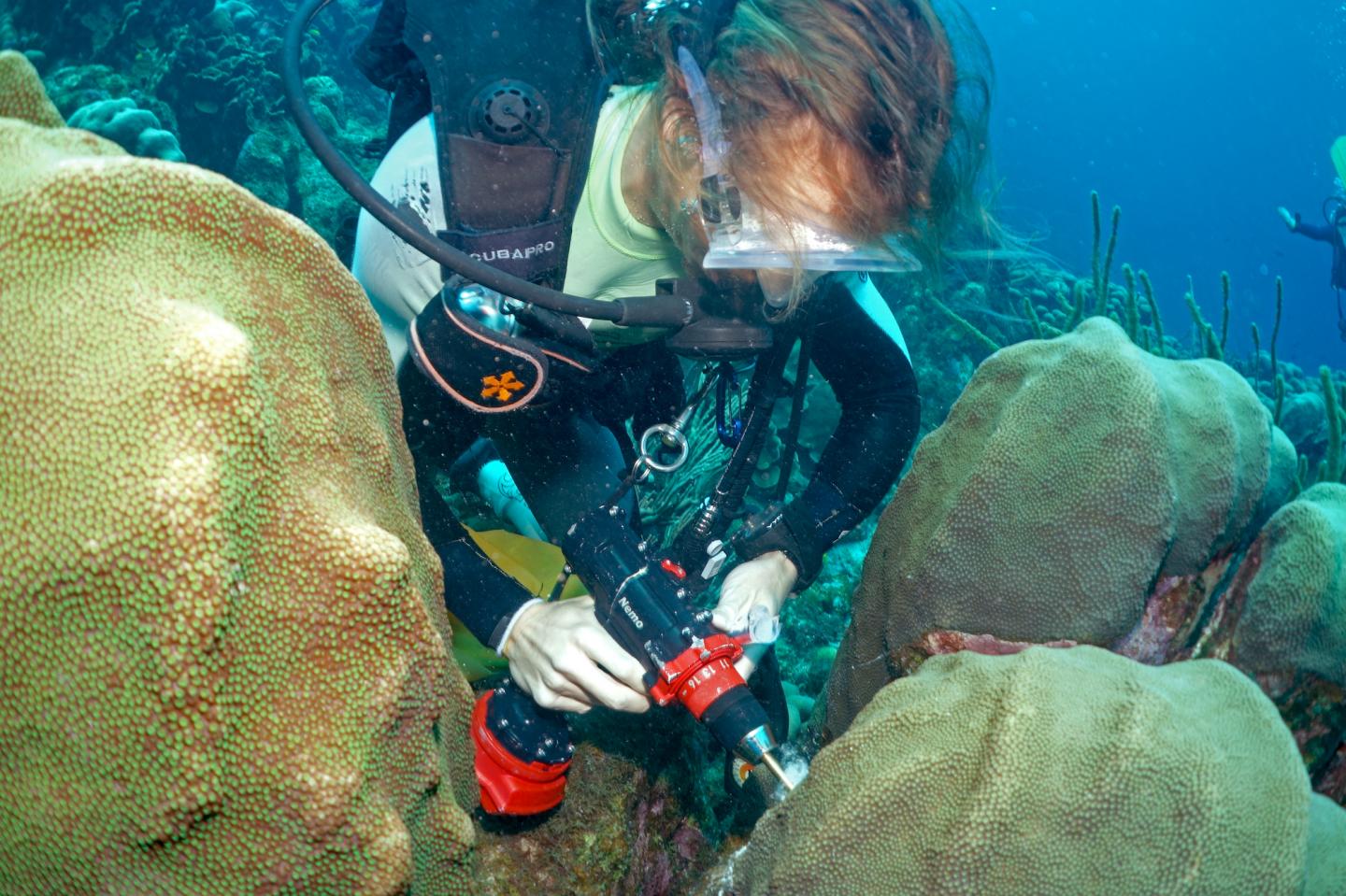
Credit: Dr. Ben Mueller

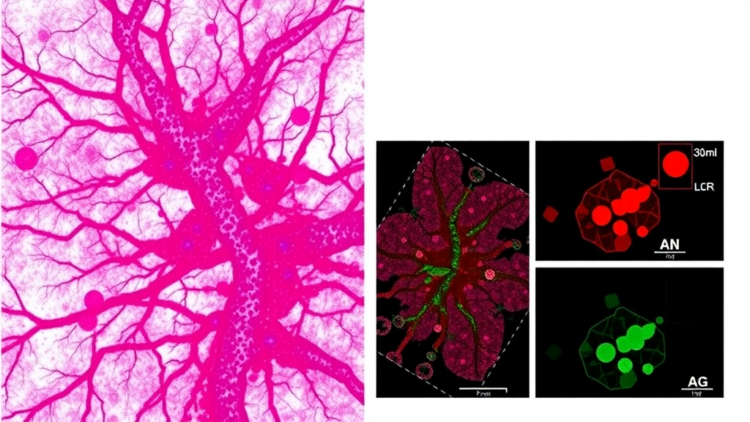
Researchers from the University of Hawai’i (UH) at Mānoa, University of British Columbia (UBC), San Diego State University (SDSU), and elsewhere have created 3D molecular maps of bacteria, viruses, and biochemicals across coral colonies along with their interacting organisms such as algae and other competing corals. This allowed the team to discover specific microbial and viral functions that appear to be key components of the coral microbiome.

The study, published recently in Frontiers of Marine Science, used a novel combination of state-of-the-art molecular methods with cutting-edge 3D imaging techniques to create high-resolution molecular maps on coral reef organisms.

Healthy coral reefs require coral colonies that are resilient and outcompete other organisms such as algae. The new study builds on the authors’ previous research which highlighted the important role that viruses and bacteria play in mediating the clash between coral and algae on a coral reef.

“Our recent research extends this work into a spatially explicit framework and makes for some really impressive 3D molecular maps,” said Ty Roach, study senior author and post-doctoral researcher at the Hawai’i Institute of Marine Biology (HIMB) in the UH Mānoa School of Ocean and Earth Science and Technology. “Further, we found that patterns in bacteria and viruses that live on and in corals were mainly driven by ecological factors such as how close to a competitor the sample was taken.”

The team sampled two coral colonies from a Caribbean coral reef and made 3D reconstructions of the corals and their interacting organisms using a method called structure from motion photogrammetry. Multiple molecular methods were then used to investigate the bacterial and viral DNA, RNA, and biochemicals that were associated with these corals. These molecules were then mapped back onto the 3D models.

“The current state of ecology has demonstrated that corals are home to millions of microbes and viruses, which exist in a complex biochemical milieu,” said Emma George, co-lead author of the study and doctoral candidate at UBC. “These viruses, microbes and chemicals in combination with the coral host form a unit called a holobiont. Understanding the roles of each of these players in ecosystem function has become increasingly important as coral reef health has begun to decline over recent decades.”

Functional and healthy reef ecosystems protect coastlines, contribute to local economies and support marine food webs, including fisheries. The new findings have direct implications for coral reef restoration and management, as they provide a more mechanistic understanding of the way that local stressors affect corals and can lead to disease.

“Additionally, these 3D molecular mapping methods could be applied to many other ecologically important organisms, beyond corals,” said Mark Little, co-lead author of the study and doctoral candidate at SDSU. “It is our hope that this combination of methods to generate underwater molecular maps will be a fruitful way for others to better understand the holobiont of many marine animals and plants.”

###

Media Contact
Marcie Grabowski
[email protected]

Original Source

https://www.soest.hawaii.edu/soestwp/announce/news/cutting-edge-3d-imaging-creates-molecular-maps-of-hidden-microbial-communities-on-coral-reefs/

Related Journal Article

http://dx.doi.org/10.3389/fmars.2021.627724

Tags: BacteriologyBiodiversityBioinformaticsBiologyEcology/EnvironmentGeneticsMarine/Freshwater BiologyMicrobiologyMolecular BiologyOceanography
Share12Tweet8Share2ShareShareShare2

Related Posts

Phage-Antibiotic Combo Beats Resistant Peritoneal Infection

February 7, 2026

Boosting Remote Healthcare: Stepped-Wedge Trial Insights

February 7, 2026

Barriers and Boosters of Seniors’ Physical Activity in Karachi

February 7, 2026

Evaluating Pediatric Emergency Care Quality in Ethiopia

February 7, 2026
Please login to join discussion

POPULAR NEWS

  • Robotic Ureteral Reconstruction: A Novel Approach

    Robotic Ureteral Reconstruction: A Novel Approach

    82 shares
    Share 33 Tweet 21
  • Digital Privacy: Health Data Control in Incarceration

    63 shares
    Share 25 Tweet 16
  • Study Reveals Lipid Accumulation in ME/CFS Cells

    57 shares
    Share 23 Tweet 14
  • Breakthrough in RNA Research Accelerates Medical Innovations Timeline

    53 shares
    Share 21 Tweet 13

About

We bring you the latest biotechnology news from best research centers and universities around the world. Check our website.

Follow us

Recent News

Phage-Antibiotic Combo Beats Resistant Peritoneal Infection

Boosting Remote Healthcare: Stepped-Wedge Trial Insights

Barriers and Boosters of Seniors’ Physical Activity in Karachi

Subscribe to Blog via Email

Enter your email address to subscribe to this blog and receive notifications of new posts by email.

Join 73 other subscribers
  • Contact Us

Bioengineer.org © Copyright 2023 All Rights Reserved.

Welcome Back!

Login to your account below

Forgotten Password?

Retrieve your password

Please enter your username or email address to reset your password.

Log In
No Result
View All Result
  • Homepages
    • Home Page 1
    • Home Page 2
  • News
  • National
  • Business
  • Health
  • Lifestyle
  • Science

Bioengineer.org © Copyright 2023 All Rights Reserved.