• HOME
  • NEWS
  • EXPLORE
    • CAREER
      • Companies
      • Jobs
    • EVENTS
    • iGEM
      • News
      • Team
    • PHOTOS
    • VIDEO
    • WIKI
  • BLOG
  • COMMUNITY
    • FACEBOOK
    • INSTAGRAM
    • TWITTER
Saturday, February 7, 2026
BIOENGINEER.ORG
No Result
View All Result
  • Login
  • HOME
  • NEWS
  • EXPLORE
    • CAREER
      • Companies
      • Jobs
        • Lecturer
        • PhD Studentship
        • Postdoc
        • Research Assistant
    • EVENTS
    • iGEM
      • News
      • Team
    • PHOTOS
    • VIDEO
    • WIKI
  • BLOG
  • COMMUNITY
    • FACEBOOK
    • INSTAGRAM
    • TWITTER
  • HOME
  • NEWS
  • EXPLORE
    • CAREER
      • Companies
      • Jobs
        • Lecturer
        • PhD Studentship
        • Postdoc
        • Research Assistant
    • EVENTS
    • iGEM
      • News
      • Team
    • PHOTOS
    • VIDEO
    • WIKI
  • BLOG
  • COMMUNITY
    • FACEBOOK
    • INSTAGRAM
    • TWITTER
No Result
View All Result
Bioengineer.org
No Result
View All Result
Home NEWS Science News Biology

How do lakes affect energy, heat, and carbon exchange processes in mountainous areas?

Bioengineer by Bioengineer
April 6, 2021
in Biology
Reading Time: 2 mins read
0
IMAGE
Share on FacebookShare on TwitterShare on LinkedinShare on RedditShare on Telegram

IMAGE

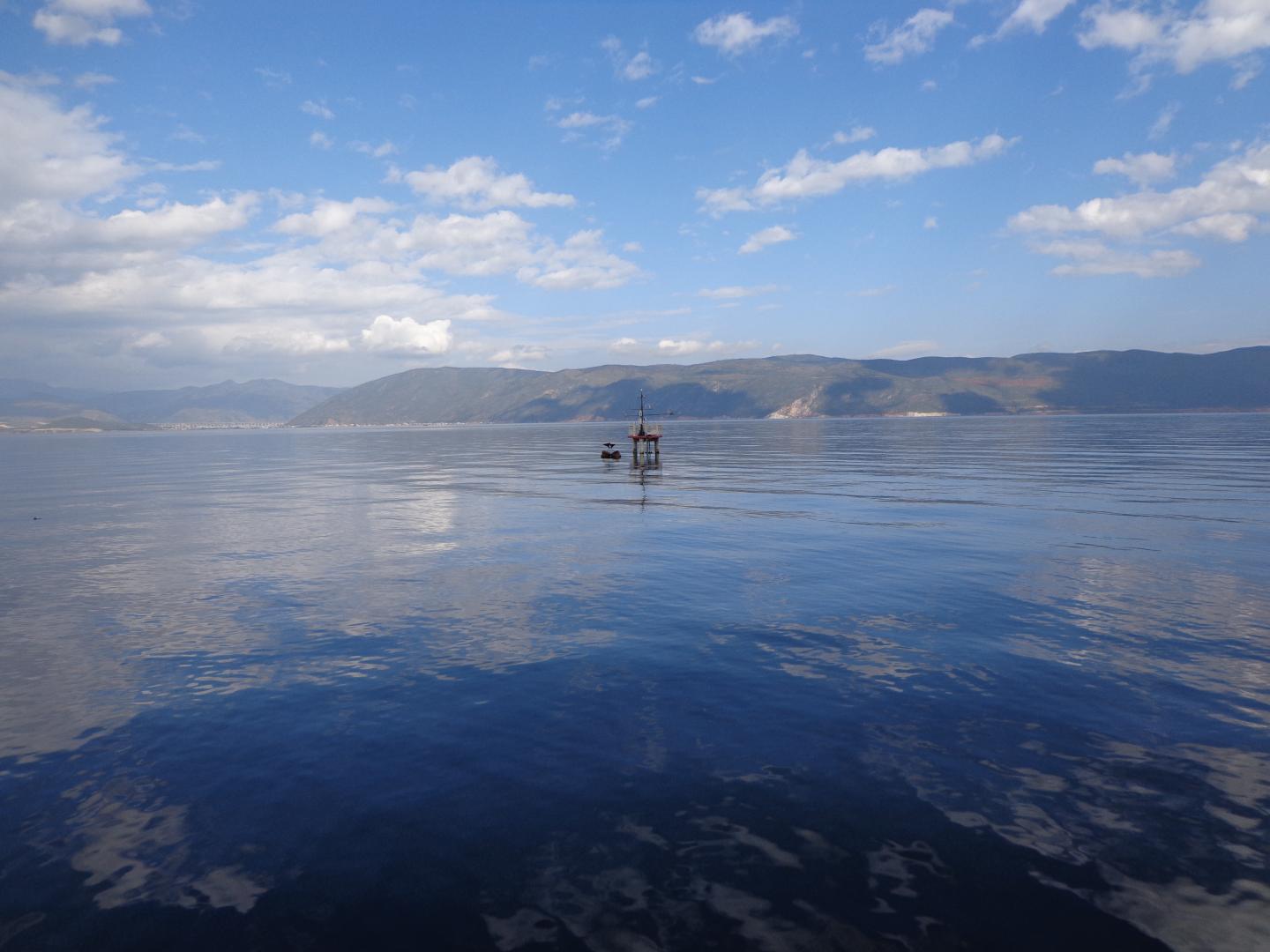
Credit: Lujun Xu

Lakes act as an important part of the earth system. They have special functions in regulating regional climate and maintaining regional ecological balance. More than 39.2% of the lakes in China are distributed in the plateau. The topography around the plateau lake area is complex and diverse. It leads to a complex and unique local circulation characterized by the superposition of lake-land breeze circulation and mountain-valley breeze circulation, which has a significant impact on the local energy and material circulation, according to Prof. Huizhi Liu, researcher at the Institute of Atmospheric Physics, Chinese Academy of Sciences.

“Due to the difficulty and high cost of continuous observation in lakes, the understanding of lake- air interactions are still very limited. The mechanism of the impact of lakes on regional hydrothermal cycle and carbon exchange needs to be further analyzed.” says Prof. Liu

Since 2011, Prof. Huizhi Liu and his team – a research group from the State Key Laboratory of Atmospheric Boundary Layer Physics and Atmospheric Chemistry, Institute of Atmospheric Physics, Chinese Academy of Sciences, had established an eddy covariance observation site at the Erhai Lake in the Dali Basin, southwest China.

Based on meteorological and turbulent fluxes data from the observation site, characteristics of local circulations and their impacts on water, heat and carbon exchange in the Erhai Lake are investigated by his team.

“Compared with other land surfaces, lakes promote latent heat mixing but suppress carbon dioxide exchange.” states Prof. Liu.

“The lake breeze promotes latent heat flux exchange and reduces sensible heat flux and carbon dioxide flux exchange during daytime. At night, mountain breeze increases the exchange of carbon dioxide flux and decreases the exchange of sensible and latent heat flux. The southeast wind from lake surface at night has the opposite effects.” he explains.

The findings were published in Advances in Atmospheric Sciences. “Future field experiments in the horizontal and vertical direction are needed to further investigate energy and carbon dioxide exchange at different temporal and spatial scales.” Liu adds.

###

Media Contact
Ms. Zheng Lin
[email protected]

Original Source

http://english.cas.cn/newsroom/research_news/earth/202104/t20210401_266874.shtml

Related Journal Article

http://dx.doi.org/10.1007/s00376-020-0298-x

Tags: Atmospheric ScienceBiologyEarth Science
Share12Tweet8Share2ShareShareShare2

Related Posts

Florida Cane Toad: Complex Spread and Selective Evolution

Florida Cane Toad: Complex Spread and Selective Evolution

February 7, 2026
New Study Uncovers Mechanism Behind Burn Pit Particulate Matter–Induced Lung Inflammation

New Study Uncovers Mechanism Behind Burn Pit Particulate Matter–Induced Lung Inflammation

February 6, 2026

DeepBlastoid: Advancing Automated and Efficient Evaluation of Human Blastoids with Deep Learning

February 6, 2026

Navigating the Gut: The Role of Formic Acid in the Microbiome

February 6, 2026
Please login to join discussion

POPULAR NEWS

  • Robotic Ureteral Reconstruction: A Novel Approach

    Robotic Ureteral Reconstruction: A Novel Approach

    82 shares
    Share 33 Tweet 21
  • Digital Privacy: Health Data Control in Incarceration

    63 shares
    Share 25 Tweet 16
  • Study Reveals Lipid Accumulation in ME/CFS Cells

    57 shares
    Share 23 Tweet 14
  • Breakthrough in RNA Research Accelerates Medical Innovations Timeline

    53 shares
    Share 21 Tweet 13

About

We bring you the latest biotechnology news from best research centers and universities around the world. Check our website.

Follow us

Recent News

LRRK2R1627P Mutation Boosts Gut Inflammation, α-Synuclein

3D Gut-Brain-Vascular Model Reveals Disease Links

Low-Inflammation in Elderly UTIs: Risks and Resistance

Subscribe to Blog via Email

Enter your email address to subscribe to this blog and receive notifications of new posts by email.

Join 73 other subscribers
  • Contact Us

Bioengineer.org © Copyright 2023 All Rights Reserved.

Welcome Back!

Login to your account below

Forgotten Password?

Retrieve your password

Please enter your username or email address to reset your password.

Log In
No Result
View All Result
  • Homepages
    • Home Page 1
    • Home Page 2
  • News
  • National
  • Business
  • Health
  • Lifestyle
  • Science

Bioengineer.org © Copyright 2023 All Rights Reserved.