• HOME
  • NEWS
  • EXPLORE
    • CAREER
      • Companies
      • Jobs
    • EVENTS
    • iGEM
      • News
      • Team
    • PHOTOS
    • VIDEO
    • WIKI
  • BLOG
  • COMMUNITY
    • FACEBOOK
    • INSTAGRAM
    • TWITTER
Saturday, February 7, 2026
BIOENGINEER.ORG
No Result
View All Result
  • Login
  • HOME
  • NEWS
  • EXPLORE
    • CAREER
      • Companies
      • Jobs
        • Lecturer
        • PhD Studentship
        • Postdoc
        • Research Assistant
    • EVENTS
    • iGEM
      • News
      • Team
    • PHOTOS
    • VIDEO
    • WIKI
  • BLOG
  • COMMUNITY
    • FACEBOOK
    • INSTAGRAM
    • TWITTER
  • HOME
  • NEWS
  • EXPLORE
    • CAREER
      • Companies
      • Jobs
        • Lecturer
        • PhD Studentship
        • Postdoc
        • Research Assistant
    • EVENTS
    • iGEM
      • News
      • Team
    • PHOTOS
    • VIDEO
    • WIKI
  • BLOG
  • COMMUNITY
    • FACEBOOK
    • INSTAGRAM
    • TWITTER
No Result
View All Result
Bioengineer.org
No Result
View All Result
Home NEWS Science News Health

Possible trigger for Crohn’s disease identified

Bioengineer by Bioengineer
April 1, 2021
in Health
Reading Time: 2 mins read
0
IMAGE
Share on FacebookShare on TwitterShare on LinkedinShare on RedditShare on Telegram

Adherent-invasive E-coli (AIEC) strongly implicated
IMAGE

Credit: McMaster University

Hamilton, ON (April 1, 2021) – People living with the often-debilitating effects of Crohn’s disease may finally gain some relief, thanks to ground-breaking research led by McMaster University.

McMaster investigator Brian Coombes said his team identified a strain of adherent-invasive E-coli (AIEC) that is strongly implicated in the condition and is often found in the intestines of people with Crohn’s disease.

“If you examine the gut lining of patients with Crohn’s disease, you will find that around 70 to 80 per cent of them test positive for AIEC bacteria, but one of the things we don’t understand is why,” said Coombes, professor and chair of the Department of Biochemistry and Biomedical Sciences, and the Canada Research Chair in Infectious Disease Pathogenesis.

“We believe that AIEC is a potential trigger of Crohn’s disease.”

By mutating every gene in a particular strain of AIEC and testing how those mutants grow in mice, the researchers were able to pinpoint which genes allowed the bacteria to freely colonize the gut linings of people with Crohn’s disease.

AIEC bacteria grow in a biofilm that coats cells lining the intestinal wall, protecting them from both the immune system and antibiotics. In this research, the team identified a critical protein structure on the surface of the bacteria that allow them to grow in biofilms.

Coombes said Crohn’s disease is caused by the immune system’s inability to “switch off” its inflammatory response to gut bacteria. Symptoms include severe diarrhoea, fatigue, weight loss and malnutrition.

Current treatments focus on easing the inflammation, but do not address the root cause of the condition.

“New therapies are on the way – we are one step closer to figuring out how this Crohn’s disease-associated bacteria lives in the gut and when we do that, we can develop new treatments,” said Coombes.

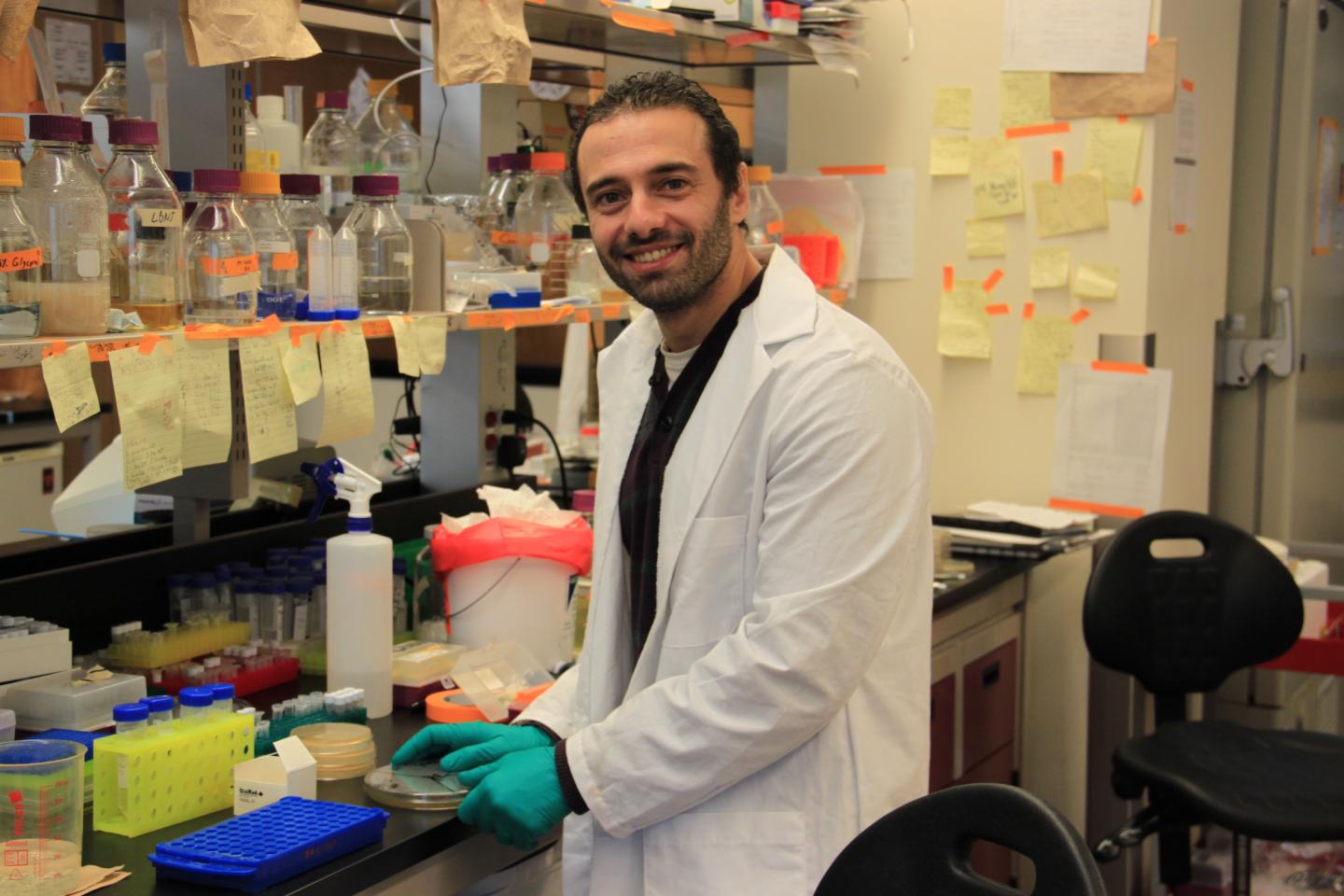
The team’s findings were led by postdoctoral fellow, Wael Elhenawy and published in Nature Communications.

###

Funding for the study was provided by the Canadian Institutes for Health Research and Crohn’s and Colitis Canada.

Editors:

A photo of Wael Elhenawy is attached.

For information, please contact:

Veronica McGuire

Media Relations

Faculty of Health Sciences

McMaster University

289-776-6952

[email protected]

Media Contact
Veronica McGuire
[email protected]

Tags: GastroenterologyInternal MedicineMedicine/Health
Share12Tweet8Share2ShareShareShare2

Related Posts

Decoding Prostate Cancer Origins via snFLARE-seq, mxFRIZNGRND

February 7, 2026

Digital Health Perspectives from Baltic Sea Experts

February 7, 2026

Exploring Decision-Making in Dementia Caregivers’ Mobility

February 7, 2026

Succinate Receptor 1 Limits Blood Cell Formation, Leukemia

February 7, 2026
Please login to join discussion

POPULAR NEWS

  • Robotic Ureteral Reconstruction: A Novel Approach

    Robotic Ureteral Reconstruction: A Novel Approach

    82 shares
    Share 33 Tweet 21
  • Digital Privacy: Health Data Control in Incarceration

    63 shares
    Share 25 Tweet 16
  • Study Reveals Lipid Accumulation in ME/CFS Cells

    57 shares
    Share 23 Tweet 14
  • Breakthrough in RNA Research Accelerates Medical Innovations Timeline

    53 shares
    Share 21 Tweet 13

About

We bring you the latest biotechnology news from best research centers and universities around the world. Check our website.

Follow us

Recent News

Decoding Prostate Cancer Origins via snFLARE-seq, mxFRIZNGRND

Digital Health Perspectives from Baltic Sea Experts

Florida Cane Toad: Complex Spread and Selective Evolution

Subscribe to Blog via Email

Enter your email address to subscribe to this blog and receive notifications of new posts by email.

Join 73 other subscribers
  • Contact Us

Bioengineer.org © Copyright 2023 All Rights Reserved.

Welcome Back!

Login to your account below

Forgotten Password?

Retrieve your password

Please enter your username or email address to reset your password.

Log In
No Result
View All Result
  • Homepages
    • Home Page 1
    • Home Page 2
  • News
  • National
  • Business
  • Health
  • Lifestyle
  • Science

Bioengineer.org © Copyright 2023 All Rights Reserved.