• HOME
  • NEWS
  • EXPLORE
    • CAREER
      • Companies
      • Jobs
    • EVENTS
    • iGEM
      • News
      • Team
    • PHOTOS
    • VIDEO
    • WIKI
  • BLOG
  • COMMUNITY
    • FACEBOOK
    • INSTAGRAM
    • TWITTER
Saturday, February 7, 2026
BIOENGINEER.ORG
No Result
View All Result
  • Login
  • HOME
  • NEWS
  • EXPLORE
    • CAREER
      • Companies
      • Jobs
        • Lecturer
        • PhD Studentship
        • Postdoc
        • Research Assistant
    • EVENTS
    • iGEM
      • News
      • Team
    • PHOTOS
    • VIDEO
    • WIKI
  • BLOG
  • COMMUNITY
    • FACEBOOK
    • INSTAGRAM
    • TWITTER
  • HOME
  • NEWS
  • EXPLORE
    • CAREER
      • Companies
      • Jobs
        • Lecturer
        • PhD Studentship
        • Postdoc
        • Research Assistant
    • EVENTS
    • iGEM
      • News
      • Team
    • PHOTOS
    • VIDEO
    • WIKI
  • BLOG
  • COMMUNITY
    • FACEBOOK
    • INSTAGRAM
    • TWITTER
No Result
View All Result
Bioengineer.org
No Result
View All Result
Home NEWS Science News

What are we breeding for, and who decides?

Bioengineer by Bioengineer
March 31, 2021
in Science News
Reading Time: 2 mins read
0
IMAGE
Share on FacebookShare on TwitterShare on LinkedinShare on RedditShare on Telegram

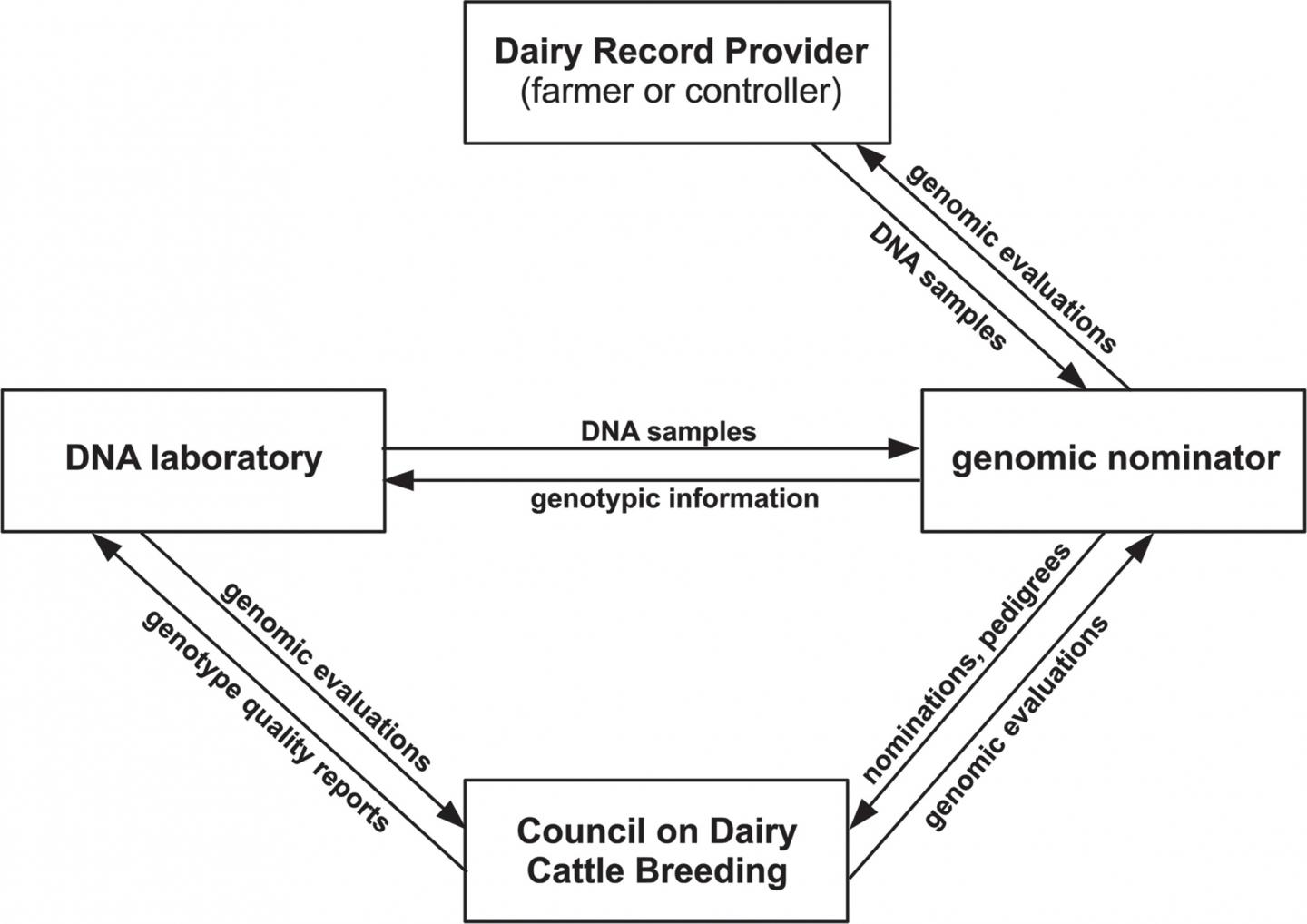
The future of selection decisions and breeding programs are examined in a review in the Journal of Dairy Science®
IMAGE

Credit: Journal of Dairy Science

Philadelphia, March 31, 2021 – In an article appearing in the Journal of Dairy Science®, scientists from the United States Department of Agriculture and the Council on Dairy Cattle Breeding provide an insightful review of how US dairy industry breeding selection objectives are established, as well as detail opportunities and obstacles related to new technologies for documenting animal performance.

Genetic selection has been an extremely efficacious tool for the long-term enhancement of livestock populations, and the implementation of genomic selection has doubled the rate of gain in dairy cattle. Data captured through the national dairy herd improvement program are used to calculate genomic evaluations for comparing and ranking animals for selection. Over time, most of the focus on the selection indices used to rank bulls and cows on their genetic merit has changed from yield traits to fertility, health, and fitness traits.

Today, most breeding stock are selected and marketed using the net merit dollars (NM$) selection index, which progressed from two traits in 1926 (milk and fat yield) to a mix of 36 individual traits following the most recent update three years ago. Updates to the index depend upon the estimation of a variety of values, and it can be challenging to reach an agreement among stakeholders on what should be included in the index at each review and how those traits should be weighted. Phenotypes for some of the new traits are difficult or costly to measure or depend upon changes to on-farm practices that have not been widely implemented. There is also a need to collect more comprehensive data about the environment in which animals perform, including information about feeding, housing, milking systems, and infectious and parasitic load.

“The rate of change is rapid, and farmers need objective sources of information more than ever before,” said first author John B. Cole, PhD, affiliated with the Animal Genomics and Improvement Laboratory, Agricultural Research Service, United States Department of Agriculture, Beltsville, MD, USA, at the time the review was accepted for publication. “The best way for the industry to meet the needs of the dairy producers, who drive the whole system, is to treat genetic evaluations as a shared good for the benefit of all.”

The number of traits evaluated continues to increase, and is mind-boggling to many, which indicates that new approaches to classify and express traits may be necessary.

###

Media Contact
Eileen Leahy
[email protected]

Related Journal Article

http://dx.doi.org/10.3168/jds.2020-19777

Tags: Agricultural Production/EconomicsAgricultureFood/Food ScienceGeneticsZoology/Veterinary Science
Share12Tweet8Share2ShareShareShare2

Related Posts

Inflammasome Protein ASC Drives Pancreatic Cancer Metabolism

February 7, 2026

Phage-Antibiotic Combo Beats Resistant Peritoneal Infection

February 7, 2026

Boosting Remote Healthcare: Stepped-Wedge Trial Insights

February 7, 2026

Barriers and Boosters of Seniors’ Physical Activity in Karachi

February 7, 2026
Please login to join discussion

POPULAR NEWS

  • Robotic Ureteral Reconstruction: A Novel Approach

    Robotic Ureteral Reconstruction: A Novel Approach

    82 shares
    Share 33 Tweet 21
  • Digital Privacy: Health Data Control in Incarceration

    63 shares
    Share 25 Tweet 16
  • Study Reveals Lipid Accumulation in ME/CFS Cells

    57 shares
    Share 23 Tweet 14
  • Breakthrough in RNA Research Accelerates Medical Innovations Timeline

    53 shares
    Share 21 Tweet 13

About

We bring you the latest biotechnology news from best research centers and universities around the world. Check our website.

Follow us

Recent News

Inflammasome Protein ASC Drives Pancreatic Cancer Metabolism

Phage-Antibiotic Combo Beats Resistant Peritoneal Infection

Boosting Remote Healthcare: Stepped-Wedge Trial Insights

Subscribe to Blog via Email

Enter your email address to subscribe to this blog and receive notifications of new posts by email.

Join 73 other subscribers
  • Contact Us

Bioengineer.org © Copyright 2023 All Rights Reserved.

Welcome Back!

Login to your account below

Forgotten Password?

Retrieve your password

Please enter your username or email address to reset your password.

Log In
No Result
View All Result
  • Homepages
    • Home Page 1
    • Home Page 2
  • News
  • National
  • Business
  • Health
  • Lifestyle
  • Science

Bioengineer.org © Copyright 2023 All Rights Reserved.