• HOME
  • NEWS
  • EXPLORE
    • CAREER
      • Companies
      • Jobs
    • EVENTS
    • iGEM
      • News
      • Team
    • PHOTOS
    • VIDEO
    • WIKI
  • BLOG
  • COMMUNITY
    • FACEBOOK
    • INSTAGRAM
    • TWITTER
Wednesday, August 12, 2026
BIOENGINEER.ORG
No Result
View All Result
  • Login
  • HOME
  • NEWS
  • EXPLORE
    • CAREER
      • Companies
      • Jobs
        • Lecturer
        • PhD Studentship
        • Postdoc
        • Research Assistant
    • EVENTS
    • iGEM
      • News
      • Team
    • PHOTOS
    • VIDEO
    • WIKI
  • BLOG
  • COMMUNITY
    • FACEBOOK
    • INSTAGRAM
    • TWITTER
  • HOME
  • NEWS
  • EXPLORE
    • CAREER
      • Companies
      • Jobs
        • Lecturer
        • PhD Studentship
        • Postdoc
        • Research Assistant
    • EVENTS
    • iGEM
      • News
      • Team
    • PHOTOS
    • VIDEO
    • WIKI
  • BLOG
  • COMMUNITY
    • FACEBOOK
    • INSTAGRAM
    • TWITTER
No Result
View All Result
Bioengineer.org
No Result
View All Result
Home NEWS Science News Health

New approach for the development of a drug treatment for obesity and the resulting diseases

Bioengineer by Bioengineer
March 31, 2021
in Health
Reading Time: 2 mins read
0
IMAGE
Share on FacebookShare on TwitterShare on LinkedinShare on RedditShare on Telegram

IMAGE

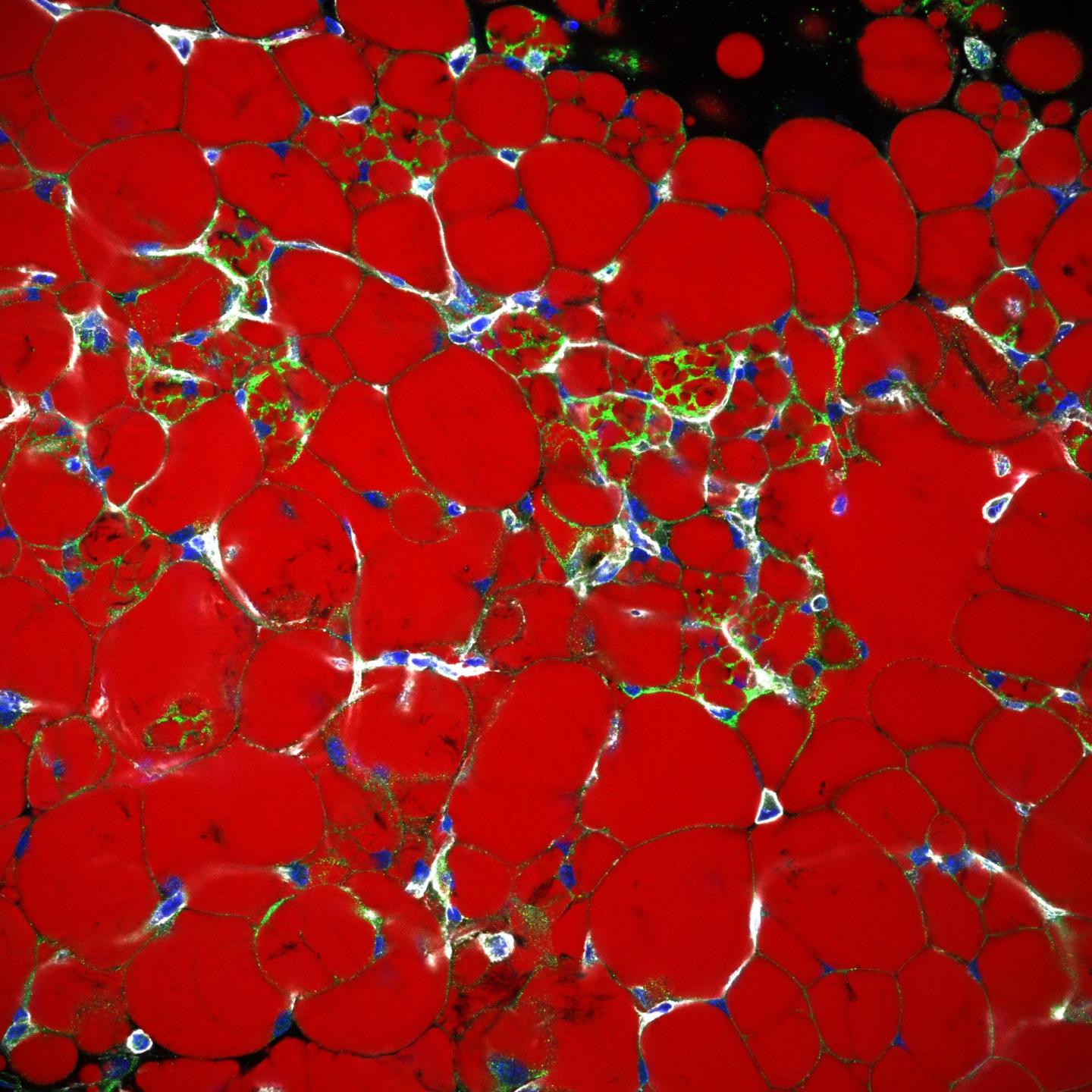
Credit: Ruth Karlina

The protein Asc-1 regulates whether fat-burning beige or fat-storing white adipocytes are formed, which can have an impact on the development of metabolic diseases. This is shown by a current study of the Helmholtz Zentrum München and the German Center for Diabetes Research (DZD). The results open up new approaches to prevent the development of metabolic diseases. The study has now been published in Nature Communications.

Not all fat is the same: there is white, brown and beige adipose tissue *. While white fat cells serve as energy stores, excess energy is burned in brown and beige fat tissue. Too much white fat is considered unhealthy. If the white adipose tissue increases significantly in adults with obesity, metabolic diseases such as diabetes or metabolic syndrome can develop. The situation is different in children: There, the initial formation of white adipose tissue is a prerequisite for a healthy metabolism. But how does adolescent adipose tissue differs from adult white adipose tissue? To answer this question, researchers have investigated the composition of white adipose tissue of young and adult mice using single cell RNA sequencing**.

Asc-1 promotes the formation of white adipocytes

The researchers found that adolescent adipose tissue differs greatly from adult white fat, especially in terms of the properties and composition of fat precursor cells. The researchers discovered a special subgroup of fat precursor cells in adolescent adipose tissue that contain the protein Asc-1, which is otherwise present in mature adipocytes. These precursor cells differentiate predominantly into white adipocytes, and the formation of “healthy” beige adipocytes is actively suppressed. In further cell biological investigations, the team around first author Lisa Suwandhi were able to show that the loss of Asc-1 function promotes the formation of beige adipocytes.

“These insights into the physiological processes of adipose tissue growth enable us to develop new strategies to prevent the harmful metabolic consequences of obesity,” said last author Dr. Siegfried Ussar. The researchers are already pursuing this approach further. They are currently establishing strategies to modulate Asc-1 function in adipose tissue in the living organism and exploring ways to promote healthy adipose tissue expansion. The goal is to help obese patients maintain a healthy metabolism in the future and thus gain time to treat obesity with a holistic approach.

###

Media Contact
Birgit Niesing
[email protected]

Original Source

https://www.dzd-ev.de/en/press/press-releases/press-releases-2021/new-approach-for-the-development-of-a-drug-treatment-for-obesity-and-the-resulting-diseases/index.html

Related Journal Article

http://dx.doi.org/10.1038/s41467-021-21826-9

Tags: DiabetesDiet/Body WeightEating Disorders/ObesityMedicine/HealthMetabolism/Metabolic Diseases
Share12Tweet8Share2ShareShareShare2

Related Posts

AI-Guided System Improves Real-Time Factory Scheduling After Equipment Failures

August 12, 2026

Novel slotted circumferential groove with self-recirculation boosts transonic compressor rotor stability

August 12, 2026

Mechanistic Simulation-Trained Neural Networks Improve Scientific Inference

August 12, 2026

AlzheiNN: Convolutional Neural Network Model Classifies Alzheimer’s Disease

August 12, 2026
Please login to join discussion

POPULAR NEWS

  • New Generative Models Predict Transition States in Unseen Chemical Reactions

    29 shares
    Share 12 Tweet 7
  • Multiple Myeloma Cell Lines Reveal Clonal Heterogeneity Across One Patient’s Disease Course

    29 shares
    Share 12 Tweet 7
  • AI-Guided System Improves Real-Time Factory Scheduling After Equipment Failures

    29 shares
    Share 12 Tweet 7
  • Novel slotted circumferential groove with self-recirculation boosts transonic compressor rotor stability

    29 shares
    Share 12 Tweet 7

About

We bring you the latest biotechnology news from best research centers and universities around the world. Check our website.

Follow us

Recent News

New Generative Models Predict Transition States in Unseen Chemical Reactions

Multiple Myeloma Cell Lines Reveal Clonal Heterogeneity Across One Patient’s Disease Course

AI-Guided System Improves Real-Time Factory Scheduling After Equipment Failures

Subscribe to Blog via Email

Enter your email address to subscribe to this blog and receive notifications of new posts by email.

Join 86 other subscribers
  • Contact Us

Bioengineer.org © Copyright 2023 All Rights Reserved.

Welcome Back!

Login to your account below

Forgotten Password?

Retrieve your password

Please enter your username or email address to reset your password.

Log In
No Result
View All Result
  • Homepages
    • Home Page 1
    • Home Page 2
  • News
  • National
  • Business
  • Health
  • Lifestyle
  • Science

Bioengineer.org © Copyright 2023 All Rights Reserved.