• HOME
  • NEWS
  • EXPLORE
    • CAREER
      • Companies
      • Jobs
    • EVENTS
    • iGEM
      • News
      • Team
    • PHOTOS
    • VIDEO
    • WIKI
  • BLOG
  • COMMUNITY
    • FACEBOOK
    • INSTAGRAM
    • TWITTER
Thursday, March 26, 2026
BIOENGINEER.ORG
No Result
View All Result
  • Login
  • HOME
  • NEWS
  • EXPLORE
    • CAREER
      • Companies
      • Jobs
        • Lecturer
        • PhD Studentship
        • Postdoc
        • Research Assistant
    • EVENTS
    • iGEM
      • News
      • Team
    • PHOTOS
    • VIDEO
    • WIKI
  • BLOG
  • COMMUNITY
    • FACEBOOK
    • INSTAGRAM
    • TWITTER
  • HOME
  • NEWS
  • EXPLORE
    • CAREER
      • Companies
      • Jobs
        • Lecturer
        • PhD Studentship
        • Postdoc
        • Research Assistant
    • EVENTS
    • iGEM
      • News
      • Team
    • PHOTOS
    • VIDEO
    • WIKI
  • BLOG
  • COMMUNITY
    • FACEBOOK
    • INSTAGRAM
    • TWITTER
No Result
View All Result
Bioengineer.org
No Result
View All Result
Home NEWS Science News

Genetic sleuthing reveals endangered river dolphins in Asia as different species

Bioengineer by Bioengineer
March 29, 2021
in Science News
Reading Time: 3 mins read
0
IMAGE
Share on FacebookShare on TwitterShare on LinkedinShare on RedditShare on Telegram

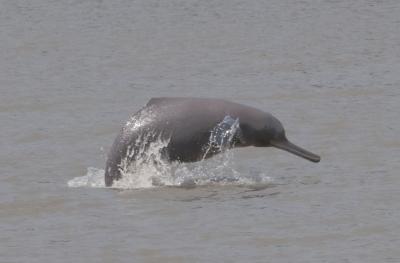
Tissue collection at NOAA Fisheries lab helps reveal genetic distinction
IMAGE

Credit: Mansur/WCR Bangladesh

New genetic analysis and years of painstaking research has revealed that one of the world’s most endangered marine mammals is actually two species rather than one, as scientists had long assumed.

Scientists spent about two decades crossing Asia and Europe in pursuit of river dolphins skulls and reexamining tissue samples with modern genetic techniques. Their findings revealed that Indus and Ganges river dolphins are separate species, according to a new study published in Marine Mammal Science.

The two dolphins that live in the muddy waters of the Ganges and Indus rivers have lost their eyesight and rely on sophisticated sonar to hunt for prey. The new research recognized that the dolphins have clear genetic differences, as well as different numbers of teeth, coloration, growth patterns and skull shapes. Together, these differences distinguish them as separate species.

“The genetic tools we have today help us extract new information from samples collected years ago,” said Eric Archer, leader of the Marine Mammal Genetics Program at NOAA Fisheries’ Southwest Fisheries Science Center. The analysis of the river dolphin genetics included tissue samples from the Science Center’s Marine Mammal and Sea Turtle Research Tissue Collection, the largest of its kind in the world. Archer added: “Without collections such as this and those at other museums around the world, it would be impossible to identify difficult to study species such as these dolphins.”

An estimated several thousand Ganges river dolphins live in the rivers of Bangladesh, India, and Nepal, but their numbers and range are thought to be declining. Indus river dolphins have increased in number from about 1,200 in 2001 to almost 2,000 in 2017. This increase reflects dedicated conservation efforts by local communities and the provincial and national government authorities that oversee their management.

Some scientists suggested as early as the 1970s that the two dolphins were separate species. However, the findings were dismissed until the new analysis proved the original indications were accurate. The revelation is one of many recent genetic studies that have revealed new information about marine mammal populations around the world. Other recent discoveries include a new subspecies of fin whale in the Pacific Ocean and a new and critically endangered whale species in the Gulf of Mexico.

“Recognizing the species-level differences between Indus and Ganges river dolphins is extremely important, as only a few thousand individual dolphins of each species remain,” said Gill Braulik of the Sea Mammal Research Unit at the University of St. Andrews, who led the study. “My hope is that our findings will bring much-needed attention to these remarkable animals, helping to prevent them sliding towards extinction.”

“Serious challenges still face this incredible species and all other river dolphin populations, but we can save them,” said Uzma Kahn, Asia Coordinator of the WWF River Dolphin Initiative. “By doing so we’ll save so much more, since hundreds of millions of people and countless other species depend on the health” of similar rivers around the world.

###

The research reflected long-term collaboration between:

  • University of St Andrews
  • WWF-Pakistan
  • Patna University, India
  • Southwest Fisheries Science Center, NOAA Fisheries
  • Many other researchers in South Asia

Media Contact
Michael Milstein
[email protected]

Original Source

https://www.fisheries.noaa.gov/feature-story/landmark-research-shows-endangered-river-dolphins-asia-two-different-species

Related Journal Article

http://dx.doi.org/10.1111/mms.12801

Tags: BiologyEcology/EnvironmentFisheries/AquacultureGenesGeneticsMarine/Freshwater BiologyPopulation Biology
Share12Tweet8Share2ShareShareShare2

Related Posts

Starburst Winds Drain Supernova Energy Quickly

Starburst Winds Drain Supernova Energy Quickly

March 26, 2026
Decoding the Phosphorus Puzzle: How Microplastics and Hydrochar Transform Nutrient Dynamics in Rice Paddies

Decoding the Phosphorus Puzzle: How Microplastics and Hydrochar Transform Nutrient Dynamics in Rice Paddies

March 26, 2026

Microtubules Found to Actively Ensure Accurate Chromosome Distribution During Cell Division

March 25, 2026

Aversive Learning Hijacks Brain Sugar Sensor

March 25, 2026
Please login to join discussion

POPULAR NEWS

  • blank

    Revolutionary AI Model Enhances Precision in Detecting Food Contamination

    96 shares
    Share 38 Tweet 24
  • Imagine a Social Media Feed That Challenges Your Views Instead of Reinforcing Them

    1003 shares
    Share 397 Tweet 248
  • Uncovering Functions of Cavernous Malformation Proteins in Organoids

    54 shares
    Share 22 Tweet 14
  • Promising Outcomes from First Clinical Trials of Gene Regulation in Epilepsy

    51 shares
    Share 20 Tweet 13

About

We bring you the latest biotechnology news from best research centers and universities around the world. Check our website.

Follow us

Recent News

In-Sensor Cryptography Links Physical Process to Digital Identity

Can Psychosocial Factors Influence Cancer Risk?

Depression Factors in Elderly: Pre vs. Post-COVID Analysis

Subscribe to Blog via Email

Success! An email was just sent to confirm your subscription. Please find the email now and click 'Confirm' to start subscribing.

Join 78 other subscribers
  • Contact Us

Bioengineer.org © Copyright 2023 All Rights Reserved.

Welcome Back!

Login to your account below

Forgotten Password?

Retrieve your password

Please enter your username or email address to reset your password.

Log In
No Result
View All Result
  • Homepages
    • Home Page 1
    • Home Page 2
  • News
  • National
  • Business
  • Health
  • Lifestyle
  • Science

Bioengineer.org © Copyright 2023 All Rights Reserved.