• HOME
  • NEWS
  • EXPLORE
    • CAREER
      • Companies
      • Jobs
    • EVENTS
    • iGEM
      • News
      • Team
    • PHOTOS
    • VIDEO
    • WIKI
  • BLOG
  • COMMUNITY
    • FACEBOOK
    • INSTAGRAM
    • TWITTER
Saturday, February 7, 2026
BIOENGINEER.ORG
No Result
View All Result
  • Login
  • HOME
  • NEWS
  • EXPLORE
    • CAREER
      • Companies
      • Jobs
        • Lecturer
        • PhD Studentship
        • Postdoc
        • Research Assistant
    • EVENTS
    • iGEM
      • News
      • Team
    • PHOTOS
    • VIDEO
    • WIKI
  • BLOG
  • COMMUNITY
    • FACEBOOK
    • INSTAGRAM
    • TWITTER
  • HOME
  • NEWS
  • EXPLORE
    • CAREER
      • Companies
      • Jobs
        • Lecturer
        • PhD Studentship
        • Postdoc
        • Research Assistant
    • EVENTS
    • iGEM
      • News
      • Team
    • PHOTOS
    • VIDEO
    • WIKI
  • BLOG
  • COMMUNITY
    • FACEBOOK
    • INSTAGRAM
    • TWITTER
No Result
View All Result
Bioengineer.org
No Result
View All Result
Home NEWS Science News Health

Incurable Leigh Syndrome: German scientists create first human model for rare disease

Bioengineer by Bioengineer
March 26, 2021
in Health
Reading Time: 2 mins read
0
IMAGE
Share on FacebookShare on TwitterShare on LinkedinShare on RedditShare on Telegram

Neuronal defects may be caused by an energy deficit in neural precursors
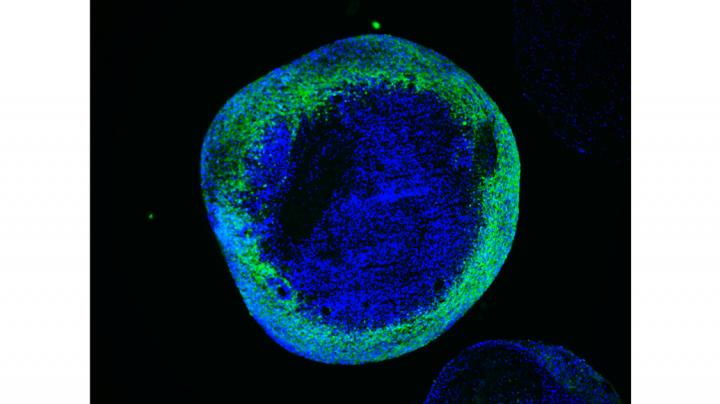
IMAGE

Credit: Copyright: Dr. Agnieszka Rybak-Wolf

Leigh syndrome is the most severe mitochondrial disease in children. It causes severe muscle weakness, movement defects, and intellectual disabilities. It usually leads to death within the first years of life. No causative treatment is currently available. One of the genes frequently mutated in patients is SURF1, which encodes for a protein involved in the process of energy generation in the cells. Animal models did not recapitulate the defects seen in the patients carrying mutations in SURF1. Therefore, the scientists did not have the tool to start understanding the disease mechanisms and to identify possible targets for treatment. They report about the first human model for this rare disease in Nature Communications, published on March 26th.

The group of Prof. Alessandro Prigione at the Department of General Pediatrics at the University Hospital Duesseldorf, Germany, in collaboration with the groups of Prof. Markus Schuelke at the Department of Neuropediatrics, Charite Universitaetsmedizin Berlin, and Prof. Nikolaus Rajewsky at the Berlin Institute for Medical Systems Biology (BIMSB), Max Delbrueck Center for Molecular Medicine (MDC), have now developed the first human model of Leigh syndrome caused by SURF1 mutations.

To achieve this, the authors employed the technology of cellular reprogramming, which enables to convert cells from the skin into stem cells that are capable of generating neurons. They then used the molecular scissors CRISPR/Cas9 to precisely remove the mutation from the patient cells and to introduce the mutations into the control cells. Thus the authors were able to investigate the specific effect of SURF1 mutations in a controlled genetic background. They next generated neurons and brain organoids, which are of a three-dimensional structure and reproduce the features of early human brain development.

Using these models, the authors discovered that the neuronal defects seen in the patients may be caused by an energy deficit occurring at the level of neural precursors, which are the cells that generate neurons. These energy defects lead to insufficient neuronal branching, which causes improper brain function during development. Finally, the authors demonstrate that the neuronal branching defects can be corrected by improving the energy output of progenitor cells using SURF1 gene replacement therapy or by using the drug Bezafibrate, which is currently safe for clinical use in children.

These findings are important since they provide for the first time a model for studying the neuronal pathology of Leigh syndrome caused by SURF1 mutations. Moreover, they indicate practical strategies for treating children affected by the rare disease Leigh syndrome, which is an orphan disease with high medical needs.

###

Media Contact
Prof. Alessandro Prigione M.D., Ph.D
[email protected]

Related Journal Article

http://dx.doi.org/10.1038/s41467-021-22117-z

Tags: Medicine/Health
Share12Tweet8Share2ShareShareShare2

Related Posts

Phage-Antibiotic Combo Beats Resistant Peritoneal Infection

February 7, 2026

Boosting Remote Healthcare: Stepped-Wedge Trial Insights

February 7, 2026

Barriers and Boosters of Seniors’ Physical Activity in Karachi

February 7, 2026

Evaluating Pediatric Emergency Care Quality in Ethiopia

February 7, 2026
Please login to join discussion

POPULAR NEWS

  • Robotic Ureteral Reconstruction: A Novel Approach

    Robotic Ureteral Reconstruction: A Novel Approach

    82 shares
    Share 33 Tweet 21
  • Digital Privacy: Health Data Control in Incarceration

    63 shares
    Share 25 Tweet 16
  • Study Reveals Lipid Accumulation in ME/CFS Cells

    57 shares
    Share 23 Tweet 14
  • Breakthrough in RNA Research Accelerates Medical Innovations Timeline

    53 shares
    Share 21 Tweet 13

About

We bring you the latest biotechnology news from best research centers and universities around the world. Check our website.

Follow us

Recent News

Phage-Antibiotic Combo Beats Resistant Peritoneal Infection

Boosting Remote Healthcare: Stepped-Wedge Trial Insights

Barriers and Boosters of Seniors’ Physical Activity in Karachi

Subscribe to Blog via Email

Enter your email address to subscribe to this blog and receive notifications of new posts by email.

Join 73 other subscribers
  • Contact Us

Bioengineer.org © Copyright 2023 All Rights Reserved.

Welcome Back!

Login to your account below

Forgotten Password?

Retrieve your password

Please enter your username or email address to reset your password.

Log In
No Result
View All Result
  • Homepages
    • Home Page 1
    • Home Page 2
  • News
  • National
  • Business
  • Health
  • Lifestyle
  • Science

Bioengineer.org © Copyright 2023 All Rights Reserved.