Credit: Jinan University
Glioma is a fatal neurological disorder that has limited interventional treatment, despite extensive research over the past several decades. A research team led by Dr. Gong Chen, a former professor at Penn State University and now leading a brain repair center at Jinan University in China, has developed a novel gene therapy to reprogram glioma cells into functional neurons, shedding new light on glioma treatment. The work has been published in Cancer Biology & Medicine on March 22, 2021
Glioma is a common malignant cancer growing in the central nervous system. For patients with a type of severe glioma called glioblastoma, the median survival time is typically less than 15 months. Surgical removal followed with chemotherapy and/or radiation therapy are the major ways of treatment but their effectiveness is limited. Several clinical trials are ongoing using engineered immune cells to target primary or recurrent glioma, but still meet with serious hurdles to be solved.
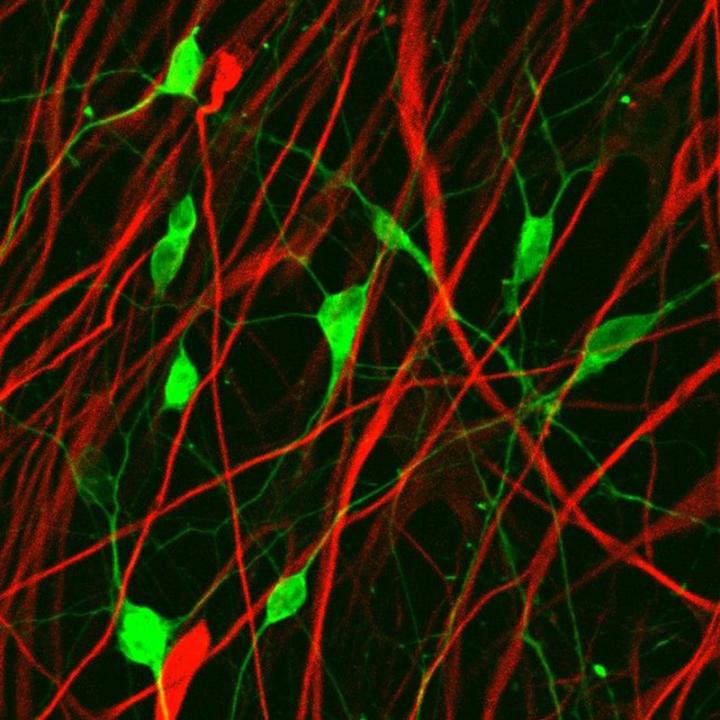
Glioma is caused by aggressive proliferation of glial cells. Chen’s team has previously published a series of work demonstrating that brain internal glial cells can be directly converted into functional neurons after overexpressing neural transcription factors such as NeuroD1 and Dlx2. In this work, the team further extended their research from glial cells to glioma cells and discovered that neural transcription factors can also efficiently convert glioma cells into neurons.
“Our cell conversion therapy for glioma is quite unique and distinct from conventional cancer therapies that typically aim at killing cancer cells,” commented by Prof. Chen. “One major side effect caused by killing cancer cells is the inevitable collateral damage on normal cells. In contrast, when we use gene therapy technology to convert glioma cells into neurons, normal cells are minimally affected”, Prof. Chen explained why they developed this new technology.
“Another important advantage of our gene therapy approach is that after overexpressing neural transcription factor(s) such as NeuroD1 or other transcription factors into glioma cells, the glioma cells stop proliferation immediately before being converted into neurons. Therefore, this transcription factor-based gene therapy may provide a new strategy to prolong the time window of treatment by arresting rapid proliferation of malignant glioma cells,” added Dr. Xin Wang, the first author of this work.
While excited about their new findings, Prof. Chen and colleagues also acknowledge that this new technology of treating glioma with transcription factor-based gene therapy is still in its infant stage. Many technical issues still need to be considered, such as developing a safe viral delivery system, targeting glioma cells in a specific way, and potential side effects induced by neural transcription factors. They also plan to combine their cell conversion therapy together with other interventions to achieve synergistic effects to treat glioma.
###
In addition to Prof. Chen and Dr. Wang, other contributors to this work include Dr. Zifei Pei, Aasma Hossain, and Yuting Bai from Penn State. This work was supported by the Charles H. “Skip” Smith Endowment Fund to Prof. Chen.
Media Contact
Qingsong Wang
[email protected]
Original Source
http://www.
Related Journal Article
http://dx.