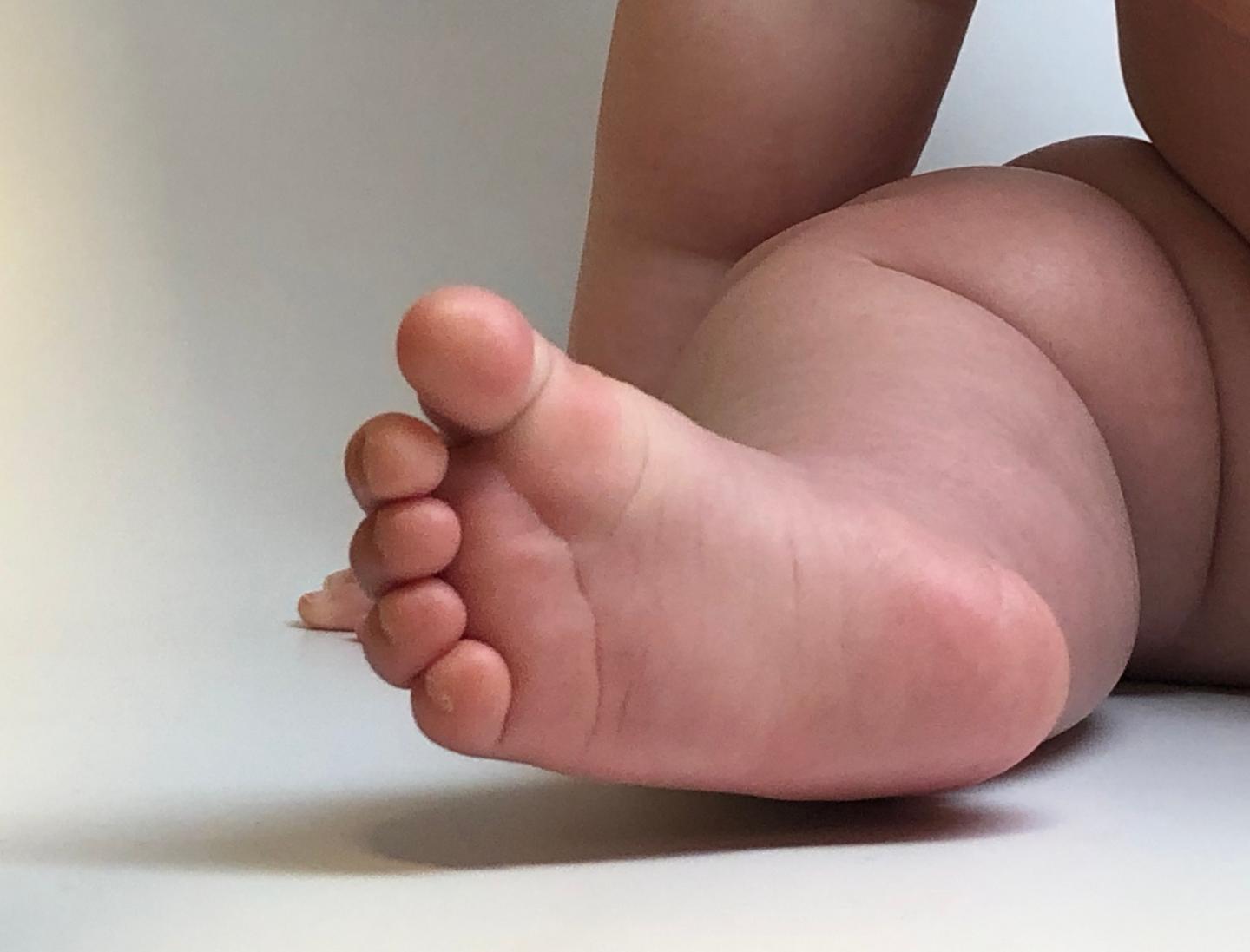
Credit: NIAID
A study to identify prenatal and early childhood markers of high risk for food allergy and atopic dermatitis, or eczema, as well as biological pathways that lead to these conditions, has begun. The observational study of children from birth to age 3 years will examine the origins of allergic disease by integrating interdisciplinary analyses of data from more than 260 biological and environmental samples and survey responses from each of 2,500 families. Called Systems Biology of Early Atopy, or SUNBEAM, the study is sponsored and funded by the National Institute of Allergy and Infectious Diseases (NIAID), part of the National Institutes of Health.
“Millions of children worldwide suffer from eczema and food allergy–diseases that significantly affect their quality of life,” said NIAID Director Anthony S. Fauci, M.D. “Currently, there is no reliable way to identify those infants destined to develop eczema or food allergy who would benefit from targeted prevention strategies. Identifying early-life markers of children at risk through the SUNBEAM study could help focus the implementation of current prevention strategies and facilitate the discovery of new ones.”
At 12 sites nationwide, the SUNBEAM study team will enroll at least 2,500 pregnant women; the biological father, if possible; and their child, who will be followed from birth to age 3 years. Unlike previous allergy studies, families will be enrolled regardless of whether they have known risk factors for allergic disease. Participating families will provide biological samples and samples from their home environment during and between study visits. They also will complete questionnaires about their health history, allergies, diet, infant feeding practices, home environment, sociodemographic characteristics (such as race, ethnicity and language) and mental health. Children will be assessed periodically for eczema and food allergy.
The SUNBEAM study team will examine the roles and interrelationships of clinical, environmental, biological and genetic factors in the development of allergic diseases. This is now possible thanks to new approaches in systems biology and recent, major technological advances in the ability to analyze biological pathways and immune responses. Systems biology is an interdisciplinary approach to integrating large amounts of data from a variety of biological systems to better understand a biological phenomenon. A biological pathway is a series of reactions among cellular molecules that leads to a certain product or a change in a cell, tissue or organ, such as the assembly of a new molecule or turning on a gene.
The SUNBEAM study was spearheaded by the NIAID Consortium of Food Allergy Research and is being led by protocol chair Corinne A. Keet, M.D., Ph.D., and protocol co-chair Scott H. Sicherer, M.D. Dr. Keet is an associate professor of pediatrics at Johns Hopkins University School of Medicine in Baltimore. Dr. Sicherer is director of the Elliot and Roslyn Jaffe Food Allergy Institute and the Elliot and Roslyn Jaffe professor of pediatric allergy and immunology in the Icahn School of Medicine at Mount Sinai in New York. The NIAID-funded Atopic Dermatitis Research Network and NIAID co-funded Immune Tolerance Network are supporting the SUNBEAM study sites and biorepository.
###
NIAID conducts and supports research–at NIH, throughout the United States, and worldwide–to study the causes of infectious and immune-mediated diseases, and to develop better means of preventing, diagnosing and treating these illnesses. News releases, fact sheets and other NIAID-related materials are available on the NIAID website.
About the National Institutes of Health (NIH): NIH, the nation’s medical research agency, includes 27 Institutes and Centers and is a component of the U.S. Department of Health and Human Services. NIH is the primary federal agency conducting and supporting basic, clinical, and translational medical research, and is investigating the causes, treatments, and cures for both common and rare diseases. For more information about NIH and its programs, visit http://www.
Media Contact
Laura S. Leifman
[email protected]
Original Source
https:/