Restaurants in Central African urban areas are key drivers in keeping protected wildlife on the menu
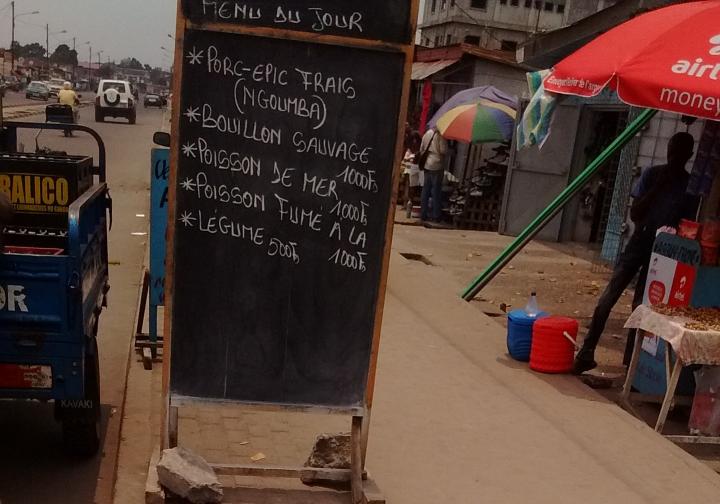
Credit: WCS
KINSHASA, DEMOCRATIC REPUBLIC OF CONGO (March 18, 2021) – A new study in the journal Conservation Science and Practice finds that restaurants in urban areas in Central Africa play a key role in whether protected wildlife winds up on the menu.
The study, by a team of scientists from Michigan State University, Wildlife Conservation Society (WCS), and University of Maryland, used a crime science “hot product” approach, which looks at frequently stolen items coveted by thieves. The approach offered new insights into wildlife targeted by the urban wild meat trade and can inform urban wildlife policies.
The study engaged lower, middle, and upper-level tiered restaurants to understand which species were traded. The findings revealed that procurement of wild meat by restaurants was more targeted than opportunistic, with monkeys identified as “hot products” – species most at risk of being targeted by the urban wild meat trade in both Kinshasa and Brazzaville, the respective capital cities of Democratic Republic of Congo and Republic of Congo.
Restaurants in Brazzaville were more aware of laws and revealed a wider variety of wild meat species at risk of illegal trade. This could be suggestive that awareness of laws is not an effective deterrent against illegal activity, and instead might lead to adaptive practice, such as diversifying the range of products offered, and in doing so spreading out the risk associated with any one particular species.
Though the wild meat trade can and does exist legally, it crosses into illegality when sourcing wildlife that are protected from poaching by national laws and regulations. These can include hunting in protected areas, outside of permitted seasons, beyond set quotas, hunting protected species, or by individuals without permits) or from trading across borders by international laws.
Looking at consumer demand alone, besides monkeys, restaurant customers also commonly requested antelopes. The study found that although consumer demand is an important consideration for restaurants’ purchasing decisions, it did not account for the cost and effort required to source a tradeable product. When factoring this in, pangolins were also identified as being at risk from the wild meat trade. This suggests the need to work with other supply chain actors besides consumers.
Knowing which wildlife are most at risk in urban centers can be helpful in focusing law enforcement efforts on compliance with species-specific rules say the authors.
“Restaurants have the potential to help reduce risks from the illegal wildlife trade and make their livelihoods more sustainable. Working with restaurants can also help build a community of informal wildlife guardians complementing law enforcement and legislative action, in a multi-pronged approach,” said Sarah Gluszek, lead author now working for FFI.
The illegal wildmeat trade is a problem for urban zones in Central Africa, but the dynamics of the trade are poorly understood. At unsustainable rates and in illegal contexts, the wild meat trade is a driver of species extinction; it can also threaten ecosystem services, local food security and contribute to the risk of zoonotic disease spread.
###
WCS (Wildlife Conservation Society)
MISSION: WCS saves wildlife and wild places worldwide through science, conservation action, education, and inspiring people to value nature. To achieve our mission, WCS, based at the Bronx Zoo, harnesses the power of its Global Conservation Program in nearly 60 nations and in all the world’s oceans and its five wildlife parks in New York City, visited by 4 million people annually. WCS combines its expertise in the field, zoos, and aquarium to achieve its conservation mission. Visit: newsroom.wcs.org Follow: @WCSNewsroom. For more information: 347-840-1242.
Media Contact
Stephen Sautner
[email protected]
Original Source
https:/
Related Journal Article
http://dx.