• HOME
  • NEWS
  • EXPLORE
    • CAREER
      • Companies
      • Jobs
    • EVENTS
    • iGEM
      • News
      • Team
    • PHOTOS
    • VIDEO
    • WIKI
  • BLOG
  • COMMUNITY
    • FACEBOOK
    • INSTAGRAM
    • TWITTER
Saturday, February 7, 2026
BIOENGINEER.ORG
No Result
View All Result
  • Login
  • HOME
  • NEWS
  • EXPLORE
    • CAREER
      • Companies
      • Jobs
        • Lecturer
        • PhD Studentship
        • Postdoc
        • Research Assistant
    • EVENTS
    • iGEM
      • News
      • Team
    • PHOTOS
    • VIDEO
    • WIKI
  • BLOG
  • COMMUNITY
    • FACEBOOK
    • INSTAGRAM
    • TWITTER
  • HOME
  • NEWS
  • EXPLORE
    • CAREER
      • Companies
      • Jobs
        • Lecturer
        • PhD Studentship
        • Postdoc
        • Research Assistant
    • EVENTS
    • iGEM
      • News
      • Team
    • PHOTOS
    • VIDEO
    • WIKI
  • BLOG
  • COMMUNITY
    • FACEBOOK
    • INSTAGRAM
    • TWITTER
No Result
View All Result
Bioengineer.org
No Result
View All Result
Home NEWS Science News

Study offers insights into management of invasive paperbark trees

Bioengineer by Bioengineer
March 10, 2021
in Science News
Reading Time: 2 mins read
0
IMAGE
Share on FacebookShare on TwitterShare on LinkedinShare on RedditShare on Telegram

IMAGE

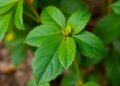
Credit: Photo credit: P. W. Tipping.

WESTMINSTER, Colorado – March 10, 2021 – The paperbark tree (Melaleuca quinquenervia) was introduced to the U.S. from Australia in the 1900s. Unfortunately, it went on to become a weedy invader that has dominated natural landscapes across southern Florida, including the fragile wetlands of the Everglades.

According to an article in the journal Invasive Plant Science and Management (IPSM), one of the challenges in managing the paperbark species is its large seedbank. A single, large tree located within a dense stand can retain as many as 9 million viable seeds. The seeds are contained in capsules within the tree canopy and are released in response to disturbances, including wildfires and even the application of herbicides.

Researchers conducting a 13-year study of Florida paperbark populations say a biological control program launched by state and federal authorities has helped to slow the plant’s invasive capacity. Now seedlings, saplings and large trees are continuously attacked by weevils, psyllids and galling flies.

After implementation of biological controls, there was a reduction of greater than 95 percent in the size of new populations of paperbark tree that emerged following wildfires. The biological controls have helped to reduce seedling and sapling density, slow their growth and inhibit surviving plants from achieving the capacity to reproduce for many years. One example: After a 1998 fire, the density of paperbark tree was reduced by 96.3 percent. By 2005, none of the remaining recruits had produced seed capsules.

Researchers say insights from Florida’s experience can help other communities facing a paperbark invasion bring new focus to their control efforts.

“Our study shows biological controls help to suppress new growth, which can be left for a decade or more before any additional treatment is needed,” said Philip Tipping, leader of the USDA-ARS Invasive Plant Research Laboratory in Davie, Florida. “As a result, land managers can prioritize removing large, reproductive trees instead of treating newly emerged populations.”

###

To learn more about effective controls for paperbark trees, you are invited to read the article “The influence of two wildfires and biological control agents on the population dynamics of Melaleuca quinquenervia in a seasonally inundated wetland”, which appears in Volume 14, Issue 1 of IPSM. The article is currently available online.

About Invasive Plant Science and Management

Invasive Plant Science and Management is a journal of the Weed Science Society of America, a nonprofit scientific society focused on weeds and their impact on the environment. The publication focuses on invasive plant species. To learn more, visit http://www.wssa.net.

Media Contact
Natalie Warrender
[email protected]

Related Journal Article

http://dx.doi.org/10.1017/inp.2021.4

Tags: AgricultureFertilizers/Pest Management
Share12Tweet8Share2ShareShareShare2

Related Posts

Phage-Antibiotic Combo Beats Resistant Peritoneal Infection

February 7, 2026

Boosting Remote Healthcare: Stepped-Wedge Trial Insights

February 7, 2026

Barriers and Boosters of Seniors’ Physical Activity in Karachi

February 7, 2026

Evaluating Pediatric Emergency Care Quality in Ethiopia

February 7, 2026
Please login to join discussion

POPULAR NEWS

  • Robotic Ureteral Reconstruction: A Novel Approach

    Robotic Ureteral Reconstruction: A Novel Approach

    82 shares
    Share 33 Tweet 21
  • Digital Privacy: Health Data Control in Incarceration

    63 shares
    Share 25 Tweet 16
  • Study Reveals Lipid Accumulation in ME/CFS Cells

    57 shares
    Share 23 Tweet 14
  • Breakthrough in RNA Research Accelerates Medical Innovations Timeline

    53 shares
    Share 21 Tweet 13

About

We bring you the latest biotechnology news from best research centers and universities around the world. Check our website.

Follow us

Recent News

Phage-Antibiotic Combo Beats Resistant Peritoneal Infection

Boosting Remote Healthcare: Stepped-Wedge Trial Insights

Barriers and Boosters of Seniors’ Physical Activity in Karachi

Subscribe to Blog via Email

Enter your email address to subscribe to this blog and receive notifications of new posts by email.

Join 73 other subscribers
  • Contact Us

Bioengineer.org © Copyright 2023 All Rights Reserved.

Welcome Back!

Login to your account below

Forgotten Password?

Retrieve your password

Please enter your username or email address to reset your password.

Log In
No Result
View All Result
  • Homepages
    • Home Page 1
    • Home Page 2
  • News
  • National
  • Business
  • Health
  • Lifestyle
  • Science

Bioengineer.org © Copyright 2023 All Rights Reserved.