• HOME
  • NEWS
  • EXPLORE
    • CAREER
      • Companies
      • Jobs
    • EVENTS
    • iGEM
      • News
      • Team
    • PHOTOS
    • VIDEO
    • WIKI
  • BLOG
  • COMMUNITY
    • FACEBOOK
    • INSTAGRAM
    • TWITTER
Thursday, March 26, 2026
BIOENGINEER.ORG
No Result
View All Result
  • Login
  • HOME
  • NEWS
  • EXPLORE
    • CAREER
      • Companies
      • Jobs
        • Lecturer
        • PhD Studentship
        • Postdoc
        • Research Assistant
    • EVENTS
    • iGEM
      • News
      • Team
    • PHOTOS
    • VIDEO
    • WIKI
  • BLOG
  • COMMUNITY
    • FACEBOOK
    • INSTAGRAM
    • TWITTER
  • HOME
  • NEWS
  • EXPLORE
    • CAREER
      • Companies
      • Jobs
        • Lecturer
        • PhD Studentship
        • Postdoc
        • Research Assistant
    • EVENTS
    • iGEM
      • News
      • Team
    • PHOTOS
    • VIDEO
    • WIKI
  • BLOG
  • COMMUNITY
    • FACEBOOK
    • INSTAGRAM
    • TWITTER
No Result
View All Result
Bioengineer.org
No Result
View All Result
Home NEWS Science News

SUTD wins best paper at 35th AAAI conference on Artificial Intelligence 2021

Bioengineer by Bioengineer
March 10, 2021
in Science News
Reading Time: 2 mins read
0
IMAGE
Share on FacebookShare on TwitterShare on LinkedinShare on RedditShare on Telegram

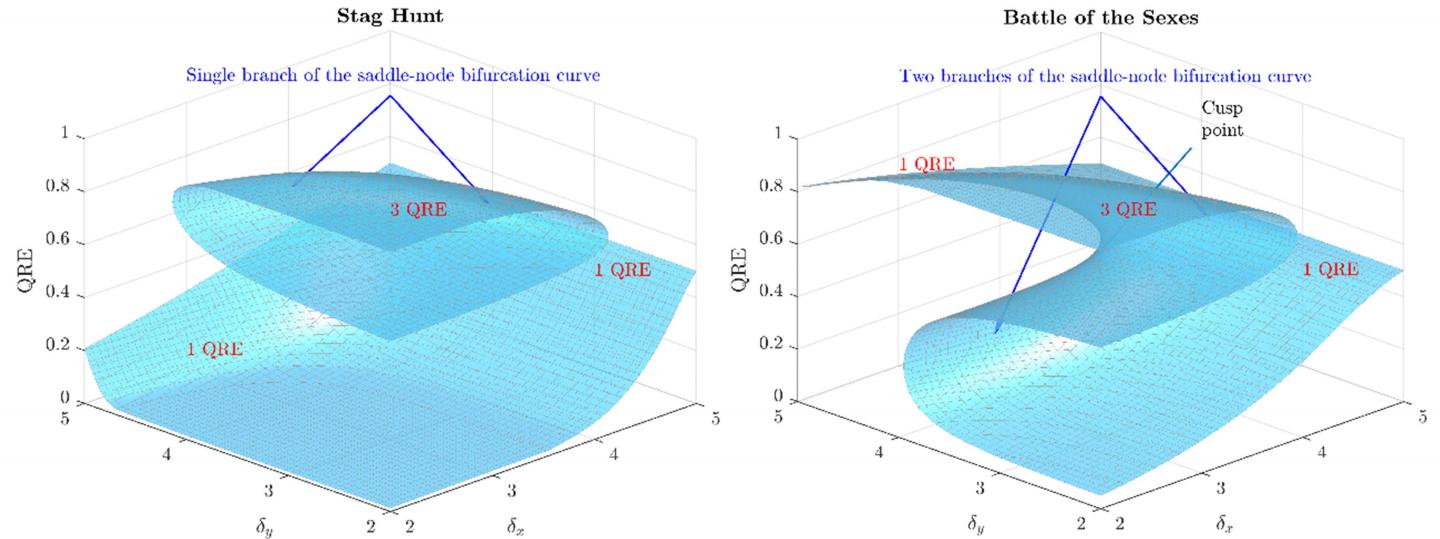
The researchers have developed a novel connection which can help in the design of more efficient multi-agent AI systems.
IMAGE

Credit: SUTD

Game theory is known to be a useful tool in the study of Machine Learning (ML) and Artificial Intelligence (AI) Multi-Agent interactions.

One basic component of these ML and AI systems is the exploration-exploitation trade-off, a fundamental dilemma between taking a risk with new actions in the quest for more information about the environment (exploration) and repeatedly selecting actions that result in the current maximum reward or (exploitation).

However, the outcome of the exploration-exploitation process is often unpredictable in practice and the reasons behind its volatile performance have been a long-standing open question in the ML and AI communities.

Dr Stefanos Leonardos and Assistant Professor Georgios Piliouras, researchers from the Singapore University of Technology and Design (SUTD), applied analytical tools from the theory of dynamical systems in the study of multi-agent systems and established a deep connection between exploration-exploitation and Catastrophe Theory (Figures 1 and 2). The latter is a branch of mathematics that formally explains phase transitions in all kinds of natural systems ranging from the transition from water to ice and disease outbreaks to collapses of financial markets.

This newly established connection provides a tool to predict the consequences and improve the performance of exploration-exploitation techniques in the development of multi-agent AI systems, such as robotic space missions, healthcare management or automated financial investing algorithms.

Their work, titled ‘Exploration-Exploitation in Multi-Agent Learning: Catastrophe Theory Meets Game Theory’, was honored with the Best Paper Award at the 35th AAAI Conference on Artificial Intelligence 2021.

“In this work, we reasoned about the rich mathematical structure in multi-agent interactions and showed how this underlying geometry shapes the performance of AI systems. We believe our new findings will support the research community in achieving its ambitious goal to push beyond the current AI boundaries,” explained first author Dr Stefanos Leonardos from SUTD.

“We are deeply honored by this recognition and are excited to continue our investigation of phase transitions and their implications to AI systems,” added Assistant Professor Georgios Piliouras from SUTD.

###

Media Contact
Jessica Sasayiah
[email protected]

Original Source

https://arxiv.org/pdf/2012.03083.pdf

Tags: Computer TheoryMathematics/StatisticsResearch/DevelopmentRobotry/Artificial IntelligenceTechnology/Engineering/Computer ScienceTheoretical SciencesTheory/Design
Share12Tweet8Share2ShareShareShare2

Related Posts

Microtubules Found to Actively Ensure Accurate Chromosome Distribution During Cell Division

March 25, 2026

Aversive Learning Hijacks Brain Sugar Sensor

March 25, 2026

Isolated H2-Reduced Clusters Boost CO2-to-Methanol Catalysis

March 25, 2026

In-Sensor Cryptography Links Physical Process to Digital Identity

March 25, 2026
Please login to join discussion

POPULAR NEWS

  • blank

    Revolutionary AI Model Enhances Precision in Detecting Food Contamination

    96 shares
    Share 38 Tweet 24
  • Imagine a Social Media Feed That Challenges Your Views Instead of Reinforcing Them

    1003 shares
    Share 397 Tweet 248
  • Uncovering Functions of Cavernous Malformation Proteins in Organoids

    54 shares
    Share 22 Tweet 14
  • Promising Outcomes from First Clinical Trials of Gene Regulation in Epilepsy

    51 shares
    Share 20 Tweet 13

About

We bring you the latest biotechnology news from best research centers and universities around the world. Check our website.

Follow us

Recent News

In-Sensor Cryptography Links Physical Process to Digital Identity

Can Psychosocial Factors Influence Cancer Risk?

Depression Factors in Elderly: Pre vs. Post-COVID Analysis

Subscribe to Blog via Email

Success! An email was just sent to confirm your subscription. Please find the email now and click 'Confirm' to start subscribing.

Join 78 other subscribers
  • Contact Us

Bioengineer.org © Copyright 2023 All Rights Reserved.

Welcome Back!

Login to your account below

Forgotten Password?

Retrieve your password

Please enter your username or email address to reset your password.

Log In
No Result
View All Result
  • Homepages
    • Home Page 1
    • Home Page 2
  • News
  • National
  • Business
  • Health
  • Lifestyle
  • Science

Bioengineer.org © Copyright 2023 All Rights Reserved.