• HOME
  • NEWS
  • EXPLORE
    • CAREER
      • Companies
      • Jobs
    • EVENTS
    • iGEM
      • News
      • Team
    • PHOTOS
    • VIDEO
    • WIKI
  • BLOG
  • COMMUNITY
    • FACEBOOK
    • INSTAGRAM
    • TWITTER
Thursday, January 15, 2026
BIOENGINEER.ORG
No Result
View All Result
  • Login
  • HOME
  • NEWS
  • EXPLORE
    • CAREER
      • Companies
      • Jobs
        • Lecturer
        • PhD Studentship
        • Postdoc
        • Research Assistant
    • EVENTS
    • iGEM
      • News
      • Team
    • PHOTOS
    • VIDEO
    • WIKI
  • BLOG
  • COMMUNITY
    • FACEBOOK
    • INSTAGRAM
    • TWITTER
  • HOME
  • NEWS
  • EXPLORE
    • CAREER
      • Companies
      • Jobs
        • Lecturer
        • PhD Studentship
        • Postdoc
        • Research Assistant
    • EVENTS
    • iGEM
      • News
      • Team
    • PHOTOS
    • VIDEO
    • WIKI
  • BLOG
  • COMMUNITY
    • FACEBOOK
    • INSTAGRAM
    • TWITTER
No Result
View All Result
Bioengineer.org
No Result
View All Result
Home NEWS Science News

UTA researcher examining potentially less invasive treatment for peripheral artery disease

Bioengineer by Bioengineer
March 3, 2021
in Science News
Reading Time: 2 mins read
0
IMAGE
Share on FacebookShare on TwitterShare on LinkedinShare on RedditShare on Telegram

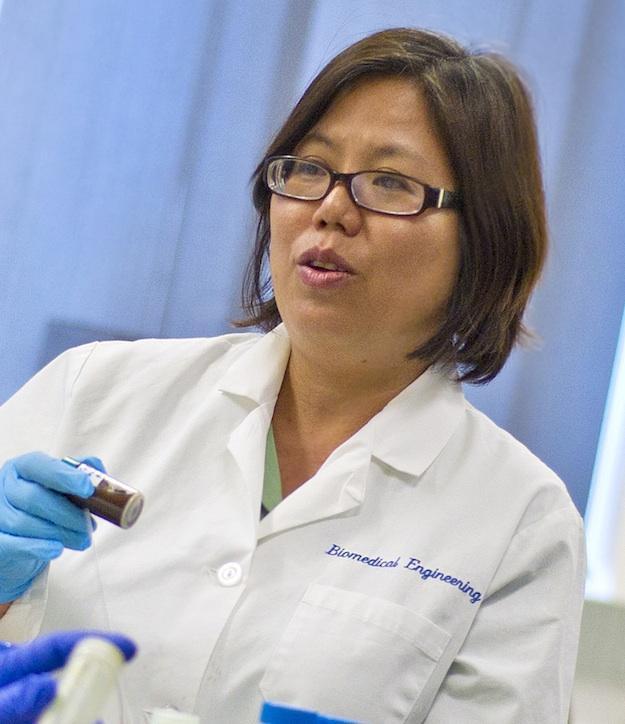
Nanoparticle delivery offers hope to those with peripheral artery disease
IMAGE

Credit: UT Arlington

A University of Texas at Arlington bioengineer is designing a nanoparticle delivery system that will take needed plasmids to arteries in patients who are suffering from peripheral artery disease (PAD) in their arms and legs.

A plasmid is the genetic structure in a cell that can replicate independently of chromosomes and often is used in the laboratory for the manipulation of genes.

Kytai Nguyen, the lead investigator and a professor of bioengineering, received a three-year, $442,549 grant from the National Institutes of Health for the project. With these funds, she will be able to provide for two doctoral students and four undergraduates, who will gain experiences on cell studies and the fabrication and characterization of nanoparticles.

“This grant could help us find better, less invasive ways for people to cope with peripheral artery disease,” Nguyen said. “When arteries become constricted, it’s more difficult for them to carry oxygen and blood to that body part, usually the leg for PAD. It can lead to muscle pain and numbness even when at rest, along with subsequent complications like critical limb ischemia, stroke and heart attack.”

Peripheral artery disease affects more than 200 million people worldwide and is associated with high rates of amputation, morbidity and mortality. Nguyen said this research will reduce these complications and improve the quality of life for PAD patients.

“The nanoparticles we’re developing are biodegradable and will deliver a combination of plasmids that protect cells under stress and facilitate the effective growth of new blood vessels to bridge over narrowed arteries and restore blood supply,” Nguyen said. “What’s more is that the research produces blood vessels again via the use of nanoparticles and nanotechnology for gene therapy.”

Michael Cho, chair of the UT Arlington Bioengineering Department, said Nguyen’s innovative research could offer hope to those who live with PAD.

“If successful, this new treatment could outline a solution for so many people around the world who suffer from this common malady,” Cho said. “No current research has been done to investigate the use of these plasmids for helping PAD. The use of these plasmids utilizes recent advances in both vascular tissue engineering and nanotechnology.”

###

Media Contact
Herb Booth
[email protected]

Original Source

https://www.uta.edu/news/news-releases/2021/03/03/nguyen-nanoparticles-plasmids

Tags: Biomedical/Environmental/Chemical EngineeringBiotechnologyCell BiologyTechnology/Engineering/Computer Science
Share12Tweet8Share2ShareShareShare2

Related Posts

Linking Reasoning Skills and Eating Disorders: An Insight

January 15, 2026

Workplace Violence Against Nurses: Causes and Prevention Strategies

January 15, 2026

KLHL6 Ubiquitin Ligase Fuels CD8+ T Cell Resistance

January 15, 2026

Low Threshold Care Improves Outcomes for Opioid Users

January 15, 2026
Please login to join discussion

POPULAR NEWS

  • Enhancing Spiritual Care Education in Nursing Programs

    155 shares
    Share 62 Tweet 39
  • PTSD, Depression, Anxiety in Childhood Cancer Survivors, Parents

    147 shares
    Share 59 Tweet 37
  • Robotic Ureteral Reconstruction: A Novel Approach

    75 shares
    Share 30 Tweet 19
  • Study Reveals Lipid Accumulation in ME/CFS Cells

    53 shares
    Share 21 Tweet 13
iv>

About

We bring you the latest biotechnology news from best research centers and universities around the world. Check our website.

Follow us

Recent News

Linking Reasoning Skills and Eating Disorders: An Insight

Workplace Violence Against Nurses: Causes and Prevention Strategies

KLHL6 Ubiquitin Ligase Fuels CD8+ T Cell Resistance

Subscribe to Blog via Email

Success! An email was just sent to confirm your subscription. Please find the email now and click 'Confirm' to start subscribing.

Join 71 other subscribers
  • Contact Us

Bioengineer.org © Copyright 2023 All Rights Reserved.

Welcome Back!

Login to your account below

Forgotten Password?

Retrieve your password

Please enter your username or email address to reset your password.

Log In
No Result
View All Result
  • Homepages
    • Home Page 1
    • Home Page 2
  • News
  • National
  • Business
  • Health
  • Lifestyle
  • Science

Bioengineer.org © Copyright 2023 All Rights Reserved.