• HOME
  • NEWS
  • EXPLORE
    • CAREER
      • Companies
      • Jobs
    • EVENTS
    • iGEM
      • News
      • Team
    • PHOTOS
    • VIDEO
    • WIKI
  • BLOG
  • COMMUNITY
    • FACEBOOK
    • INSTAGRAM
    • TWITTER
Saturday, February 7, 2026
BIOENGINEER.ORG
No Result
View All Result
  • Login
  • HOME
  • NEWS
  • EXPLORE
    • CAREER
      • Companies
      • Jobs
        • Lecturer
        • PhD Studentship
        • Postdoc
        • Research Assistant
    • EVENTS
    • iGEM
      • News
      • Team
    • PHOTOS
    • VIDEO
    • WIKI
  • BLOG
  • COMMUNITY
    • FACEBOOK
    • INSTAGRAM
    • TWITTER
  • HOME
  • NEWS
  • EXPLORE
    • CAREER
      • Companies
      • Jobs
        • Lecturer
        • PhD Studentship
        • Postdoc
        • Research Assistant
    • EVENTS
    • iGEM
      • News
      • Team
    • PHOTOS
    • VIDEO
    • WIKI
  • BLOG
  • COMMUNITY
    • FACEBOOK
    • INSTAGRAM
    • TWITTER
No Result
View All Result
Bioengineer.org
No Result
View All Result
Home NEWS Science News

A silver swining: ‘Destructive’ pigs help build rainforests

Bioengineer by Bioengineer
March 3, 2021
in Science News
Reading Time: 2 mins read
0
IMAGE
Share on FacebookShare on TwitterShare on LinkedinShare on RedditShare on Telegram

IMAGE

Credit: The University of Queensland

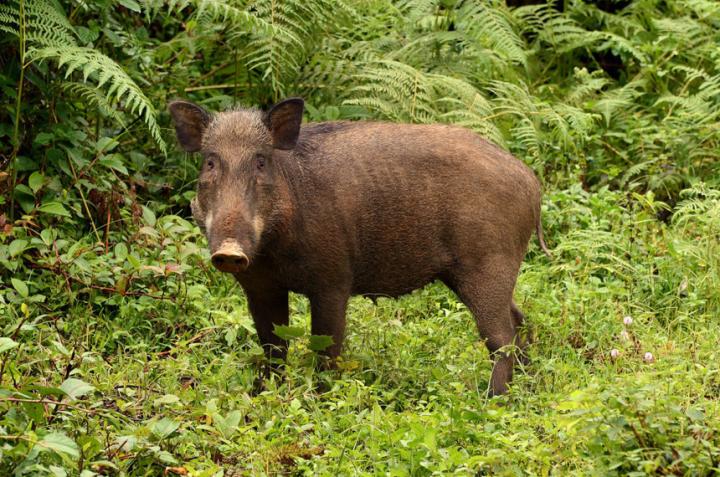
Wild pigs are often maligned as ecosystem destroyers, but a University of Queensland study has found they also cultivate biodiverse rainforests in their native habitats.

Dr Matthew Luskin has been researching the effect of native pigs in Malaysian rainforests and found their nests may be critical to maintaining diverse and balanced tree communities.

“We’ve shown that wild pigs can support higher diversity ecosystems and are not just nuisances and pests, thanks to a beneficial effect of their nesting practices,” Dr Luskin said.

“Prior to giving birth, pigs build birthing nests made up of hundreds of tree seedlings, usually on flat, dry sites in the forest.

“As they build their nests, the pigs kill many of the dominant seedlings and inadvertently reduce the abundance of locally dominant tree species, but usually not rarer local species, supporting tree diversity.”

Dr Luskin said wild pigs (Sus scrofa) descended from the same species of domestic pigs and both have generally been considered pests by farmers, land managers and conservationists.

“Their negative impacts on natural and cultivated ecosystems have been well documented – ranging from soil disturbances to attacking newborn livestock,” he said.

This is the first study to link animals to this key mechanism for maintaining hyper-diverse rainforests.

The researchers tagged more than 30,000 tree seedlings in a Malaysian rainforest and were able to examine how tree diversity changed in the areas where pigs nested after recovering more than 1800 of those tree tags from inside more than 200 pig birthing nests.

“You could consider pigs ‘accidental forest gardeners’ that prune common seedlings and inadvertently maintain diversity,” Dr Luskin said.

“In many regions, there’s a focus on managing overabundant pig populations to limit their negative environmental impacts.

“But our results suggest there may be some positives to maintaining pigs in the ecosystem.”

Dr Luskin said that as the fieldwork was conducted in Malaysia where pigs are native – the impacts of invasive pigs in Australia may not create similar effects.

“We’re currently in the process of designing new research to study the same pig processes here in Queensland,” he said.

“And we’ll also be comparing our initial Malaysian results with conditions in a nearby Malaysian forest that is heavily hunted and where many native pigs have been killed.

“It’s an intriguing insight, as pigs have become the most widespread large animal on earth, so documenting any new ecological impacts has massive repercussions globally.”

###

The research is published in Proceedings of the Royal Society B (DOI: 10.1098/rspb.2021.0001).

Media Contact
Dr Matthew Luskin
[email protected]

Related Journal Article

http://dx.doi.org/10.1098/rspb.2021.0001

Tags: AgricultureBiodiversityBiologyEcology/EnvironmentForestryPlant Sciences
Share12Tweet8Share2ShareShareShare2

Related Posts

Evaluating Pediatric Emergency Care Quality in Ethiopia

February 7, 2026

TPMT Expression Predictions Linked to Azathioprine Side Effects

February 7, 2026

Improving Dementia Care with Enhanced Activity Kits

February 7, 2026

Decoding Prostate Cancer Origins via snFLARE-seq, mxFRIZNGRND

February 7, 2026
Please login to join discussion

POPULAR NEWS

  • Robotic Ureteral Reconstruction: A Novel Approach

    Robotic Ureteral Reconstruction: A Novel Approach

    82 shares
    Share 33 Tweet 21
  • Digital Privacy: Health Data Control in Incarceration

    63 shares
    Share 25 Tweet 16
  • Study Reveals Lipid Accumulation in ME/CFS Cells

    57 shares
    Share 23 Tweet 14
  • Breakthrough in RNA Research Accelerates Medical Innovations Timeline

    53 shares
    Share 21 Tweet 13

About

We bring you the latest biotechnology news from best research centers and universities around the world. Check our website.

Follow us

Recent News

Evaluating Pediatric Emergency Care Quality in Ethiopia

TPMT Expression Predictions Linked to Azathioprine Side Effects

Improving Dementia Care with Enhanced Activity Kits

Subscribe to Blog via Email

Enter your email address to subscribe to this blog and receive notifications of new posts by email.

Join 73 other subscribers
  • Contact Us

Bioengineer.org © Copyright 2023 All Rights Reserved.

Welcome Back!

Login to your account below

Forgotten Password?

Retrieve your password

Please enter your username or email address to reset your password.

Log In
No Result
View All Result
  • Homepages
    • Home Page 1
    • Home Page 2
  • News
  • National
  • Business
  • Health
  • Lifestyle
  • Science

Bioengineer.org © Copyright 2023 All Rights Reserved.