• HOME
  • NEWS
  • EXPLORE
    • CAREER
      • Companies
      • Jobs
    • EVENTS
    • iGEM
      • News
      • Team
    • PHOTOS
    • VIDEO
    • WIKI
  • BLOG
  • COMMUNITY
    • FACEBOOK
    • INSTAGRAM
    • TWITTER
Sunday, May 10, 2026
BIOENGINEER.ORG
No Result
View All Result
  • Login
  • HOME
  • NEWS
  • EXPLORE
    • CAREER
      • Companies
      • Jobs
        • Lecturer
        • PhD Studentship
        • Postdoc
        • Research Assistant
    • EVENTS
    • iGEM
      • News
      • Team
    • PHOTOS
    • VIDEO
    • WIKI
  • BLOG
  • COMMUNITY
    • FACEBOOK
    • INSTAGRAM
    • TWITTER
  • HOME
  • NEWS
  • EXPLORE
    • CAREER
      • Companies
      • Jobs
        • Lecturer
        • PhD Studentship
        • Postdoc
        • Research Assistant
    • EVENTS
    • iGEM
      • News
      • Team
    • PHOTOS
    • VIDEO
    • WIKI
  • BLOG
  • COMMUNITY
    • FACEBOOK
    • INSTAGRAM
    • TWITTER
No Result
View All Result
Bioengineer.org
No Result
View All Result
Home NEWS Science News Chemistry

Antibodies recognize and attack different SARS-CoV-2 spike shapes

Bioengineer by Bioengineer
February 25, 2021
in Chemistry
Reading Time: 2 mins read
0
IMAGE
Share on FacebookShare on TwitterShare on LinkedinShare on RedditShare on Telegram

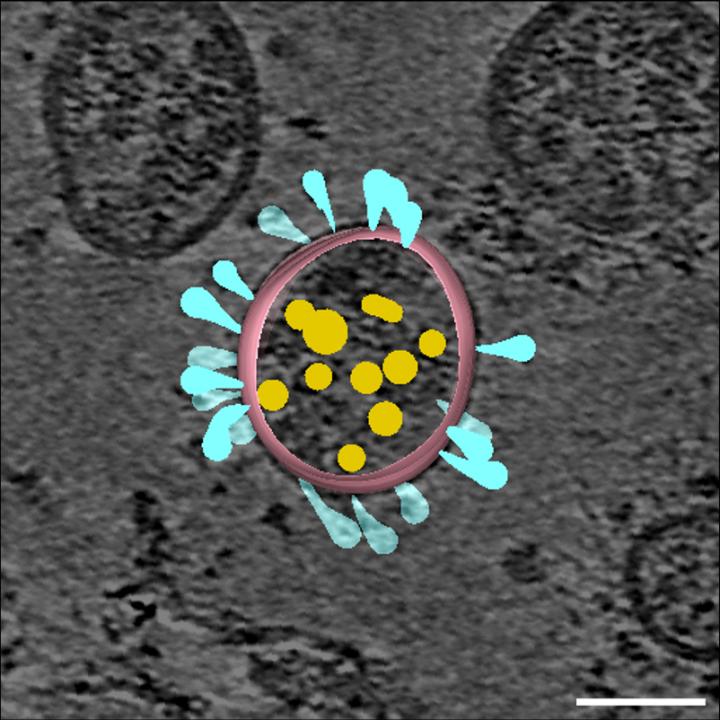
The spikes on the SARS-CoV-2 virus, which causes COVID-19, change shapes; new research reveals ways that antibodies can recognize these different shapes and block the virus and informs the design of vaccines and antiviral therapies
IMAGE

Credit: Image courtesy of Wenwei Li.

ROCKVILLE, MD – The virus that causes COVID-19 belongs to the family of coronaviruses, “corona” referring to the spikes on the viral surface. These spikes are not static–to infect cells, they change shapes. Maolin Lu, an associate research scientist at Yale University, directly visualized the changing shapes of those spike proteins and monitored how the shapes change when COVID-19 patient antibodies attach. Her work, which was published in Cell Host & Microbe in December 2020 and will be presented on Thursday, February 25 at the 65th Annual Meeting of the Biophysical Society informs the development of COVID-19 vaccines and treatments that target the spikes of the SARS-CoV-2 virus, which causes COVID-19.

When the COVID-19 pandemic hit, Lu was quick to apply her expertise studying the HIV-1 virus to SARS-CoV-2. Prior to the pandemic, Lu studied which shapes of the HIV-1 spikes are most susceptible to antibody attack. Using similar techniques, in March 2020, she turned to SARS-CoV-2.

Because the spike proteins are prominent on the outside of the SARS-CoV-2 virus, they are crucial targets for vaccines and therapeutics. The vaccines that have been approved so far have been designed to help the body generate antibodies that recognize this part of the SARS-CoV-2 virus, blocking its entry into cells. However, Lu says, “the spike protein constantly changes shape, this shape-shifting feature not only allows the virus to enter host cells, it also helps the virus escape from being attacked or recognized by antibodies.”

Using an imaging technique to monitor molecular movements, Lu observed that it adopts at least four shapes. She also watched how the spike proteins responded to serum from patients who recovered from COVID-19, which contained antibodies their body made against the SARS-CoV-2 virus. She noticed that some antibodies recognized and attached to the spike protein when it was in an “open” position and ready to stick to cells. Others preferred to attach to a “closed” spike, which is the spike’s dominant position when the virus first enters the body.

“This indicates that antibodies can attack or antagonize the SARS-CoV-2 spike two different ways. One way is to directly occupy the spike’s open position, then the virus cannot get close or associate with the host cells. The other way is to lock the spike into a closed position. The second locking down strategy has been widely used to develop COVID-19 vaccines,” Lu explained.

When it comes to developing new vaccines or treatments, their research shows that targeting the SARS-CoV-2 spike protein when it is in a closed position may be a particularly effective strategy.

###

Media Contact
Leann Fox
[email protected]

Original Source

https://www.biophysics.org/news-room?ArtMID=802&ArticleID=10414&preview=true

Tags: Biomechanics/BiophysicsBiotechnologyChemistry/Physics/Materials SciencesCritical Care/Emergency MedicineDeath/DyingEpidemiologyHealth CareVaccines
Share12Tweet8Share2ShareShareShare2

Related Posts

Miniature Sensor Uses Light to Detect Touch — Chemistry

Miniature Sensor Uses Light to Detect Touch

May 8, 2026
Iron Minerals Determine Whether Dissolved Organic Matter Fuels Microbes or Becomes Long-Term Carbon Storage — Chemistry

Iron Minerals Determine Whether Dissolved Organic Matter Fuels Microbes or Becomes Long-Term Carbon Storage

May 8, 2026

Kate Evans Appointed Associate Lab Director for Biological and Environmental Systems Science at ORNL

May 8, 2026

Advancing Multiscale Modeling and Overcoming Operational Challenges in Autothermal COâ‚‚-to-Methanol Reactors

May 8, 2026
Please login to join discussion

POPULAR NEWS

  • Research Indicates Potential Connection Between Prenatal Medication Exposure and Elevated Autism Risk

    840 shares
    Share 336 Tweet 210
  • New Study Reveals Plants Can Detect the Sound of Rain

    727 shares
    Share 290 Tweet 181
  • Scientists Investigate Possible Connection Between COVID-19 and Increased Lung Cancer Risk

    68 shares
    Share 27 Tweet 17
  • Salmonella Haem Blocks Macrophages, Boosts Infection

    61 shares
    Share 24 Tweet 15

About

We bring you the latest biotechnology news from best research centers and universities around the world. Check our website.

Follow us

Recent News

Evaluating Digoxin Use in Patients with Symptomatic Rheumatic Heart Disease

Evaluating the Effectiveness and Safety of Digitalis Glycosides in Treating Heart Failure

Urdu Fall Risk Questionnaire Adapted for Elderly

Subscribe to Blog via Email

Enter your email address to subscribe to this blog and receive notifications of new posts by email.

Join 82 other subscribers
  • Contact Us

Bioengineer.org © Copyright 2023 All Rights Reserved.

Welcome Back!

Login to your account below

Forgotten Password?

Retrieve your password

Please enter your username or email address to reset your password.

Log In
No Result
View All Result
  • Homepages
    • Home Page 1
    • Home Page 2
  • News
  • National
  • Business
  • Health
  • Lifestyle
  • Science

Bioengineer.org © Copyright 2023 All Rights Reserved.