• HOME
  • NEWS
  • EXPLORE
    • CAREER
      • Companies
      • Jobs
    • EVENTS
    • iGEM
      • News
      • Team
    • PHOTOS
    • VIDEO
    • WIKI
  • BLOG
  • COMMUNITY
    • FACEBOOK
    • INSTAGRAM
    • TWITTER
Saturday, February 7, 2026
BIOENGINEER.ORG
No Result
View All Result
  • Login
  • HOME
  • NEWS
  • EXPLORE
    • CAREER
      • Companies
      • Jobs
        • Lecturer
        • PhD Studentship
        • Postdoc
        • Research Assistant
    • EVENTS
    • iGEM
      • News
      • Team
    • PHOTOS
    • VIDEO
    • WIKI
  • BLOG
  • COMMUNITY
    • FACEBOOK
    • INSTAGRAM
    • TWITTER
  • HOME
  • NEWS
  • EXPLORE
    • CAREER
      • Companies
      • Jobs
        • Lecturer
        • PhD Studentship
        • Postdoc
        • Research Assistant
    • EVENTS
    • iGEM
      • News
      • Team
    • PHOTOS
    • VIDEO
    • WIKI
  • BLOG
  • COMMUNITY
    • FACEBOOK
    • INSTAGRAM
    • TWITTER
No Result
View All Result
Bioengineer.org
No Result
View All Result
Home NEWS Science News

Dozens of new lichen species discovered in East African mountain forests

Bioengineer by Bioengineer
February 22, 2021
in Science News
Reading Time: 2 mins read
0
IMAGE
Share on FacebookShare on TwitterShare on LinkedinShare on RedditShare on Telegram

IMAGE

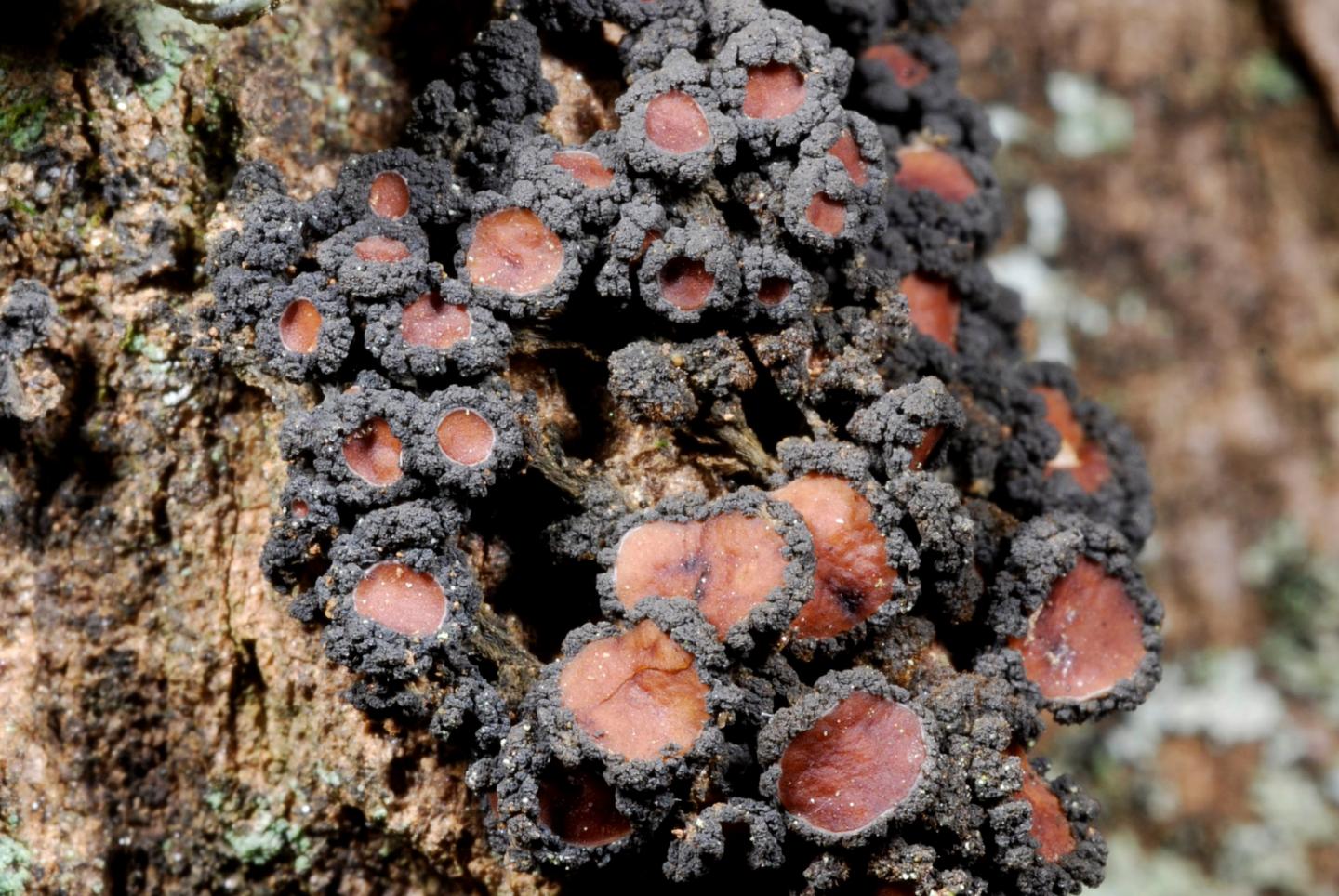
Credit: Jouko Rikkinen

“The lengthy groundwork is finally complete,” says Jouko Rikkinen, Professor of Botany at the University of Helsinki, Finland, giving a sigh of relief.

The research article just published focuses on species diversity in the genus Leptogium, a group of jelly lichens that are common in the mountain forests of East Africa. Thousands of lichen specimens were collected from Kenya and Tanzania in 2009-2017, including nearly 600 Leptogium specimens.

DNA analyses revealed that the dataset on Leptogium included more than 70 different species, of which no more than a dozen or so are previously known. DNA analyses were necessary, as species identification based on thallus structure is notoriously difficult in this group.

“The morphological differences between species are often subtle and open to interpretation, and the outer appearances of individual species can also vary greatly depending on environmental factors. Even chemical characteristics cannot be used as an aid for identification to the extent to which they are used with many other groups of lichens,” Rikkinen notes.

Due to problems in species delimitation and identification, Leptogium specimens with a more or less similar outer appearance collected from different parts of the world have traditionally been assigned to the same species. For example, Leptogium cyanescens and Leptogium rivulare, species which grow in Finland, have been thought to also inhabit the tropical rain forests of East Africa. However, the new research findings indicate that many Leptogium species can have narrow ranges, and that the total number of species in the genus is much higher than previously thought.

“Similar results have also been obtained from many other genera of lichens whose diversity has been recently studied with DNA analysis methods,” says Docent Ulla Kaasalainen, who leads a research project on tropical lichens at the University of Göttingen.

###

Media Contact
Jouko Rikkinen
[email protected]

Related Journal Article

http://dx.doi.org/10.3390/microorganisms9020314

Tags: BiodiversityBiologyEcology/EnvironmentGenesPlant Sciences
Share12Tweet8Share2ShareShareShare2

Related Posts

Evaluating Pediatric Emergency Care Quality in Ethiopia

February 7, 2026

TPMT Expression Predictions Linked to Azathioprine Side Effects

February 7, 2026

Improving Dementia Care with Enhanced Activity Kits

February 7, 2026

Decoding Prostate Cancer Origins via snFLARE-seq, mxFRIZNGRND

February 7, 2026
Please login to join discussion

POPULAR NEWS

  • Robotic Ureteral Reconstruction: A Novel Approach

    Robotic Ureteral Reconstruction: A Novel Approach

    82 shares
    Share 33 Tweet 21
  • Digital Privacy: Health Data Control in Incarceration

    63 shares
    Share 25 Tweet 16
  • Study Reveals Lipid Accumulation in ME/CFS Cells

    57 shares
    Share 23 Tweet 14
  • Breakthrough in RNA Research Accelerates Medical Innovations Timeline

    53 shares
    Share 21 Tweet 13

About

We bring you the latest biotechnology news from best research centers and universities around the world. Check our website.

Follow us

Recent News

Evaluating Pediatric Emergency Care Quality in Ethiopia

TPMT Expression Predictions Linked to Azathioprine Side Effects

Improving Dementia Care with Enhanced Activity Kits

Subscribe to Blog via Email

Success! An email was just sent to confirm your subscription. Please find the email now and click 'Confirm' to start subscribing.

Join 73 other subscribers
  • Contact Us

Bioengineer.org © Copyright 2023 All Rights Reserved.

Welcome Back!

Login to your account below

Forgotten Password?

Retrieve your password

Please enter your username or email address to reset your password.

Log In
No Result
View All Result
  • Homepages
    • Home Page 1
    • Home Page 2
  • News
  • National
  • Business
  • Health
  • Lifestyle
  • Science

Bioengineer.org © Copyright 2023 All Rights Reserved.