• HOME
  • NEWS
  • EXPLORE
    • CAREER
      • Companies
      • Jobs
    • EVENTS
    • iGEM
      • News
      • Team
    • PHOTOS
    • VIDEO
    • WIKI
  • BLOG
  • COMMUNITY
    • FACEBOOK
    • INSTAGRAM
    • TWITTER
Saturday, February 7, 2026
BIOENGINEER.ORG
No Result
View All Result
  • Login
  • HOME
  • NEWS
  • EXPLORE
    • CAREER
      • Companies
      • Jobs
        • Lecturer
        • PhD Studentship
        • Postdoc
        • Research Assistant
    • EVENTS
    • iGEM
      • News
      • Team
    • PHOTOS
    • VIDEO
    • WIKI
  • BLOG
  • COMMUNITY
    • FACEBOOK
    • INSTAGRAM
    • TWITTER
  • HOME
  • NEWS
  • EXPLORE
    • CAREER
      • Companies
      • Jobs
        • Lecturer
        • PhD Studentship
        • Postdoc
        • Research Assistant
    • EVENTS
    • iGEM
      • News
      • Team
    • PHOTOS
    • VIDEO
    • WIKI
  • BLOG
  • COMMUNITY
    • FACEBOOK
    • INSTAGRAM
    • TWITTER
No Result
View All Result
Bioengineer.org
No Result
View All Result
Home NEWS Science News

Dynamic 3D printing process features a light-driven twist

Bioengineer by Bioengineer
February 3, 2021
in Science News
Reading Time: 2 mins read
0
IMAGE
Share on FacebookShare on TwitterShare on LinkedinShare on RedditShare on Telegram

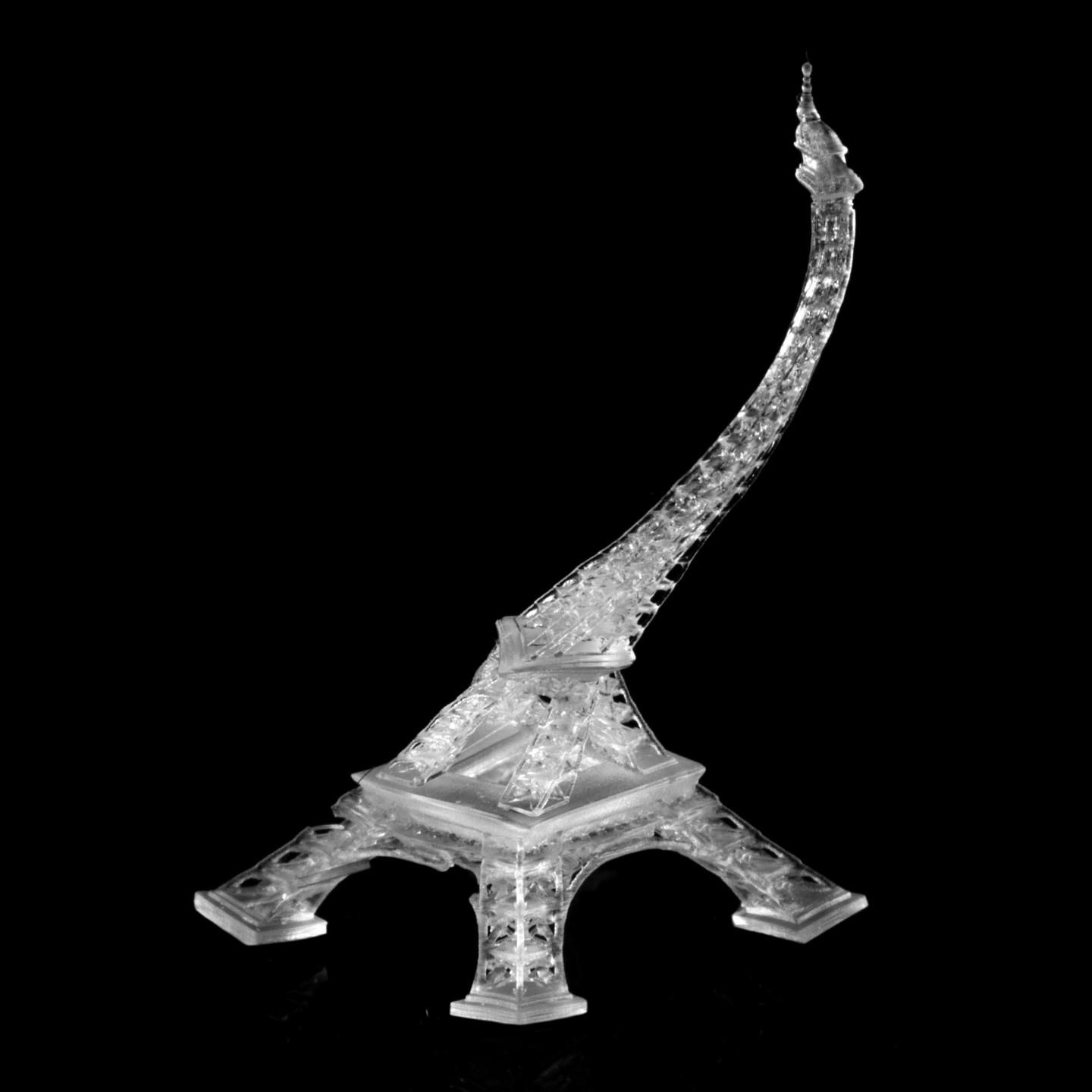
Light provides freedom to control each layer and improves precision and speed
IMAGE

Credit: Northwestern University

The speed of light has come to 3D printing. Northwestern University engineers have developed a new method that uses light to improve 3D printing speed and precision while also, in combination with a high-precision robot arm, providing the freedom to move, rotate or dilate each layer as the structure is being built.

Most conventional 3D printing processes rely on replicating a digital design model that is sliced into layers with the layers printed and assembled upwards like a cake. The Northwestern method introduces the ability to manipulate the original design layer by layer and pivot the printing direction without recreating the model. This “on-the-fly” feature enables the printing of more complicated structures and significantly improves manufacturing flexibility.

“The 3D printing process is no longer a way to merely make a replica of the designed model,” said Cheng Sun, associate professor of mechanical engineering at Northwestern’s McCormick School of Engineering. “Now we have a dynamic process that uses light to assemble all the layers but with a high degree of freedom to move each layer along the way.”

Sun led the research, which lies at the intersection of two of his main areas of focus: nanofabrication and optics. The study was published today (Feb. 3) by the journal Advanced Materials.

In the paper, the researchers demonstrate several applications, including 3D printing a customized vascular stent and printing a soft pneumatic gripper made of two different materials, one hard and one soft. A double helix and a tiny Eiffel Tower are two other printed examples in the study.

The Northwestern process uses a robotic arm and a liquid photopolymer that is activated by light. Sophisticated 3D structures are pulled out from a bath of liquid resin by a high-precision robot with enhanced geometric complexity, efficiency and quality compared to the traditional printing process. The arm is used to change the printing direction dynamically.

“We are using light to do the manufacturing,” Sun said. “Shining light on the liquid polymer causes it to crosslink, or polymerize, converting the liquid to a solid. This contributes to the speed and precision of our 3D printing process — two major challenges that conventional 3D printing is facing.”

The continuous printing process can print 4,000 layers in approximately two minutes.

“This is a very fast process, and there is no interruption between layers,” Sun said. “We hope the manufacturing industry will find benefit in it. The general printing method is compatible with a wide range of materials.”

Looking to the future, Sun said this printing process could be applied to other additive as well as traditional subtractive manufacturing processes, providing a bridge toward a truly hybrid process.

###

The title of the paper is “Conformal Geometry and Multimaterial Additive Manufacturing through Freeform Transformation of Building Layers.”

Media Contact
Megan Fellman
[email protected]

Related Journal Article

http://dx.doi.org/10.1002/adma.202005672

Tags: Chemistry/Physics/Materials SciencesMaterialsMechanical EngineeringNanotechnology/MicromachinesOpticsTechnology/Engineering/Computer Science
Share12Tweet8Share2ShareShareShare2

Related Posts

Succinate Receptor 1 Limits Blood Cell Formation, Leukemia

February 7, 2026

Palmitoylation of Tfr1 Drives Platelet Ferroptosis and Exacerbates Liver Damage in Heat Stroke

February 7, 2026

Oxygen-Enhanced Dual-Section Microneedle Patch Improves Drug Delivery and Boosts Photodynamic and Anti-Inflammatory Treatment for Psoriasis

February 7, 2026

Scientists Identify SARS-CoV-2 PLpro and RIPK1 Inhibitors Showing Potent Synergistic Antiviral Effects in Mouse COVID-19 Model

February 7, 2026
Please login to join discussion

POPULAR NEWS

  • Robotic Ureteral Reconstruction: A Novel Approach

    Robotic Ureteral Reconstruction: A Novel Approach

    82 shares
    Share 33 Tweet 21
  • Digital Privacy: Health Data Control in Incarceration

    63 shares
    Share 25 Tweet 16
  • Study Reveals Lipid Accumulation in ME/CFS Cells

    57 shares
    Share 23 Tweet 14
  • Breakthrough in RNA Research Accelerates Medical Innovations Timeline

    53 shares
    Share 21 Tweet 13

About

We bring you the latest biotechnology news from best research centers and universities around the world. Check our website.

Follow us

Recent News

Succinate Receptor 1 Limits Blood Cell Formation, Leukemia

Palmitoylation of Tfr1 Drives Platelet Ferroptosis and Exacerbates Liver Damage in Heat Stroke

Oxygen-Enhanced Dual-Section Microneedle Patch Improves Drug Delivery and Boosts Photodynamic and Anti-Inflammatory Treatment for Psoriasis

Subscribe to Blog via Email

Enter your email address to subscribe to this blog and receive notifications of new posts by email.

Join 73 other subscribers
  • Contact Us

Bioengineer.org © Copyright 2023 All Rights Reserved.

Welcome Back!

Login to your account below

Forgotten Password?

Retrieve your password

Please enter your username or email address to reset your password.

Log In
No Result
View All Result
  • Homepages
    • Home Page 1
    • Home Page 2
  • News
  • National
  • Business
  • Health
  • Lifestyle
  • Science

Bioengineer.org © Copyright 2023 All Rights Reserved.