• HOME
  • NEWS
  • EXPLORE
    • CAREER
      • Companies
      • Jobs
    • EVENTS
    • iGEM
      • News
      • Team
    • PHOTOS
    • VIDEO
    • WIKI
  • BLOG
  • COMMUNITY
    • FACEBOOK
    • INSTAGRAM
    • TWITTER
Tuesday, November 17, 2026
BIOENGINEER.ORG
No Result
View All Result
  • Login
  • HOME
  • NEWS
  • EXPLORE
    • CAREER
      • Companies
      • Jobs
        • Lecturer
        • PhD Studentship
        • Postdoc
        • Research Assistant
    • EVENTS
    • iGEM
      • News
      • Team
    • PHOTOS
    • VIDEO
    • WIKI
  • BLOG
  • COMMUNITY
    • FACEBOOK
    • INSTAGRAM
    • TWITTER
No Result
View All Result
Bioengineer.org
No Result
View All Result
Home NEWS Science News Biology

Greenland melting likely increased by bacteria in sediment

Bioengineer by Bioengineer
January 14, 2021
in Biology
Reading Time: 3 mins read
0
IMAGE
Share on FacebookShare on TwitterShare on LinkedinShare on RedditShare on Telegram

Microbes in meltwater stream sediment may help boost island’s contribution to sea-level rise
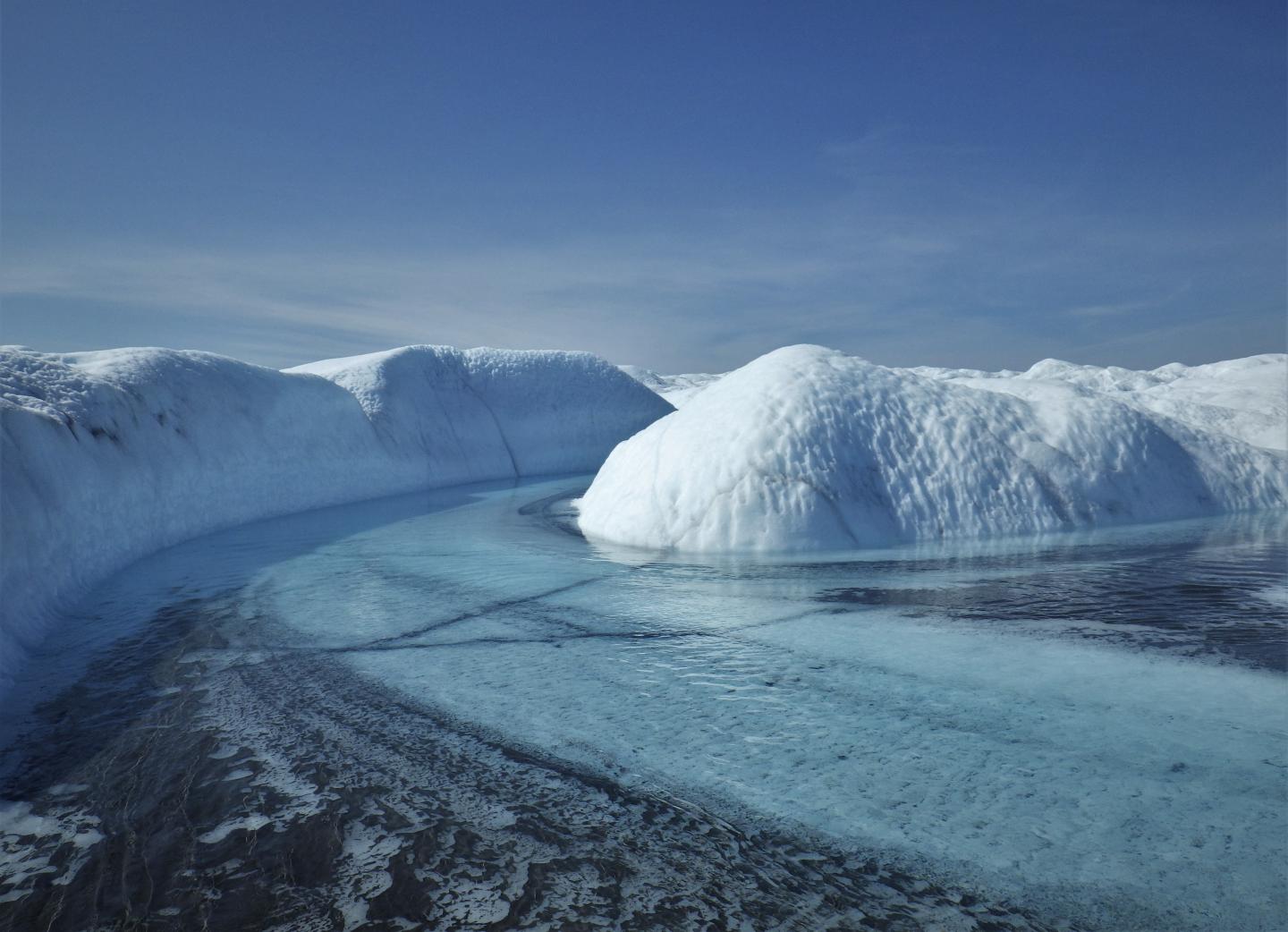
IMAGE

Credit: Sasha Leidman

Bacteria are likely triggering greater melting on the Greenland ice sheet, possibly increasing the island’s contribution to sea-level rise, according to Rutgers scientists.

That’s because the microbes cause sunlight-absorbing sediment to clump together and accumulate in the meltwater streams, according to a Rutgers-led study – the first of its kind – in the journal Geophysical Research Letters. The findings can be incorporated in climate models, leading to more accurate predictions of melting, scientists say.

“These streams can be seen all over Greenland and they have a brilliant blue color, which leads to further melting since they absorb more sunlight than the surrounding ice,” said lead author Sasha Leidman, a graduate student in the lab of co-author Asa K. Rennermalm, an associate professor in the Department of Geography in the School of Arts and Sciences at Rutgers University-New Brunswick. “This is exacerbated as dark sediment accumulates in these streams, absorbing even more sunlight and causing more melting that may increase sea-level rise.”

The Greenland ice sheet covers about 656,000 square miles – most of the island and three times the size of Texas, according to the National Snow & Ice Data Center. The global sea level would rise an estimated 20 feet if the thick ice sheet melted.

With climate change, sea-level rise and coastal storms threaten low-lying islands, cities and lands around the world.

YouTube video: Drone flight over a supraglacial stream in Greenland

Most scientists ignore sediment in glacial streams that form on top of the Greenland ice sheet as meltwater flows to the ocean, but the Rutgers-led team wanted to find out why they accumulated so much sediment. In 2017, scientists flew drones over an approximately 425-foot-long stream in southwest Greenland, took measurements and collected sediment samples. They found that sediment covers up to a quarter of the stream bottom, far more than the estimated 1.2 percent that would exist if organic matter and cyanobacteria did not cause sediment granules to clump together. They also showed that streams have more sediment than predicted by hydrological models.

“We found that the only way for sediment to accumulate in these streams was if bacteria grew in the sediment, causing it to clump into balls 91 times their original size,” Leidman said. “If bacteria didn’t grow in the sediment, all the sediment would be washed away and these streams would absorb significantly less sunlight. This sediment aggregation process has been going on for longer than human history.”

The solar energy absorbed by streams likely depends on the health and longevity of the bacteria, and further warming in Greenland may lead to greater sediment deposits in glacial streams, the study says.

“Decreases in cloud cover and increases in temperature in Greenland are likely causing these bacteria to grow more extensively, causing more sediment-driven melting,” Leidman said. “With climate change causing more of the ice sheet to be covered by streams, this feedback may lead to an increase in Greenland’s contribution to sea-level rise. By incorporating this process into climate models, we’ll be able to more accurately predict how much melting will occur, with the caveat that it is uncertain how much more melting will take place compared with what climate models predict. It will likely not be negligible.”

###

Rutgers co-authors include graduate student Rohi Muthyala and School of Engineering Professor Qizhong (George) Guo. A scientist at the University of Colorado Boulder contributed to the study.

Media Contact
Todd Bates
todd.bates@rutgers.edu

Original Source

https://www.rutgers.edu/news/greenland-melting-likely-increased-bacteria-sediment

Related Journal Article

http://dx.doi.org/10.1029/2020GL088444

Tags: BacteriologyClimate ChangeEarth ScienceEcology/EnvironmentGeology/SoilHydrology/Water ResourcesOceanographyTemperature-Dependent PhenomenaWeather/Storms
Share12Tweet8Share2ShareShareShare2

Related Posts

Review Finds Ferroptosis Links to Fallopian Tube Fibrosis Remain Unproven Hypotheses

Review Finds Ferroptosis Links to Fallopian Tube Fibrosis Remain Unproven Hypotheses

November 17, 2026
Retrospective Study Characterizes Hematologic Changes in Patients Receiving Docetaxel Chemotherapy

Retrospective Study Characterizes Hematologic Changes in Patients Receiving Docetaxel Chemotherapy

November 17, 2026

Review Evaluates GLP-1 Receptor Agonists as Host-Directed Adjuncts in Infectious Diseases

November 17, 2026

Audouin’s Gulls Exhibit Varied Migration Strategies in Western Breeding Populations

November 17, 2026
Please login to join discussion

POPULAR NEWS

  • Alloplastic Temporomandibular Joint Replacement Offers Uncertain Benefits After Mandibular Neoplasm Resection

    Alloplastic Temporomandibular Joint Replacement Offers Uncertain Benefits After Mandibular Neoplasm Resection

    29 shares
    Share 12 Tweet 7
  • Serum Mass Spectrometry Predicts Treatment Response in HER2-Positive Breast Cancer

    29 shares
    Share 12 Tweet 7
  • Polypharmacy Linked to Higher Odds of Sarcopenia in Older Adults

    29 shares
    Share 12 Tweet 7
  • Adapted Virtual Presence Tool Proves Feasible in Pilot Manikin Simulation Courses

    29 shares
    Share 12 Tweet 7

About

We bring you the latest biotechnology news from best research centers and universities around the world. Check our website.

Follow us

Recent News

Review Outlines How Intratumoral Bacteria and Metabolites Influence Cancer Immunotherapy Outcomes

Thiazole Copolymer Mediator Boosts Rubber-Kaolin Composite Tensile Strength by Fifty-One Percent

Review Finds Ferroptosis Links to Fallopian Tube Fibrosis Remain Unproven Hypotheses

Subscribe to Blog via Email

Enter your email address to subscribe to this blog and receive notifications of new posts by email.

Join 88 other subscribers
  • Contact Us

Bioengineer.org © Copyright 2023 All Rights Reserved.

Welcome Back!

Login to your account below

Forgotten Password?

Retrieve your password

Please enter your username or email address to reset your password.

Log In
No Result
View All Result
  • Homepages
    • Home Page 1
    • Home Page 2
  • News
  • National
  • Business
  • Health
  • Lifestyle
  • Science

Bioengineer.org © Copyright 2023 All Rights Reserved.