• HOME
  • NEWS
  • EXPLORE
    • CAREER
      • Companies
      • Jobs
    • EVENTS
    • iGEM
      • News
      • Team
    • PHOTOS
    • VIDEO
    • WIKI
  • BLOG
  • COMMUNITY
    • FACEBOOK
    • INSTAGRAM
    • TWITTER
Friday, May 15, 2026
BIOENGINEER.ORG
No Result
View All Result
  • Login
  • HOME
  • NEWS
  • EXPLORE
    • CAREER
      • Companies
      • Jobs
        • Lecturer
        • PhD Studentship
        • Postdoc
        • Research Assistant
    • EVENTS
    • iGEM
      • News
      • Team
    • PHOTOS
    • VIDEO
    • WIKI
  • BLOG
  • COMMUNITY
    • FACEBOOK
    • INSTAGRAM
    • TWITTER
  • HOME
  • NEWS
  • EXPLORE
    • CAREER
      • Companies
      • Jobs
        • Lecturer
        • PhD Studentship
        • Postdoc
        • Research Assistant
    • EVENTS
    • iGEM
      • News
      • Team
    • PHOTOS
    • VIDEO
    • WIKI
  • BLOG
  • COMMUNITY
    • FACEBOOK
    • INSTAGRAM
    • TWITTER
No Result
View All Result
Bioengineer.org
No Result
View All Result
Home NEWS Science News Chemistry

How aerosols are formed

Bioengineer by Bioengineer
January 14, 2021
in Chemistry
Reading Time: 2 mins read
0
IMAGE
Share on FacebookShare on TwitterShare on LinkedinShare on RedditShare on Telegram

IMAGE

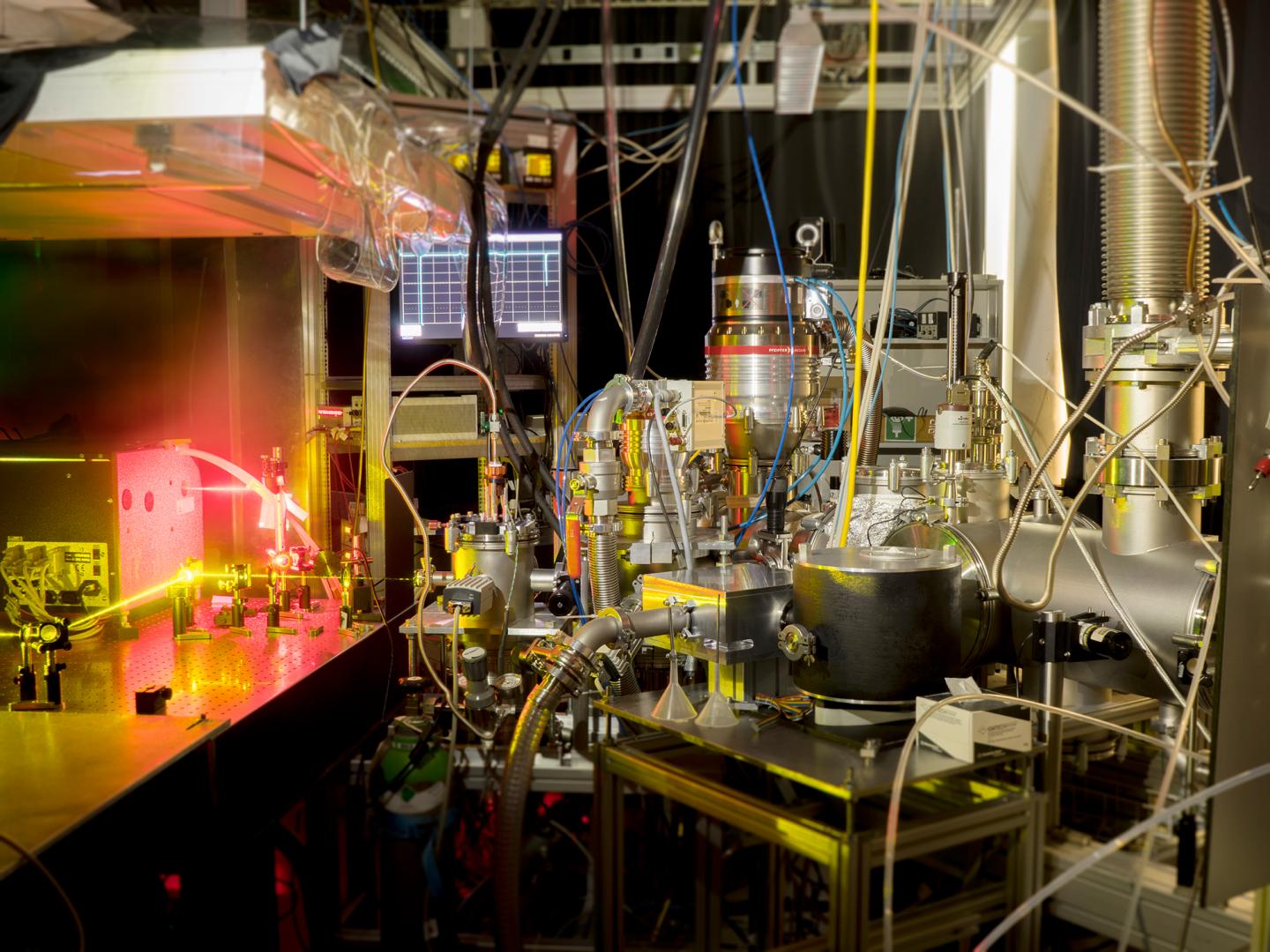
Credit: ETH Zurich / Ruth Signorell

Aerosols are suspensions of fine solid particles or liquid droplets in a gas. Clouds, for example, are aerosols because they consist of water droplets dispersed in the air. Such droplets are produced in a two-step process: first, a condensation nucleus forms, and then volatile molecules condense onto this nucleus, producing a droplet. Nuclei frequently consist of molecules different to those that condense onto them. In the case of clouds, the nuclei often contain sulphuric acids and organic substances. Water vapour from the atmosphere subsequently condenses onto these nuclei.

Scientists led by Ruth Signorell, Professor at the Department of Chemistry and Applied Biosciences, have now gained new insights into the first step of aerosol formation, nucleation. “Observations have shown that the volatile components can also influence the nucleation process,” Signorell says, “but what was unclear was how this was happening at the molecular level.” Previously it was impossible to observe the volatile components during nucleation in an experimental setting. Even in a famous CERN experiment on cloud formation, the “Cloud” experiment, certain volatile components could not be directly detected.

Volatile components detected for the first time

The ETH researchers developed an experiment aimed at the first microseconds of the nucleation process. In the experiment, the particles formed remain intact during this time and can be detected using mass spectrometry. The scientists looked at nucleation in various gas mixtures containing CO2 and for the first time, they were able to detect the volatile components as well – in this case, the CO2. The researchers could show that the volatile components were essential for the formation of nuclei and also accelerated this process.

An analysis of the experimental data revealed that this acceleration is the result of the volatile components catalysing the nucleation of other, less volatile components. They do this by forming short-lived, heterogeneous molecular aggregates, known as chaperon complexes. “Because temperature determines the volatility of gas components, it also plays a decisive role in these processes,” Signorell explains.

One reason the new research results are interesting is that they improve the understanding of nucleation, its molecular mechanisms and speed, in order to properly account for it in models for, say, cloud formation in the atmosphere. In addition, the results should help to improve the efficiency of technical processes for producing aerosols – such as the use of rapid cooling to capture CO2 from natural gas.

###

Reference

Li C, Krohn J, Lippe M, Signorell R: How volatile components catalyze vapor nucleation, Science Advances, 13 January 2021, doi: 10.1126/sciadv.abd9954

Media Contact
Prof. Dr. Ruth Signorell
[email protected]

Original Source

https://ethz.ch/en/news-and-events/eth-news/news/2021/01/how-aerosols-are-formed.html

Related Journal Article

http://dx.doi.org/10.1126/sciadv.abd9954

Tags: Atmospheric ChemistryAtmospheric ScienceChemistry/Physics/Materials Sciences
Share12Tweet8Share2ShareShareShare2

Related Posts

Hanyang University Researchers Pinpoint 2.5 Nanometers as Minimum Coating Thickness for Durable Solid-State EV Batteries — Chemistry

Hanyang University Researchers Pinpoint 2.5 Nanometers as Minimum Coating Thickness for Durable Solid-State EV Batteries

May 15, 2026
Smart Hydrogels Revolutionize Information Security with Photo-Patterning and Multi-Stimuli Responsive Structural Colors — Chemistry

Smart Hydrogels Revolutionize Information Security with Photo-Patterning and Multi-Stimuli Responsive Structural Colors

May 15, 2026

Scientists Overcome Longstanding Challenge in Measuring Semiconductor Defects

May 14, 2026

Wall Design Highlights Deaf and Hard-of-Hearing Experience at #ASA190

May 14, 2026
Please login to join discussion

POPULAR NEWS

  • Research Indicates Potential Connection Between Prenatal Medication Exposure and Elevated Autism Risk

    843 shares
    Share 337 Tweet 211
  • New Study Reveals Plants Can Detect the Sound of Rain

    729 shares
    Share 291 Tweet 182
  • Salmonella Haem Blocks Macrophages, Boosts Infection

    62 shares
    Share 25 Tweet 16
  • Breastmilk Balances E. coli and Beneficial Bacteria in Infant Gut Microbiomes

    58 shares
    Share 23 Tweet 15

About

We bring you the latest biotechnology news from best research centers and universities around the world. Check our website.

Follow us

Recent News

Hanyang University Researchers Pinpoint 2.5 Nanometers as Minimum Coating Thickness for Durable Solid-State EV Batteries

Axonic Spine Synapses Trigger Action Potentials, Direct Signals

New Study Uncovers Why Breast Cancer Becomes More Lethal with Age

Subscribe to Blog via Email

Enter your email address to subscribe to this blog and receive notifications of new posts by email.

Join 82 other subscribers
  • Contact Us

Bioengineer.org © Copyright 2023 All Rights Reserved.

Welcome Back!

Login to your account below

Forgotten Password?

Retrieve your password

Please enter your username or email address to reset your password.

Log In
No Result
View All Result
  • Homepages
    • Home Page 1
    • Home Page 2
  • News
  • National
  • Business
  • Health
  • Lifestyle
  • Science

Bioengineer.org © Copyright 2023 All Rights Reserved.