• HOME
  • NEWS
  • EXPLORE
    • CAREER
      • Companies
      • Jobs
    • EVENTS
    • iGEM
      • News
      • Team
    • PHOTOS
    • VIDEO
    • WIKI
  • BLOG
  • COMMUNITY
    • FACEBOOK
    • INSTAGRAM
    • TWITTER
Saturday, February 7, 2026
BIOENGINEER.ORG
No Result
View All Result
  • Login
  • HOME
  • NEWS
  • EXPLORE
    • CAREER
      • Companies
      • Jobs
        • Lecturer
        • PhD Studentship
        • Postdoc
        • Research Assistant
    • EVENTS
    • iGEM
      • News
      • Team
    • PHOTOS
    • VIDEO
    • WIKI
  • BLOG
  • COMMUNITY
    • FACEBOOK
    • INSTAGRAM
    • TWITTER
  • HOME
  • NEWS
  • EXPLORE
    • CAREER
      • Companies
      • Jobs
        • Lecturer
        • PhD Studentship
        • Postdoc
        • Research Assistant
    • EVENTS
    • iGEM
      • News
      • Team
    • PHOTOS
    • VIDEO
    • WIKI
  • BLOG
  • COMMUNITY
    • FACEBOOK
    • INSTAGRAM
    • TWITTER
No Result
View All Result
Bioengineer.org
No Result
View All Result
Home NEWS Science News Biology

Penned release of green geckos has potential to help preserve threatened native species

Bioengineer by Bioengineer
January 14, 2021
in Biology
Reading Time: 2 mins read
0
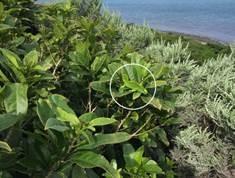
IMAGE
Share on FacebookShare on TwitterShare on LinkedinShare on RedditShare on Telegram

IMAGE

Credit: Tom Flynn-Plummer

University of Otago researchers have added another piece to the puzzle about how best to translocate New Zealand lizards for conservation purposes – confine them.

In a paper just published in the New Zealand Journal of Ecology, the Department of Zoology researchers outlined how they translocated 19 barking geckos to Mana Island, using the method of penned release – enclosing them in a 100m² pen for three months so they get used to the site and hopefully establish a breeding population.

It was the first time such a method had been used with the species and the researchers found it worked well. The geckos’ area use decreased over time, indicating territory establishment.

Co-author Dr Jo Monks, Otago Honorary Research Fellow and Department of Conservation Science Advisor, says translocations of reptiles and amphibians has, historically and globally, been notoriously unsuccessful. However, recent penned release success of jewelled geckos prompted them to try with a different species.

“By understanding the behavioural response of barking geckos to a penned release, this research is helping us to understand which techniques best help a new population of geckos establish following translocation to a new site,” she says.

Barking geckos are one of nine green gecko, moko-kākāriki, species that only live in Aotearoa New Zealand. They are considered ‘At Risk – Declining’ under New Zealand’s Threat Classification System due to ongoing predicted declines from habitat destruction and predation by introduced mammals.

Many green gecko populations have undergone decline in numbers and locations due to predators, habitat modification, and poaching for illegal trade, but little research on their ecology exists.

“Protecting barking geckos and other reptiles of Aotearoa is important in its own right and for the mauri of ecosystems in which they have important roles as pollinators and seed dispersers as well as being predators of invertebrates and prey of larger animals,” Dr Monks says.

There is potential for penned release to work for a wide range of fauna where initial dispersal following translocation could be detrimental to species establishment. It has been done for birds and lizards in Aotearoa.

###

Publication details:

Penned release reduces area use by translocated barking geckos (Naultinus punctatus)

Tom P. Flynn-Plummer and Joanne M. Monks

New Zealand Journal of Ecology

https://dx.doi.org/10.20417/nzjecol.45.17

Media Contact
Dr Jo Monks
[email protected]

Original Source

https://www.otago.ac.nz/news/news/otago775447.html

Related Journal Article

http://dx.doi.org/10.20417/nzjecol.45.17

Tags: BiologyZoology/Veterinary Science
Share12Tweet8Share2ShareShareShare2

Related Posts

Florida Cane Toad: Complex Spread and Selective Evolution

Florida Cane Toad: Complex Spread and Selective Evolution

February 7, 2026
New Study Uncovers Mechanism Behind Burn Pit Particulate Matter–Induced Lung Inflammation

New Study Uncovers Mechanism Behind Burn Pit Particulate Matter–Induced Lung Inflammation

February 6, 2026

DeepBlastoid: Advancing Automated and Efficient Evaluation of Human Blastoids with Deep Learning

February 6, 2026

Navigating the Gut: The Role of Formic Acid in the Microbiome

February 6, 2026
Please login to join discussion

POPULAR NEWS

  • Robotic Ureteral Reconstruction: A Novel Approach

    Robotic Ureteral Reconstruction: A Novel Approach

    82 shares
    Share 33 Tweet 21
  • Digital Privacy: Health Data Control in Incarceration

    63 shares
    Share 25 Tweet 16
  • Study Reveals Lipid Accumulation in ME/CFS Cells

    57 shares
    Share 23 Tweet 14
  • Breakthrough in RNA Research Accelerates Medical Innovations Timeline

    53 shares
    Share 21 Tweet 13

About

We bring you the latest biotechnology news from best research centers and universities around the world. Check our website.

Follow us

Recent News

Evaluating Pediatric Emergency Care Quality in Ethiopia

TPMT Expression Predictions Linked to Azathioprine Side Effects

Improving Dementia Care with Enhanced Activity Kits

Subscribe to Blog via Email

Success! An email was just sent to confirm your subscription. Please find the email now and click 'Confirm' to start subscribing.

Join 73 other subscribers
  • Contact Us

Bioengineer.org © Copyright 2023 All Rights Reserved.

Welcome Back!

Login to your account below

Forgotten Password?

Retrieve your password

Please enter your username or email address to reset your password.

Log In
No Result
View All Result
  • Homepages
    • Home Page 1
    • Home Page 2
  • News
  • National
  • Business
  • Health
  • Lifestyle
  • Science

Bioengineer.org © Copyright 2023 All Rights Reserved.