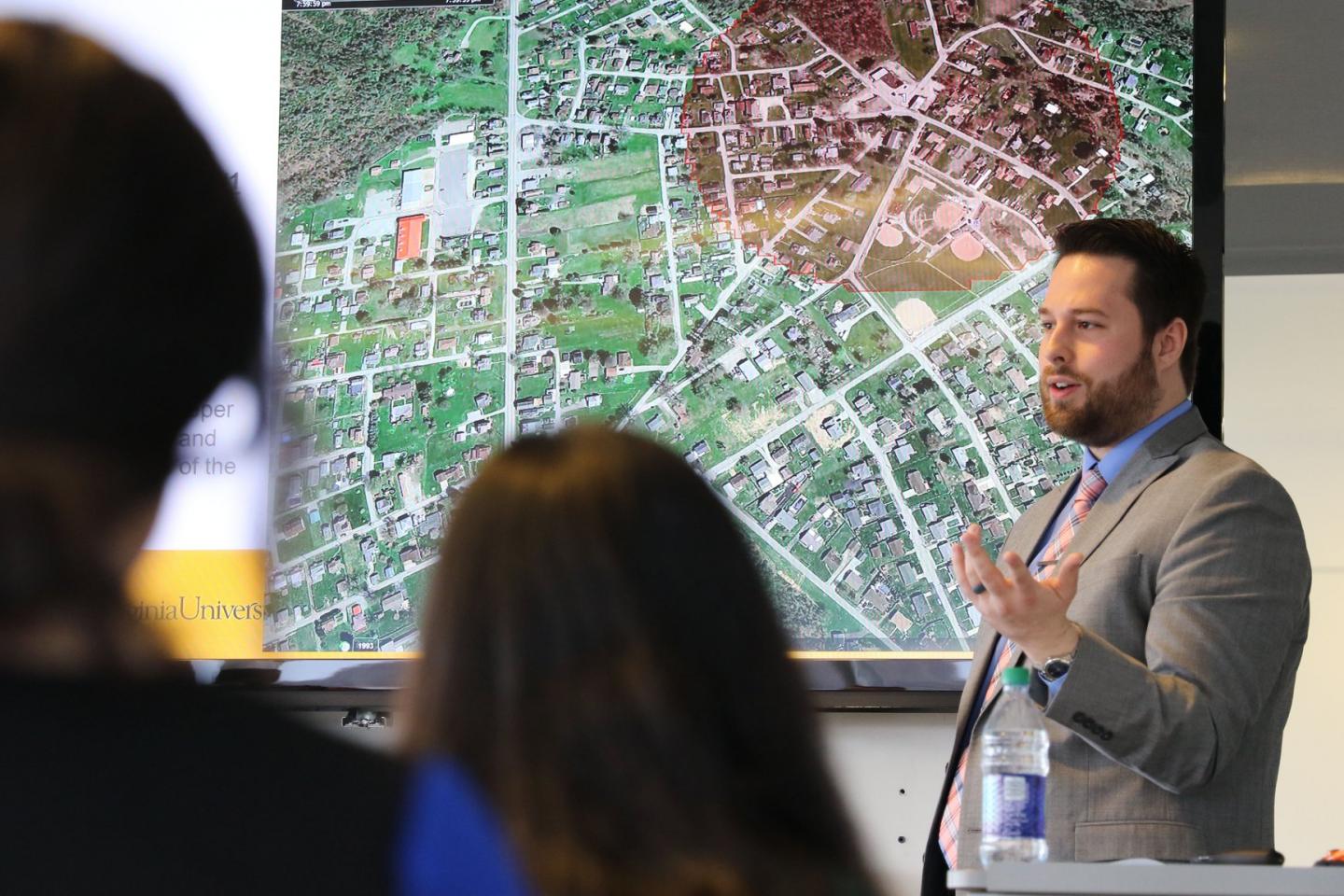
Credit: West Virginia University
Dr. Brian Hendricks, a research assistant professor with the West Virginia University School of Public Health’s Department of Epidemiology, is trying to better understand the needs of a historically underserved population in West Virginia — pregnant women with substance use disorder.
Hendricks plans to explore telehealth utilization rates, barriers to use and the potential advantages for pregnant women with substance use disorder.
“We want to get a better understanding of this population’s needs,” Hendricks said. “Access to care is a big issue all rural residents face. Rural areas experience longer than average drive times to receive clinical care. Additionally, some West Virginia counties have as high as 14% of their households with no motor vehicles for transportation. Add the need for specialty care during pregnancy or for substance use disorders into the mix and finding a primary care doctor in your community is even more difficult.”
The research is being made possible through the West Virginia Clinical and Translational Science Institute Research Scholars program. This competitive training program provides early career investigators with two years of mentoring and support to conduct research to benefit West Virginia.
The project is focused primarily on pregnant Medicaid beneficiaries — a woman is eligible for pregnancy-related Medicaid based upon their household size, income, residency, and immigration status. Eligibility factors do differ by state. Preliminary data from a small population (n=500) of pregnant and postpartum women receiving treatment for substance use disorder indicated that roughly 94% were enrolled in Medicaid.
Hendricks’ project will ask, “How is telehealth for prenatal care and substance use disorder treatment among pregnant women being used? Which communities have historically had access to telehealth and which ones have gotten better access since the pandemic?”
To address these questions, Hendricks will request data for 2016-2020 and analyze the ratio of telehealth versus in-clinic visitations at the ZIP code level for each year of the study. After conducting the spatial analysis, a survey will be conducted in a population of pregnant women with substance use disorder leveraging active WVU partnerships with the WV Drug Free Moms and Babies project to better understand attitudes around telehealth use.
After these initial two years of WVCTSI support, he plans to apply for external funding to focus efforts on developing interventions to support this vulnerable and underserved population.
As a spatial epidemiologist, Hendricks is interested in studying geographic differences in health outcomes and medical care within communities. By exploring telehealth use, along with travel behaviors in West Virginia, he hopes to develop a smartphone-based app to help intervene, for example, when a pregnant woman is experiencing a drug craving.
This is made possible through GPS tracking and geographic information systems tech called geo-fencing. The combination of this technology provides opportunities to contact future study participants should they be within certain distances of high-risk areas, for example vacant lots or bus stops, which are known to be associated with drug overdoses in rural areas.
“This would allow us to respond in real-time to help prevent threats to long-term recovery,” Hendricks said. “Treatment for opioid use disorder is usually done through clinic visits a certain number of times per week. That’s not always enough to respond to in-the-moment threats to recovery.”
But first, he must analyze the data he gathers in his current research project, “Coping with a Pandemic — Addressing Inequalities and Increasing Reliance on Telehealth Services for Pregnant Women with Substance Misuse Disorder.” Funding for the project began in September 2020.
###
WVCTSI Background
WVCTSI is funded by an IDeA Clinical and Translational grant from the National Institute of General Medical Sciences (U54GM104942) to support the mission of building clinical and translational research infrastructure and capacity to impact health disparities in West Virginia.
-WVU-
wh/01/13/21
Media Contact
Nikky Luna
[email protected]
Original Source
https:/