• HOME
  • NEWS
  • EXPLORE
    • CAREER
      • Companies
      • Jobs
    • EVENTS
    • iGEM
      • News
      • Team
    • PHOTOS
    • VIDEO
    • WIKI
  • BLOG
  • COMMUNITY
    • FACEBOOK
    • INSTAGRAM
    • TWITTER
Thursday, February 5, 2026
BIOENGINEER.ORG
No Result
View All Result
  • Login
  • HOME
  • NEWS
  • EXPLORE
    • CAREER
      • Companies
      • Jobs
        • Lecturer
        • PhD Studentship
        • Postdoc
        • Research Assistant
    • EVENTS
    • iGEM
      • News
      • Team
    • PHOTOS
    • VIDEO
    • WIKI
  • BLOG
  • COMMUNITY
    • FACEBOOK
    • INSTAGRAM
    • TWITTER
  • HOME
  • NEWS
  • EXPLORE
    • CAREER
      • Companies
      • Jobs
        • Lecturer
        • PhD Studentship
        • Postdoc
        • Research Assistant
    • EVENTS
    • iGEM
      • News
      • Team
    • PHOTOS
    • VIDEO
    • WIKI
  • BLOG
  • COMMUNITY
    • FACEBOOK
    • INSTAGRAM
    • TWITTER
No Result
View All Result
Bioengineer.org
No Result
View All Result
Home NEWS Science News Biology

Asian tiger mosquito poses low risk for Zika virus outbreaks

Bioengineer by Bioengineer
December 31, 2020
in Biology
Reading Time: 3 mins read
0
IMAGE
Share on FacebookShare on TwitterShare on LinkedinShare on RedditShare on Telegram

IMAGE

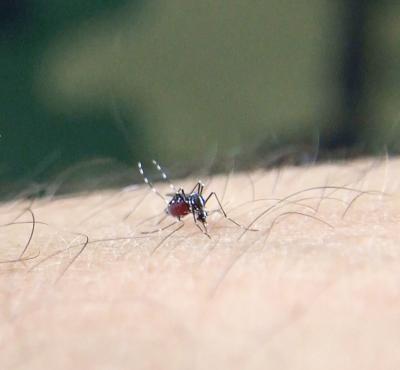
Credit: Albin Fontaine and Céline Jourdan, 2020 (CCBY 2.0)

The Asian tiger mosquito does not pose a major risk for Zika virus epidemics, according to a study published December 31 in the open-access journal PLOS Pathogens by Albin Fontaine of the Institut de Recherche Biomédicale des Armées, and colleagues.

Zika virus has triggered large outbreaks in human populations, in some cases causing congenital deformities, fetal loss, or neurological problems in adults. While the yellow fever mosquito Aedes aegypti is considered the primary vector of Zika virus, the Asian tiger mosquito Aedes albopictus has been shown experimentally to transmit the virus and was involved in several transmissions of the virus in France in 2019. Originating from Southeast Asia, Ae. aegypti is an aggressive biter that has invaded the world and is now present on all inhabited continents, including temperate Europe, due to its ability to endure harsh winter conditions. As the second most important vector of human viral pathogens, Ae. albopictus is displacing Ae. aegypti populations due to competitive advantages. But it is not known if Ae. albopictus could trigger large-scale Zika virus epidemics.

To address this question, the researchers exposed Ae. albopictus to Zika virus and assessed infection rates in experiments, modeled the dynamics of Zika virus infection within individual humans, and used epidemiological simulations. The highest risk of transmission occurred during the pre-symptomatic stage of the disease. At this dose, mosquito infection probability was estimated to be 20%, and 21 days were required to reach median systemic infection rates. Despite these unfavorable characteristics for transmission, Ae. albopictus was still able to trigger large outbreaks in a simulated environment in the presence of sufficiently high mosquito densities and biting rates. According to the authors, active surveillance and eradication programs should be implemented in territories occupied by Ae. albopictus to maintain the low risk of Zika virus outbreaks.

The authors conclude, “The complementary combination of dose-dependent experimental infection, modeling of intra-human viremia dynamics, and in silico epidemiological simulations confirms the low epidemic potential of Aedes albopictus for Zika virus.”

###

Peer-reviewed; Situation / modeling; Experimental study; Animals; Cells

In your coverage please use this URL to provide access to the freely available article in PLOS Pathogens:
http://journals.plos.org/plospathogens/article?id=10.1371/journal.ppat.1009068

Citation: Lequime S, Dehecq J-S, Matheus S, de Laval F, Almeras L, Briolant S, et al. (2020) Modeling intra-mosquito dynamics of Zika virus and its dose-dependence confirms the low epidemic potential of Aedes albopictus. PLoS Pathog 16(12): e1009068.
https://doi.org/10.1371/journal.ppat.1009068

Funding: This study was funded by the Direction Générale de l’Armement (https://www.defense.gouv.fr/dga, grant no PDH-2-NRBC-2-B-2113, SB) and the Direction Centrale du Service de Santé des Armées (https://www.defense.gouv.fr/sante, grant agreement 2016RC10, SB) and was supported by the European Virus Archive goes Global (EVAg, https://www.european-virus-archive.com) project that has received funding from the European Union’s Horizon 2020 research and innovation program under grant agreement No 653316. The contents of this publication are the sole responsibility of the authors.

SL was funded by a postdoctoral grant of the Fonds Wetenschappelijk Onderzoek – Vlaanderen (FWO, https://www.fwo.be). The funders had no role in study design, data collection and analysis, decision to publish, or preparation of the manuscript

Competing interests: The authors have declared that no competing interests exist.

Media Contact
Albin Fontaine
[email protected]

Related Journal Article

http://dx.doi.org/10.1371/journal.ppat.1009068

Tags: BiologyInfectious/Emerging DiseasesParasitologyPublic HealthVirology
Share12Tweet8Share2ShareShareShare2

Related Posts

Higher Choline Intake During Pregnancy Associated with Reduced Inflammation

Higher Choline Intake During Pregnancy Associated with Reduced Inflammation

February 5, 2026
New B-vHIT Classification Framework Boosts Accuracy in Differentiating Peripheral and Non-Peripheral Vertigo

New B-vHIT Classification Framework Boosts Accuracy in Differentiating Peripheral and Non-Peripheral Vertigo

February 5, 2026

Boosted Inner Ear Targeting of AAV Vectors Achieved Through Peptide Display on AAV1 Capsid

February 5, 2026

MIRO1 Drives Mitochondrial Fusion for Plant Immunity

February 5, 2026
Please login to join discussion

POPULAR NEWS

  • Robotic Ureteral Reconstruction: A Novel Approach

    Robotic Ureteral Reconstruction: A Novel Approach

    81 shares
    Share 32 Tweet 20
  • Digital Privacy: Health Data Control in Incarceration

    63 shares
    Share 25 Tweet 16
  • Study Reveals Lipid Accumulation in ME/CFS Cells

    57 shares
    Share 23 Tweet 14
  • Breakthrough in RNA Research Accelerates Medical Innovations Timeline

    53 shares
    Share 21 Tweet 13

About

We bring you the latest biotechnology news from best research centers and universities around the world. Check our website.

Follow us

Recent News

Immune Marker Identified as Predictor of Poor Outcomes Across Multiple Tumor Types and Species

A Fully Real-Valued Optical Chip Enables Light to “Think” Using Negative Values for Generative Models

Sandia Labs Recognized by HIRE Vets for Outstanding Support of Military Veterans

Subscribe to Blog via Email

Enter your email address to subscribe to this blog and receive notifications of new posts by email.

Join 73 other subscribers
  • Contact Us

Bioengineer.org © Copyright 2023 All Rights Reserved.

Welcome Back!

Login to your account below

Forgotten Password?

Retrieve your password

Please enter your username or email address to reset your password.

Log In
No Result
View All Result
  • Homepages
    • Home Page 1
    • Home Page 2
  • News
  • National
  • Business
  • Health
  • Lifestyle
  • Science

Bioengineer.org © Copyright 2023 All Rights Reserved.