• HOME
  • NEWS
  • EXPLORE
    • CAREER
      • Companies
      • Jobs
    • EVENTS
    • iGEM
      • News
      • Team
    • PHOTOS
    • VIDEO
    • WIKI
  • BLOG
  • COMMUNITY
    • FACEBOOK
    • INSTAGRAM
    • TWITTER
Saturday, February 7, 2026
BIOENGINEER.ORG
No Result
View All Result
  • Login
  • HOME
  • NEWS
  • EXPLORE
    • CAREER
      • Companies
      • Jobs
        • Lecturer
        • PhD Studentship
        • Postdoc
        • Research Assistant
    • EVENTS
    • iGEM
      • News
      • Team
    • PHOTOS
    • VIDEO
    • WIKI
  • BLOG
  • COMMUNITY
    • FACEBOOK
    • INSTAGRAM
    • TWITTER
  • HOME
  • NEWS
  • EXPLORE
    • CAREER
      • Companies
      • Jobs
        • Lecturer
        • PhD Studentship
        • Postdoc
        • Research Assistant
    • EVENTS
    • iGEM
      • News
      • Team
    • PHOTOS
    • VIDEO
    • WIKI
  • BLOG
  • COMMUNITY
    • FACEBOOK
    • INSTAGRAM
    • TWITTER
No Result
View All Result
Bioengineer.org
No Result
View All Result
Home NEWS Science News

Researchers explain why feather shafts change shape when under stress

Bioengineer by Bioengineer
December 12, 2016
in Science News
Reading Time: 2 mins read
0
Share on FacebookShare on TwitterShare on LinkedinShare on RedditShare on Telegram
IMAGE

Credit: UC San Diego

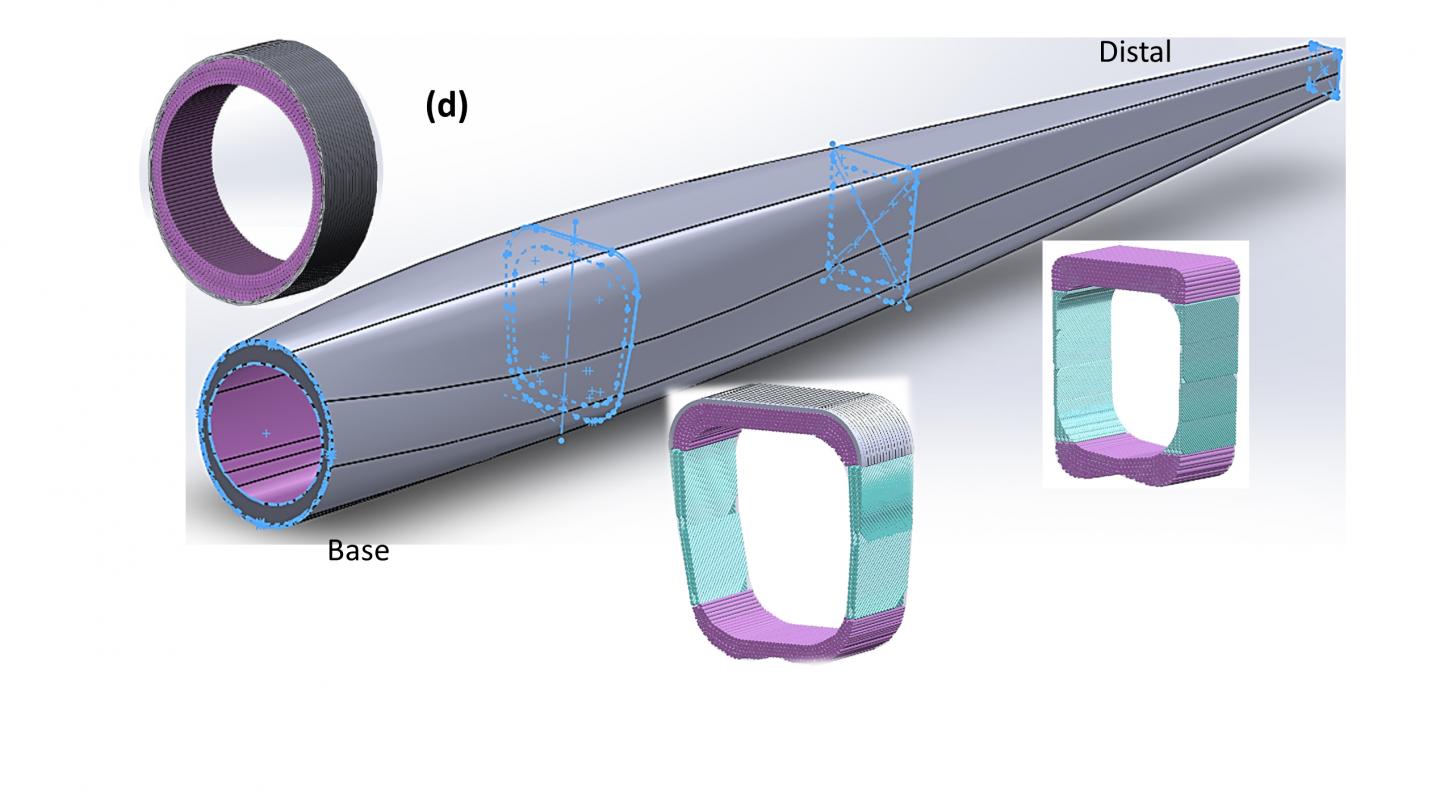
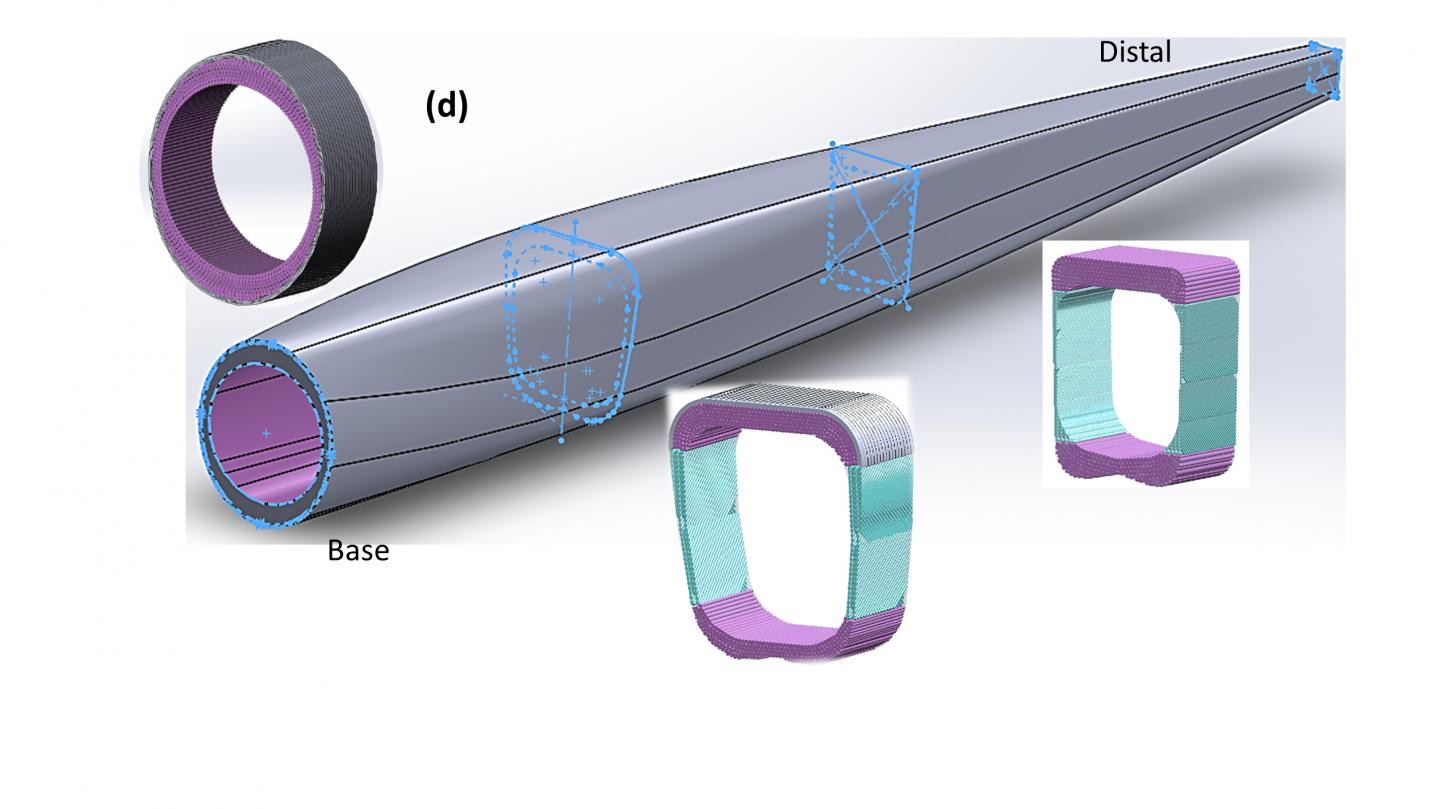
Researchers at the University of California San Diego for the first time have revealed why the shape of the feather shaft changes from round to square when it's put under stress in a paper published in recent issue of Advanced Science. Nature almost always favors roundness. Only under special circumstances does it opt for square shapes. Examples include the cells of plants — which derive their name from the square cells of monks. At a larger, structural level, there are a few rare examples: the seahorse tail, a vine found in the Amazon that has a square cross section, and the feather rachis.

In their study, using fundamental mechanics equations and experiments in modeling materials, researchers show that the square shape provides greater rigidity and higher resistance to ovalization and buckling than a hollow round shape of the same weight. "The most amazing thing is that this reflects textbook mechanics," said Marc Meyers, the paper's senior author and a professor of mechanical and aerospace engineering at the Jacobs School of Engineering at UC San Diego. "And obviously, birds haven't studied that subject."

Ovalization can be observed by subjecting a drink straw to progressive bending: the section will gradually change from round to oval, and the stiffness is correspondingly decreased. But the feathers of flying birds, with a round-to-square sectional shape, retain their rigidity intact in spite of bending. By contrast, non-flight feathers, such as flightless ostrich wing feathers and peacock tail feathers, are not subjected to the same constraints and their shafts do not change from round to square. This is because a feather is a highly specialized appendage that enables birds to fly, generating thrust and lift. Its mechanical properties are optimized and weight minimized.

The feather-shaft cortex is a fibrous composite with varying fiber orientations along the length adjusting to local stress requirements: the increasing amount of axial fibers ensure sufficient flexural rigidity, while the crossed fibers provide reasonable flexibility and torsional rigidity.

The features revealed symbolize the unique adaptation of feathers for optimized stiffness and lightness, a natural structure inspiring for advanced engineering designs.

"Nature is indeed wondrous," said Bin Wang, the paper's lead author and a member of Meyers' research group. "And it is such a beauty to look at nature with human knowledge."

Wang and Meyers said that the findings could be used to build stronger, stiffer square foam-filled structures for lightweight vehicles, such as drones and other aircraft. They also said that the findings could be applied to other types of energy-efficient structures.

###

Media Contact

Ioana Patringenaru
[email protected]
858-822-0899
@UCSanDiego

http://www.ucsd.edu

############

Story Source: Materials provided by Scienmag

Share12Tweet8Share2ShareShareShare2

Related Posts

Personalized Guide to Understanding and Reducing Chemicals

February 7, 2026

Inflammasome Protein ASC Drives Pancreatic Cancer Metabolism

February 7, 2026

Phage-Antibiotic Combo Beats Resistant Peritoneal Infection

February 7, 2026

Boosting Remote Healthcare: Stepped-Wedge Trial Insights

February 7, 2026
Please login to join discussion

POPULAR NEWS

  • Robotic Ureteral Reconstruction: A Novel Approach

    Robotic Ureteral Reconstruction: A Novel Approach

    82 shares
    Share 33 Tweet 21
  • Digital Privacy: Health Data Control in Incarceration

    63 shares
    Share 25 Tweet 16
  • Study Reveals Lipid Accumulation in ME/CFS Cells

    57 shares
    Share 23 Tweet 14
  • Breakthrough in RNA Research Accelerates Medical Innovations Timeline

    53 shares
    Share 21 Tweet 13

About

We bring you the latest biotechnology news from best research centers and universities around the world. Check our website.

Follow us

Recent News

Personalized Guide to Understanding and Reducing Chemicals

Inflammasome Protein ASC Drives Pancreatic Cancer Metabolism

Phage-Antibiotic Combo Beats Resistant Peritoneal Infection

Subscribe to Blog via Email

Enter your email address to subscribe to this blog and receive notifications of new posts by email.

Join 73 other subscribers
  • Contact Us

Bioengineer.org © Copyright 2023 All Rights Reserved.

Welcome Back!

Login to your account below

Forgotten Password?

Retrieve your password

Please enter your username or email address to reset your password.

Log In
No Result
View All Result
  • Homepages
    • Home Page 1
    • Home Page 2
  • News
  • National
  • Business
  • Health
  • Lifestyle
  • Science

Bioengineer.org © Copyright 2023 All Rights Reserved.