• HOME
  • NEWS
  • EXPLORE
    • CAREER
      • Companies
      • Jobs
    • EVENTS
    • iGEM
      • News
      • Team
    • PHOTOS
    • VIDEO
    • WIKI
  • BLOG
  • COMMUNITY
    • FACEBOOK
    • INSTAGRAM
    • TWITTER
Thursday, December 4, 2025
BIOENGINEER.ORG
No Result
View All Result
  • Login
  • HOME
  • NEWS
  • EXPLORE
    • CAREER
      • Companies
      • Jobs
        • Lecturer
        • PhD Studentship
        • Postdoc
        • Research Assistant
    • EVENTS
    • iGEM
      • News
      • Team
    • PHOTOS
    • VIDEO
    • WIKI
  • BLOG
  • COMMUNITY
    • FACEBOOK
    • INSTAGRAM
    • TWITTER
  • HOME
  • NEWS
  • EXPLORE
    • CAREER
      • Companies
      • Jobs
        • Lecturer
        • PhD Studentship
        • Postdoc
        • Research Assistant
    • EVENTS
    • iGEM
      • News
      • Team
    • PHOTOS
    • VIDEO
    • WIKI
  • BLOG
  • COMMUNITY
    • FACEBOOK
    • INSTAGRAM
    • TWITTER
No Result
View All Result
Bioengineer.org
No Result
View All Result
Home NEWS Science News Health

How roundworms decide the time is right

Bioengineer by Bioengineer
December 22, 2020
in Health
Reading Time: 2 mins read
0
IMAGE
Share on FacebookShare on TwitterShare on LinkedinShare on RedditShare on Telegram

IMAGE

Credit: Natalia Stec/Hammell lab/CSHL, 2020

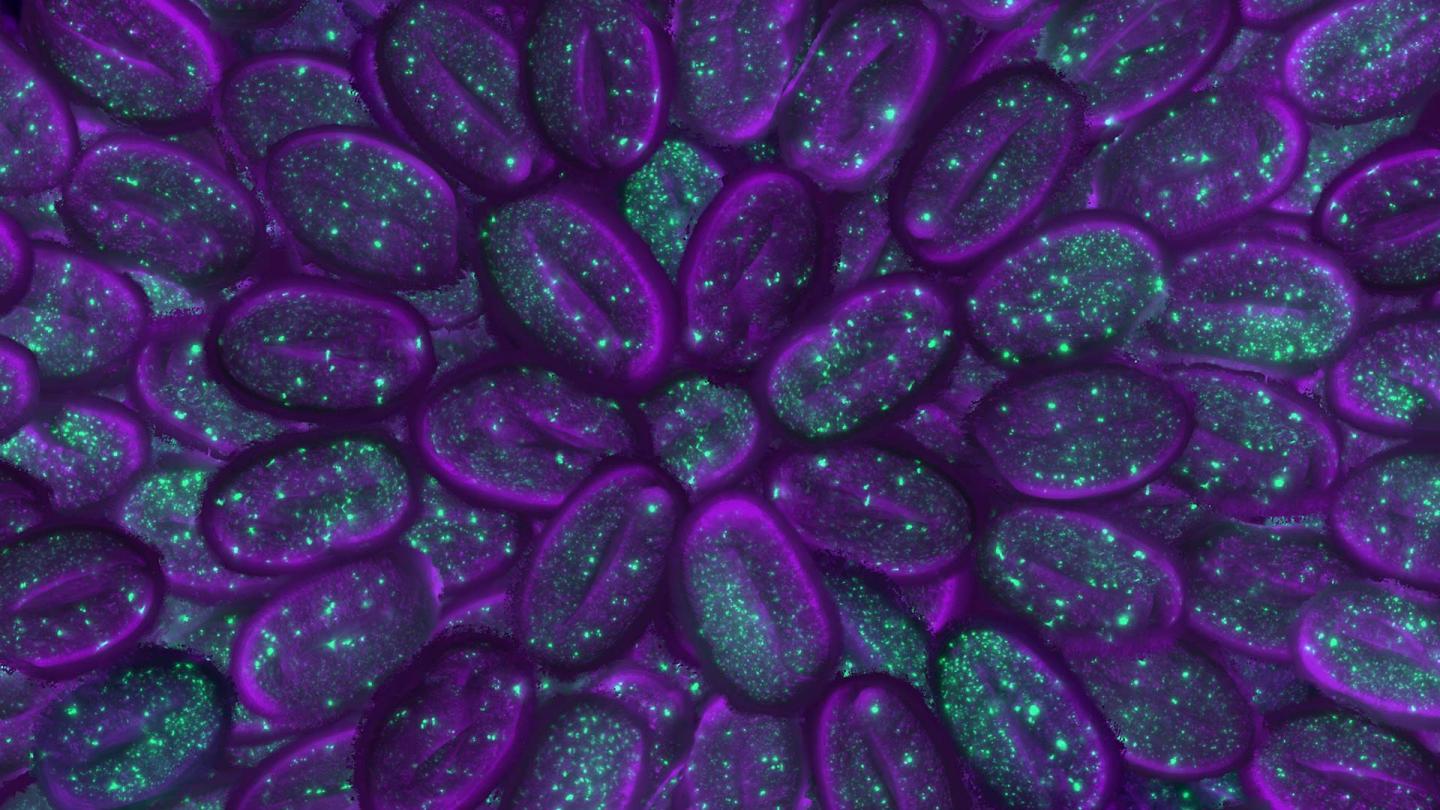
Transforming a fertilized egg into a fully functional adult is a complicated task. Cells must divide, move, and mature at specific times. Developmental genes control that process, turning on and off in a choreographed way. However, the environment influences development. A team of researchers led by Cold Spring Harbor Laboratory Associate Professor Christopher Hammell reported December 22, 2020 in the journal Current Biology how gene activity matches nutrient levels. They found a master switch developing worms use to pause growth when nutrients are scarce. When the environment improves, animals continue developing. The switch adjusts gene activity to match nutrient levels.

Caenorhabditis elegans is a tiny roundworm. In a lab, this worm develops from an embryo to a 959-cell adult in about three days. Hammell says:

“This always happens the same way. You always get 959 cells, and the patterns of those divisions that give you those cells are always done in the same manner between one animal and the next.”

The genes that direct this flexible program switch on and off in predictable patterns as an embryo morphs through several larval stages into a fully formed worm.

In the wild, developing worms can’t always depend on comfortable temperatures and plentiful food. Sometimes, development must pause until conditions improve. Hammell’s team discovered a protein called BLMP-1 that adjusts gene activity (transcription) to keep pace with development. When conditions are good, BLMP-1 levels increase and unravel stretches of DNA, so genes are more accessible. Activators then switch on the genes at the right time. “This is an anticipatory mechanism to say ‘everything’s okay, make development as robust as possible,'” Hammell explains. If conditions are not optimal, BLMP-1 levels go down, leaving genes packed tightly away, slowing or even stopping development.

The team’s experiments revealed BLMP-1 as a master regulator of thousands of genes that cycle on and off during development. Hammell says that was a surprise since his team initially set out to investigate this process in just a handful of developmental genes. BLMP-1 is unique in that it coordinates many different kinds of processes.

Hammell is not the first researcher to call attention to BLMP-1. An analogous gene is known to be overactive in some human blood cancers, where it alters the activity of a large set of genes. Hammell is hopeful that BLMP-1 in C. elegans will provide a model system to study human diseases.

###

Media Contact
Sara Roncero-Menendez
[email protected]

Related Journal Article

http://dx.doi.org/10.1016/j.cub.2020.11.060

Tags: BiologycancerCell BiologyGeneticsMedicine/Health
Share12Tweet8Share2ShareShareShare2

Related Posts

Metformin-Alogliptin Combo vs. Monotherapy in Diabetes

December 3, 2025

Botanical Extracts’ Antibacterial Activity Boosted by Enhancers

December 3, 2025

Global Guidelines for Shared Decision-Making in Valvular Heart Disease

December 3, 2025

Hidradenitis Suppurativa Remission Achieved Using Bacteriophage Therapy

December 3, 2025
Please login to join discussion

POPULAR NEWS

  • New Research Unveils the Pathway for CEOs to Achieve Social Media Stardom

    New Research Unveils the Pathway for CEOs to Achieve Social Media Stardom

    204 shares
    Share 82 Tweet 51
  • Scientists Uncover Chameleon’s Telephone-Cord-Like Optic Nerves, A Feature Missed by Aristotle and Newton

    120 shares
    Share 48 Tweet 30
  • Neurological Impacts of COVID and MIS-C in Children

    107 shares
    Share 43 Tweet 27
  • MoCK2 Kinase Shapes Mitochondrial Dynamics in Rice Fungal Pathogen

    68 shares
    Share 27 Tweet 17

About

BIOENGINEER.ORG

We bring you the latest biotechnology news from best research centers and universities around the world. Check our website.

Follow us

Recent News

Boosting Cancer Immunotherapy by Targeting DNA Repair

Evaluating eGFR Equations in Chinese Children

Metformin-Alogliptin Combo vs. Monotherapy in Diabetes

Subscribe to Blog via Email

Enter your email address to subscribe to this blog and receive notifications of new posts by email.

Join 69 other subscribers
  • Contact Us

Bioengineer.org © Copyright 2023 All Rights Reserved.

Welcome Back!

Login to your account below

Forgotten Password?

Retrieve your password

Please enter your username or email address to reset your password.

Log In
No Result
View All Result
  • Homepages
    • Home Page 1
    • Home Page 2
  • News
  • National
  • Business
  • Health
  • Lifestyle
  • Science

Bioengineer.org © Copyright 2023 All Rights Reserved.